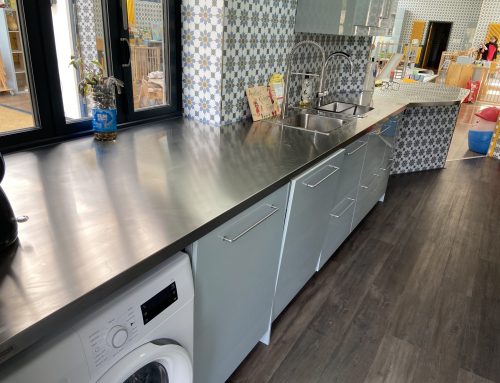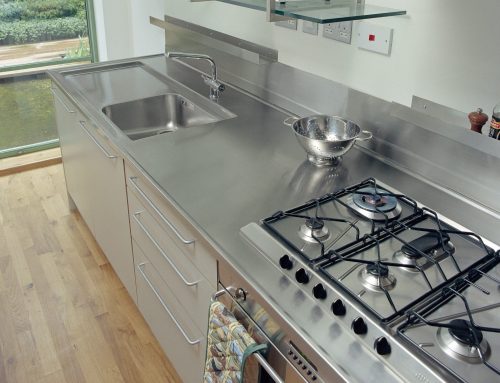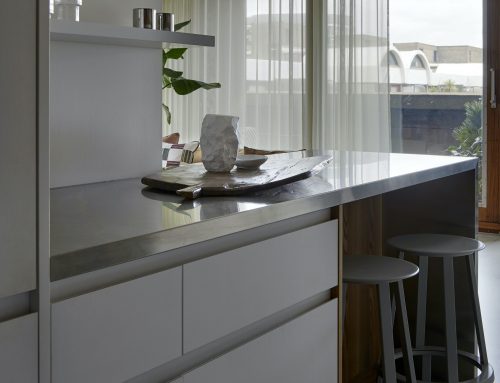


Integrated stainless steel sinks combine the sink and surrounding work surface to create a coordinated solution designed around the requirements of a particular space. Rather than treating the sink and worktop as entirely separate elements, integration allows them to work together as part of the overall design.
This approach can be valuable in domestic kitchens as well as commercial and specialist environments where practicality, durability and a clean appearance are important.
GEC Anderson offers stainless steel sinks alongside bespoke fabrication options, allowing individual projects to be designed around specific dimensions and requirements.
What Is an Integrated Stainless Steel Sink?
An integrated stainless steel sink forms part of a stainless steel work surface rather than appearing as a completely separate feature.
This creates continuity between the sink and surrounding worktop and can help produce the distinctive, clean appearance often associated with professionally designed stainless steel environments.
When the worktop is made to measure, the position and dimensions of the sink can be considered alongside the wider layout. This makes it possible to approach the entire working area as one coordinated design rather than selecting individual components independently.
What Are the Benefits of an Integrated Sink?
One of the main advantages of integrated stainless steel sinks is the combination of practicality and visual continuity.
Potential benefits include:
- A coordinated sink and worktop design
- Fewer visual interruptions across the work surface
- A clean, professional appearance
- Stainless steel’s practical cleaning characteristics
- A solution tailored to the wider workspace
- Flexibility for bespoke projects
The value of these features will depend on the project. A domestic kitchen may prioritise appearance and ease of everyday use, while a commercial environment may place greater emphasis on workflow, cleaning and durability.
Are Integrated Stainless Steel Sinks Easier to Clean?
A well-planned integrated worktop and sink can create a practical surface for routine cleaning.
Reducing unnecessary transitions between separate materials can simplify the overall working area. Stainless steel itself has a non-porous surface and is widely used in environments where straightforward cleaning is important.
Regular cleaning is still necessary, of course. An integrated design does not remove the need for appropriate care, but it can contribute to a streamlined working surface.
This makes the format particularly attractive for kitchens and other spaces where sinks and surrounding worktops receive frequent use.
Can an Integrated Sink Be Made to Measure?
Bespoke fabrication is one of the most useful aspects of choosing stainless steel.
Rather than designing the room around a fixed worktop configuration, a made-to-measure approach allows the work surface to respond to the project.
The location of the sink can be considered alongside dimensions, cabinetry, appliances and the way the space will be used. Other features can also form part of the wider worktop specification where appropriate.
This flexibility can be especially valuable when standard sizes do not suit the available space or when the project requires a particular arrangement.
GEC Anderson’s made-to-measure stainless steel worktops provide options for creating work surfaces around individual project specifications.
Where Can Integrated Stainless Steel Sinks Be Used?
Integrated stainless steel sinks can suit a variety of applications.
In residential kitchens, they can complement contemporary interiors and provide a distinctive alternative to more conventional worktop and sink combinations.
They are also relevant to professional and commercial environments where stainless steel is already valued for its practical characteristics.
The right specification will depend on the intended application, available space and how frequently the sink and surrounding work surface will be used.
Rather than approaching every installation in the same way, the sink should form part of the wider planning process.
Why Does Sink Position Matter?
Sink placement can have a significant impact on how effectively a worktop functions.
Consider what happens around the sink during everyday use. Its relationship with preparation areas, storage, appliances and other features can affect how easily people move through the space.
In a compact kitchen, careful positioning can help make better use of the available worktop. In a larger commercial or residential installation, the priorities may instead involve creating an efficient workflow between several areas.
Planning the sink as part of a bespoke worktop allows these practical considerations to be addressed before manufacture.
Are Integrated Stainless Steel Sinks Only for Commercial Kitchens?
No. Although stainless steel is closely associated with professional kitchens, integrated sinks and worktops can also be used in residential projects.
The material’s clean appearance can work particularly well in contemporary interiors, while bespoke fabrication gives homeowners and designers considerable flexibility over the finished installation.
For architects and designers, stainless steel can also provide a consistent material language across sinks, worktops and other fabricated elements.
The result can be highly functional without sacrificing the visual objectives of the project.
What Should You Consider Before Choosing an Integrated Sink?
Before specifying an integrated sink, think about the complete working area rather than the sink alone.
Consider:
- The dimensions of the available space
- How the worktop will be used
- The preferred sink position
- Storage and cabinetry beneath the worktop
- Nearby appliances
- The overall worktop configuration
- Cleaning and maintenance requirements
- The visual style of the wider interior
Establishing these requirements early can make it easier to develop a specification that works both practically and visually.
Frequently Asked Questions
What is an integrated stainless steel sink?
An integrated stainless steel sink is designed as part of the surrounding stainless steel work surface, creating a coordinated sink and worktop solution.
What are the advantages of an integrated stainless steel sink?
Benefits can include visual continuity, practical cleaning, design flexibility and the ability to create a solution around the dimensions and requirements of the project.
Can integrated stainless steel sinks be used at home?
Yes. Integrated stainless steel sinks can be suitable for both residential and professional environments, depending on the design and specification required.
Can a stainless steel sink worktop be made to measure?
GEC Anderson provides made-to-measure stainless steel worktops, allowing individual projects to be manufactured according to specific dimensions and requirements.
Specify an Integrated Stainless Steel Solution
Integrated stainless steel sinks can provide a practical way to bring the sink and work surface together within one carefully considered design. With made-to-measure fabrication, the finished solution can respond to the dimensions, layout and requirements of an individual project.
Speak to GEC Anderson about your project to explore bespoke stainless steel sinks and worktops for residential, commercial or specialist applications.