
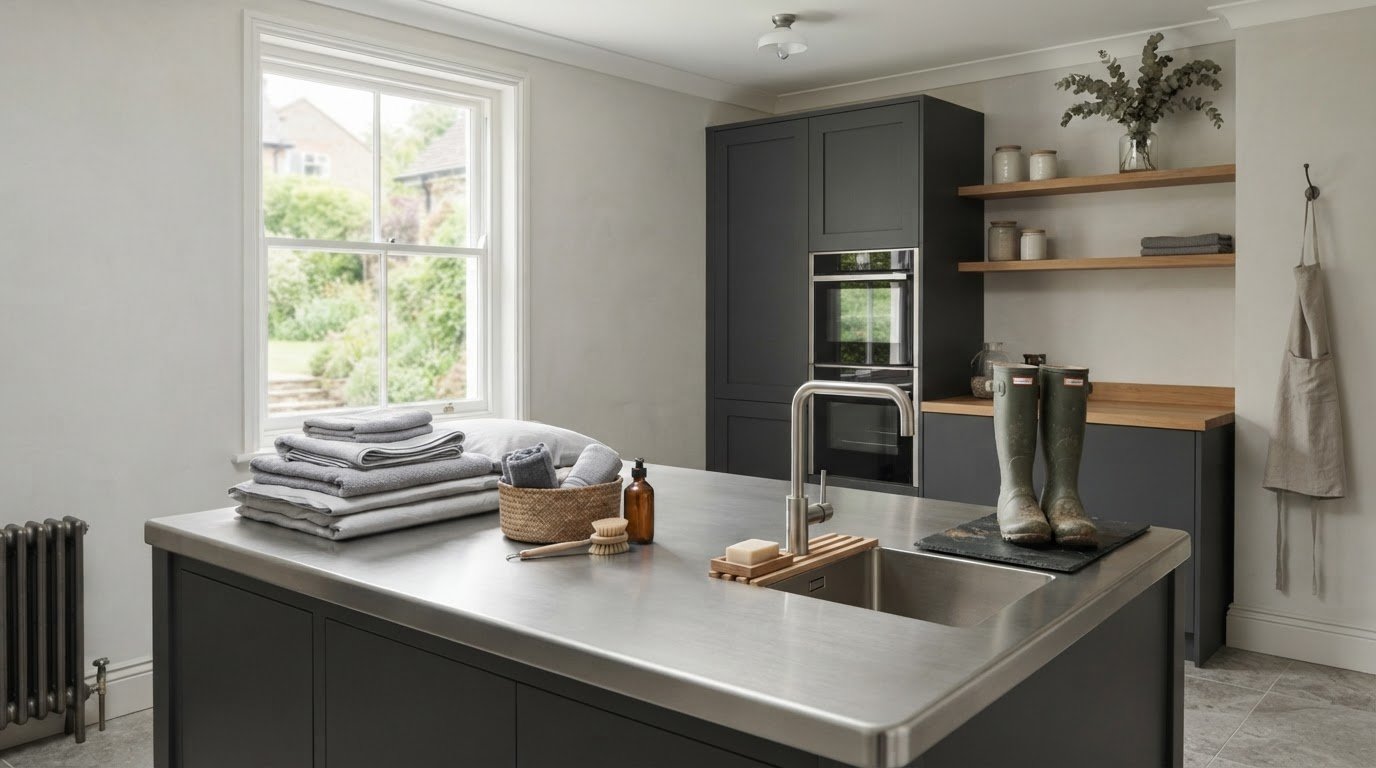
Choose a utility-room worktop for the jobs it needs to handle, not as an afterthought. Hard wearing worktops for utility rooms include stainless steel, quartz and granite, while timber can also work if you are prepared to give it more care around moisture. The right option depends on how you use the room and the finish you want.
It’s reasonable to want a considered-looking surface that can handle laundry, cleaning and muddy paws without worry. Spills and damp affect materials differently, so appearance alone is not a reliable guide to long-term practicality.
This guide explains how to balance style, budget and durability, compare worktop materials, and choose finishes that suit your room. You’ll also see how the intended layout, cleaning habits and level of maintenance can shape the decision, whether the utility room is used mainly for laundry or serves several purposes.
Key Takeaways
- Match the worktop’s size and layout to the room’s main tasks, from laundry folding to cleaning muddy footwear.
- Compare materials by how they handle moisture, stains and everyday wear, as well as the care they need over time.
- Choose a finish that works with your cabinetry and the wider look of your home, without assuming every surface must match.
- Balance the initial budget against durability and maintenance, especially if the worktop will face frequent spills or heavy use.
- Consider how a sink and the surrounding workspace could make cleaning tasks more practical in a utility room.
Balancing style, functionality and budget
A utility-room worktop should suit the room’s daily tasks, available space and style. Balancing those priorities helps you choose a surface that looks good and works hard.
Functional Priorities
Start by matching the worktop’s size and position to the jobs the room needs to handle. A laundry-focused space benefits from clear room for folding clothes; a boot room may need space to clean muddy footwear. Planning around real tasks helps avoid a design that looks good but leaves too little usable surface.
Identify the room’s main purpose, then consider what else happens there. A worktop above the washer and dryer can provide a folding surface without stacking appliances. If the room also stores household supplies or is used for cleaning, allow accessible worktop space for those tasks too.
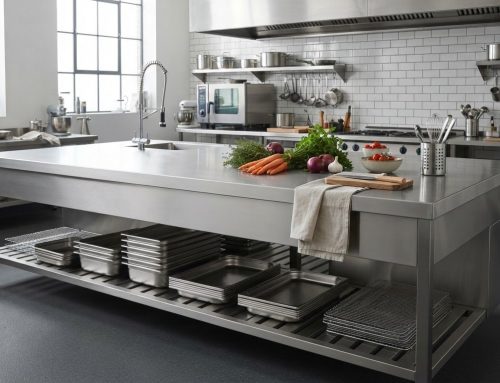
Style should support function, not dictate it. Stainless steel can complement a Scandinavian-inspired utility room with an industrial edge, and its clean lines work well with simple cabinetry. Choose a material and finish to suit the room’s fittings, rather than judging it in isolation.
Budget Considerations
Budget consideration means weighing the worktop, layout and associated fittings as one practical decision. A sink may increase the cost of a utility-room worktop, so include it early in the plan rather than treating it as an afterthought. This helps direct spending towards the features that matter most for your household’s routines.
Prioritise useful surface area over decorative details. Extra room can make folding laundry or cleaning easier, while a cramped worktop can get in the way. A sink also lets you handle cleaning in the utility room instead of the kitchen. Choose its size according to what you expect to wash there.
For example, a spacious sink can accommodate a mop bucket, with useful worktop space alongside. A deep sink and stone splashback may suit heavier cleaning tasks. A stainless steel sink with a chrome or stainless steel mixer tap gives a classic look; a black tap creates a sharper contrast.
Measure the layout around service access as well as visible work surfaces. According to the Scottish Government, units 500mm deep provide a 100mm space for service pipes below the back of the worktop. This clearance can inform how the worktop meets the units and where usable surface begins.
Connect the utility room to the kitchen with a shared colour palette, similar cabinetry details or complementary materials. The finishes do not need to match exactly: a related choice can tie the spaces together while letting the utility room suit its own purpose.
Preventing spills, stains and warping
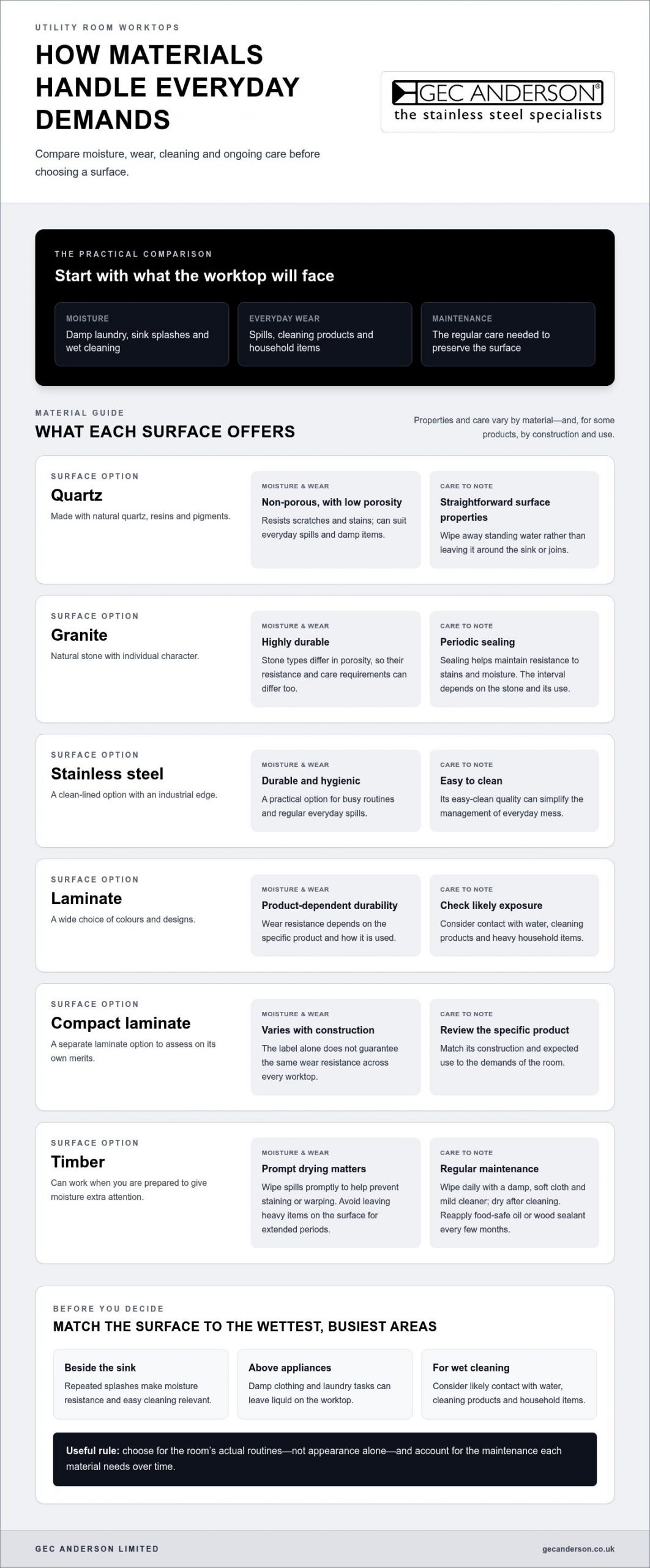
Quartz resists scratches and stains, granite is highly durable, and stainless steel is durable and easy to clean. Laminate and compact laminate vary according to their construction. Granite needs periodic sealing; timber needs prompt wiping, drying after cleaning and regular oil or sealant maintenance.
Comparing Material Durability
Compare how each surface handles laundry, cleaning and frequent spills. A utility room may see regular wet use, not just occasional storage. Quartz has low porosity and resists scratches and stains; granite is highly durable. Stainless steel is durable, hygienic and easy to clean, making it a practical option for busy routines.
Laminate offers a wide choice of colours and designs, but durability depends on the specific product and how it is used. Compact laminate also varies with its construction. Neither label guarantees the same wear resistance across every worktop. Before choosing, consider likely contact with water, cleaning products and heavy household items.
Natural stone has individual character, but its types differ in porosity and care requirements. Granite needs periodic sealing to help maintain resistance to stains and moisture. Quartz is non-porous, with low porosity and resistance to scratches and stains. Stainless steel is easy to clean, which can simplify the management of everyday spills. Match these properties to the room’s demands.
Sealing and Maintenance Needs
Maintenance is part of choosing a worktop, because regular care helps preserve its appearance and practical performance. Timber needs particular attention around moisture: wipe it daily with a damp, soft cloth and mild cleaner, then dry it after cleaning to limit water absorption.
With timber, wipe up spills promptly to help prevent staining or warping. Reapply food-safe oil or wood sealant every few months. Avoid leaving heavy items directly on the surface for extended periods, as they could cause sagging. This care matters especially beside laundry appliances, where damp clothing and cleaning can leave liquid on the worktop.
Granite requires periodic sealing, but the interval depends on the stone and its use. Quartz’s non-porous composition and stainless steel’s easy-clean quality are relevant when comparing routine care; avoid assuming every material follows the same maintenance schedule. For a surface selected partly for straightforward cleaning, stainless steel worktops are one option to consider alongside the room’s other requirements.
Moisture resistance
Moisture exposure varies around the room. Laundry can leave damp fabric on a worktop, while a sink creates repeated splashes. Consider both the material and where water is likely to collect: beside the sink, above appliances or on a surface used for wet cleaning. These conditions help determine the care a finish needs.
Quartz combines natural quartz with resins and pigments to create a non-porous surface. Its low porosity can suit a room where spills and damp items are part of daily life. For example, a laundry worktop may benefit from a surface that does not readily absorb moisture. Wipe away standing water rather than leaving it around the sink or joins.
Granite is highly durable, but periodic sealing helps maintain its resistance to stains and moisture. Because natural stone varies in porosity, factor sealing into the care of a worktop used regularly around water. A surface beside a sink may face more splashes than one used mainly for folding dry laundry.
Solid wood brings warmth to a utility room, but needs occasional care to help protect it from water damage. Dry the surface after cleaning and wipe spills promptly. These steps help limit water absorption and reduce the risk of staining or warping. A timber worktop beside a sink needs more attention than one used mainly for folding dry laundry.
Stainless steel is durable, hygienic and easy to clean, making it a practical choice for a utility room with frequent splashes. Consider laminate and compact laminate according to their specific construction and intended use; performance around moisture varies. With any material, pay attention to edges and joins where droplets can collect.
Match a material’s moisture performance to the room’s routine. A laundry-only space may have different demands from one used for muddy boots, pets or household cleaning. If the worktop is beside a sink, consider how often it will get wet and whether the required care suits your habits. Granite sealing and timber care are recurring tasks, while quartz is non-porous.
Moisture resistance does not remove the need for sensible care. Dry wet areas after use, clear spills promptly and factor in timber maintenance. If you want the utility room to relate visually to the kitchen, balance that continuity with the room’s exposure to water. The best fit suits both your preferred finish and the cleaning routine you can maintain.
Worktop finishes and texture
A considered finish can link a utility room to the kitchen without making the spaces identical. Balance colour, texture and layout so the worktop looks at home beside the cabinetry, sink and appliances.
A worktop finish does not determine building requirements. Those depend on the wider project and installation, especially if fixed services or the room layout are affected. There is no single finish for every UK utility room. Treat the worktop as part of the overall design, and plan the installation separately.
Thickness and edge profiles vary by material and specification. A slim-looking surface can feel restrained, while a deeper-looking edge adds emphasis. Straight edges create a crisp outline; softened or bevelled edges give a gentler detail. Compare profiles with cabinet fronts and the sink position, since edges stand out at worktop ends and openings.
Measure each cabinet run and note the sink, appliances and visible pipes. Mark where the worktop ends, where cut-outs are needed and which edges will be exposed. An appliance beneath the surface affects the available depth, while a sink opening reduces the uninterrupted work area. These details help the finished worktop fit the room’s layout.
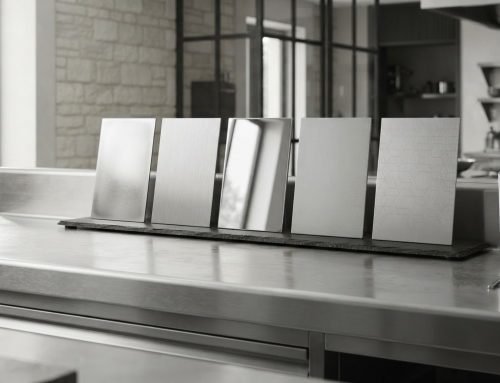
Colour and texture shape the room’s feel. Laminate comes in a wide range of colours and designs, making it easy to carry a planned palette through cabinetry and walls. Granite has distinctive veining and colour variation; granite, marble, quartzite and limestone all vary in colour, veining and texture. Natural stone gives each surface its own character rather than a uniform look.
Honed stone has a softer, more understated appearance than polished stone. A honed finish can temper prominent cabinetry, while a polished one creates a more reflective look. A strongly patterned worktop usually pairs well with quieter cabinets; a restrained surface can let painted furniture or architectural details take focus.
Consider warmth as well as contrast. Complementary stone, related cabinetry details or a shared palette can connect the utility room and kitchen without exact matching. For instance, repeat a cabinet colour in a quieter worktop tone, or make veining the room’s main visual feature. This keeps the finish connected to the home while giving the utility room its own identity.
Which worktop materials are most hard-wearing for UK utility rooms?
When comparing hard wearing worktops for utility rooms, weigh daily tasks, cleaning habits and maintenance preferences. Utility surfaces may handle soaking laundry, cleaning vegetables or rinsing muddy paws, so durability matters even if the room is used less often than the kitchen. Compare resistance and upkeep together, rather than judging a worktop by appearance or initial cost alone.
Quartz combines natural quartz with resins and pigments to create a non-porous surface. Its low porosity and resistance to scratches and stains suit regular household use. Engineered stone offers a more consistent appearance than natural stone and is designed and manufactured to last for decades. These qualities can appeal if you prefer a uniform finish.
Granite is highly durable, with distinctive veining and colour variation. Its natural character comes with a care requirement: periodic sealing helps maintain resistance to stains and moisture. Consider the stone’s porosity and upkeep, particularly if you will use the worktop daily or place it near frequent splashes.
Stainless steel is durable, hygienic and easy to clean. It suits a utility room where regular cleaning is part of the routine and its industrial appearance can shape the design. Timber offers a warmer look but needs more considered care, particularly around moisture. Dry it after cleaning and maintain it periodically to help protect it from water damage.
- Quartz: low porosity and resistance to scratches and stains support regular use.
- Granite: durable and individually patterned, with periodic sealing required.
- Stainless steel: a hygienic, easy-clean surface for frequent household tasks.
- Timber: adds warmth, but needs more care around moisture.
- Laminate: available in varied colours and designs; assess the chosen surface for its intended use.
Laminate and compact laminate do not have identical performance. Durability depends on the material and its construction, so compare the specific worktop with the tasks it will face. A laundry area used mainly for folding has different demands from one used regularly for wet cleaning or muddy footwear.
The most suitable hard wearing worktops for utility rooms are those that fit both the workload and the care you’re prepared to give them. Avoid choosing solely by initial spend; maintenance and everyday practicality also shape the decision. If stainless steel suits your priorities, explore stainless steel worktops as an option for your utility room.
Choosing a cheaper material may be a mistake: utility rooms still need a durable, hardwearing worktop. Engineered stone offers a more consistent appearance than natural stone while retaining practical qualities.
GEC Anderson Limited: Stainless Steel Worktops
GEC Anderson Limited supplies stainless steel worktops for utility rooms where a durable, easy-to-clean surface is a priority. Choose from standard, modular and made-to-measure worktops to suit different layouts and project scales. A stainless steel sink can create a coordinated working area, while stainless steel cabinets and shelving help organise the room.
Stainless steel is worth considering if your utility room sees frequent cleaning, laundry or everyday splashes and you want a practical, clean-lined finish. The right worktop configuration depends on the room’s layout and intended use.
Contact GEC Anderson Limited to discuss stainless steel worktops for your utility room.
Shape a utility room around everyday use
Choosing hard wearing worktops for utility rooms is a chance to make the space work as a considered part of your home, not an afterthought. Start with the tasks the room needs to support, then decide how its surfaces and fittings should relate to the rest of your interior. This keeps the design purposeful and gives each element a clear role.
GEC Anderson Limited supplies stainless steel worktops, sinks, cabinets and doors for coordinated utility-room designs. These products can support a practical, consistent scheme, whether you are planning a new room or updating an existing one.
The next step is to bring your priorities together: the room’s layout, the finish you prefer and the tasks it needs to accommodate. A clear brief makes it easier to shape a solution around your home and daily routines. Contact GEC Anderson Limited to discuss your utility-room project and take the next step with confidence.
Frequently Asked Questions
Which utility worktop materials resist water, detergent, bleach and heat best?
Quartz and stainless steel are strong options for wet utility-room tasks, but their care requirements differ. Quartz is non-porous and resists stains, while stainless steel is easy to clean and resistant to hot pans. Do not assume any surface is unaffected by cleaning products: synthetic detergent residue can discolour stainless steel if left in contact. Follow the care instructions for your chosen material, especially after cleaning.
What are the typical UK prices per metre for utility room worktops by material?
Prices depend on the material, dimensions and specification, so compare like-for-like worktops rather than relying on a single rate. Edge profiles, sink bowls and cut-outs affect the final price. For other materials, the overall specification and supplier determine the quote, so compare the same dimensions and required features.
What are the risks of water damage around utility sinks and washing machines, and how can worktops prevent it?
Standing water near a sink, appliance or worktop edge can seep into vulnerable materials and contribute to swelling, staining or warping. Timber needs prompt care: wipe up spills immediately and dry the surface after cleaning. Plan sink and appliance openings carefully, avoid pooled water around joins and edges, and dry splashes after use. Non-porous quartz can reduce absorption across the worktop itself.
Where can UK homeowners buy durable utility room worktops, and what warranties are offered?
UK homeowners can order GEC Anderson products directly or through their preferred builder’s merchant. Made-to-measure worktops are specified to suit the required shape and layout, with sink bowls and cut-outs affecting the final specification. Warranty coverage should be assessed from the written terms for the particular product. Review what those terms cover, any care conditions, and the process for raising a claim before placing an order.