
A commercial worktop should be designed around the kitchen, not treated as a standard surface. Bespoke commercial kitchen worktops in stainless steel can be made to suit a space’s dimensions and working requirements. They are a practical option when standard sizes or layouts do not fit the plan.
Getting the details right matters: the surface should support the intended workflow, while its finish and features suit how the kitchen is used. This guide covers what bespoke worktops can include and what to consider when specifying one, including cleaning and everyday use.
You’ll find an overview of stainless steel grades and finishes, custom features such as recessed drainers and drainer grooves, and the factors that shape a successful specification. The article also explains how GEC Anderson’s made-to-measure stainless steel worktops fit into the process, from setting requirements to planning the finished installation.
Key Takeaways
- Match the stainless steel grade to the kitchen environment, particularly where salt, acidic foods or aggressive cleaning agents are present.
- Plan the worktop around the way each station is used, with bespoke details such as recessed drainers, drainer grooves or modular panels.
- Natural metal finishes can show marks from the rolled sheet, which may be visible under certain lighting.
- Consider how the worktop, sinks, cabinets and shelving will work together when planning a commercial kitchen.
- Assess the finish and functional details as part of the specification, not as choices to make after the layout is settled.
Are stainless steel worktops easy to clean?
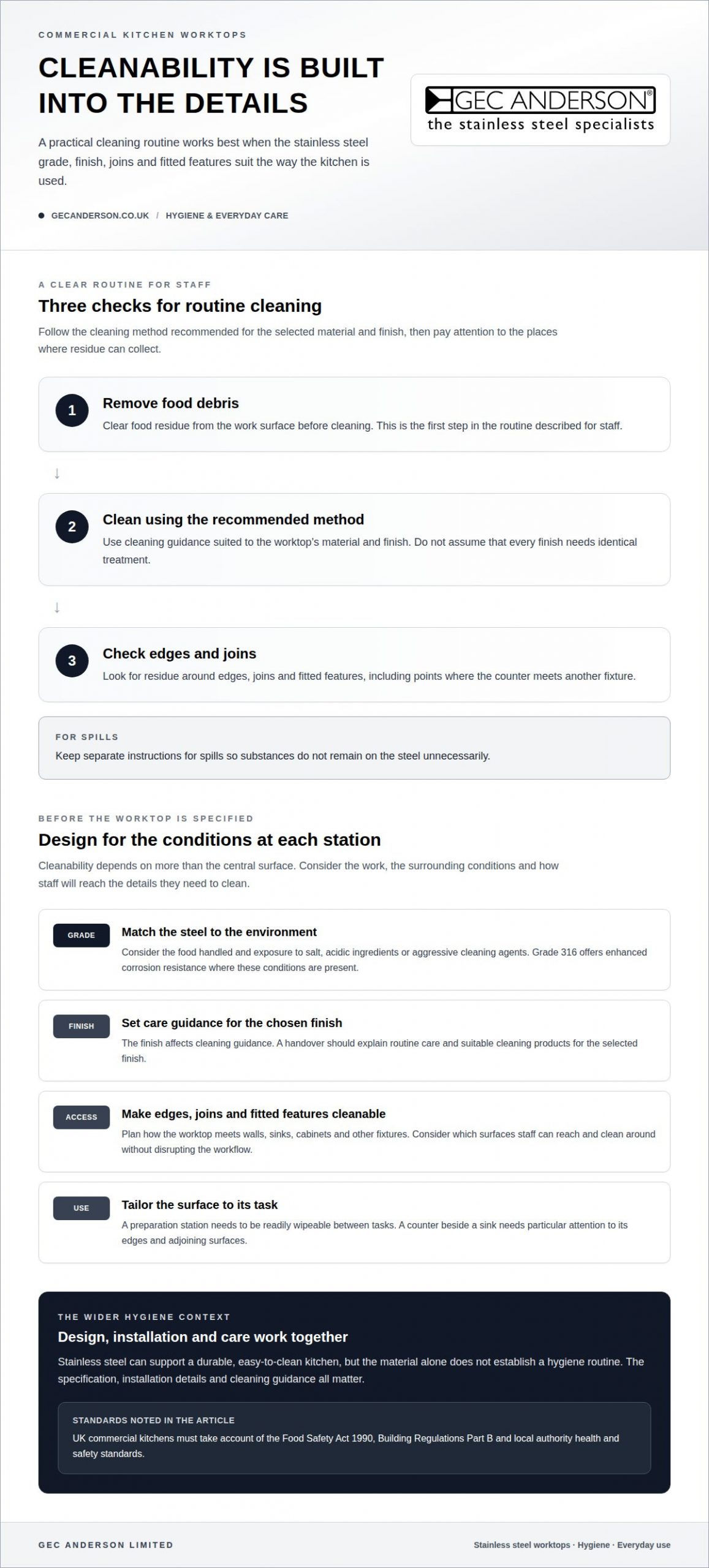
Yes. Stainless steel is heat-resistant and easy to clean, making it a practical surface for commercial kitchens. Cleanability also depends on the finish, joins and routine care.
According to UK Parliament, UK commercial kitchens must take account of the Food Safety Act 1990. They must also take account of Building Regulations Part B and local authority health and safety standards. Worktop design should support the kitchen’s hygiene procedures and safe operation.
Worktop Durability and Maintenance
Durability depends on the kitchen’s workload and the conditions around each work surface. A busy preparation counter faces repeated contact with utensils, containers and food, while a wash-up area may encounter more moisture. Grade 316 stainless steel offers enhanced corrosion resistance where salt, acidic foods or aggressive cleaning agents are present.
Plan maintenance around how the surface will be used and cleaned during each shift. A handover should explain routine care for the selected finish, suitable cleaning products and how to address spills or visible damage. Clear instructions help staff care for the worktop consistently, rather than relying on a generic method.
Hygiene and Cleanability
Effective hygiene depends on the whole work surface, not just its central area. Residue can collect around joins, edges and points where a counter meets another fixture. A hygienic design considers which surfaces are accessible and how staff can clean around fitted features without disrupting the kitchen’s workflow.
Cleaning guidance should set out a clear routine suited to the material and finish. Staff can remove food debris, clean the surface using the recommended method, then check edges and joins for residue. Separate instructions for spills help prevent substances from remaining on the steel unnecessarily.
Assess cleanability in the context of the worktop’s location and use. A preparation station needs a surface staff can wipe readily between tasks; a counter beside a sink needs particular attention to its edges and adjoining surfaces. Clear care instructions help teams work efficiently without assuming every finish requires identical treatment.
Stainless steel can support a durable, easy-to-clean kitchen, but material alone doesn’t establish a hygiene routine. The specification, installation details and cleaning guidance all matter. Consider the food handled, exposure to salt or acidic ingredients, and the cleaning agents used. Those factors help determine whether a grade such as 316 is appropriate and what maintenance guidance staff need.
Do you make stainless steel counters or work surfaces for commercial use?
Yes, stainless steel counters and work surfaces can be specified for commercial environments. The design depends on the work, available space and how staff use each station. Hospitality kitchens, healthcare facilities and industrial workshops have different priorities, so the worktop should suit its purpose rather than follow a standard domestic layout.
In hospitality and food service settings, work surfaces support preparation, plating and cleaning. A chef’s preparation counter, for example, may need a clear working area beside a sink. A service counter may instead need to support the handover of finished dishes. Mapping these tasks helps define dimensions, position and adjoining equipment before finalising the specification.
Healthcare facilities also need carefully considered layouts. A staff refreshment area has different tasks from a clinical support room, so the planned use should guide the worktop arrangement. Specify how the surface meets walls and neighbouring fixtures, and consider whether edges or joins could obstruct cleaning. These details help integrate the counter into the room’s hygiene routine.
Office and staff kitchens are often designed for shared use. A worktop beside a sink can support washing and preparation, while a separate surface can provide space for drinks or food. In an office or fire station, the design should reflect circulation and daily activities. Locating counters away from busy routes can help keep work areas organised.
Retail environments may use stainless steel surfaces in staff kitchens, preparation areas or back-of-house facilities. Industrial settings bring different requirements: intended loads, surrounding processes and exposure to materials should inform the specification. Define each station’s purpose and how staff move between it and other equipment, rather than assuming every location needs the same construction.
A tailored specification starts with the room plan and a description of the work. It considers counter dimensions, adjoining sinks or cabinets, cleaning access and the required finish. In a multi-use staff kitchen, for instance, the design may need to accommodate food preparation and washing without crowding either activity. This gives architects, facilities teams and operators a clear basis for reviewing the proposal.
Stainless steel worktops can be designed for hospitality, healthcare, office, retail and industrial applications. The important distinction is the working environment, not simply the sector name. A work surface designed around its tasks, traffic and hygiene requirements is more likely to support an orderly facility. Explore commercial stainless steel work surface options as part of that specification.
Potential imperfections in natural metal finishes
A natural metal finish retains more of the sheet’s visual character than a uniformly altered surface. Rolled metal sheets can have visible imperfections that polishing may not remove. These marks may stand out in particular lighting, so consider the expected appearance before choosing a finish for a prominent counter.
Metal worktops may be specified in natural, matte, antique distressed or antique zinc finishes. Each creates a different visual effect. A natural finish makes the metal’s character part of the design, while matte gives a more subdued appearance. Antique finishes create a deliberately aged look rather than a uniform contemporary surface.
Brushed, satin and mirror-polished are also useful terms to discuss when setting expectations. A brushed finish shows directional lines; satin has a softer sheen, while mirror-polished steel reflects its surroundings more strongly. Lighting, nearby colours and use affect how each finish appears. For example, overhead lights can be especially noticeable on a reflective counter.
These distinctions matter most in visible work areas, including serving counters and open kitchens. Choose a finish for the room and its lighting, not just by viewing a small sample in isolation. Compare samples under the planned installation lighting and consider how the material looks beside cabinetry, splashbacks and other surfaces.
Edge profiles affect the worktop’s visual line and how it meets adjoining elements. Include the intended edge in the drawing or specification alongside the worktop dimensions and joins. This lets the design team consider transitions at walls, sinks and neighbouring counters together. The word “bespoke” alone does not communicate these details.
Finish selection is more than a choice between polished and unpolished steel. A natural finish may suit a design where variation is welcome; a more consistent visual effect may suit another interior. Consider the worktop’s prominence, surrounding materials and tolerance for visible marks. Reviewing a sample can help clarify these preferences.
Consider maintenance alongside appearance. A distinctive finish should suit the cleaning routine and working conditions of its station. Where stainless steel meets another material, consider the transition and whether the junction remains accessible for cleaning. An adjoining material may need different care, so address both surfaces in the overall specification.
Before manufacture, document the chosen finish, edge profile and adjoining details in the project specification. This gives the design, production and installation teams a shared reference. It also helps prevent a mismatch between a small sample and a large installed surface, where changes in light can alter the overall impression.
Custom stainless steel commercial and industrial kitchens
Custom fabrication lets work surfaces follow a kitchen’s layout and operational demands. The specification should account for the tasks, materials and working conditions at each station.
There is no single UK price for a bespoke worktop. The specification, material, dimensions, finish, edge details and fabrication complexity all affect the cost.
For a UK project, look for a commercial stainless steel specialist able to work from drawings or templates. The supplier’s project scope should suit the site and the required worktop specification.
Custom Fabrication and Project Enquiries
A useful project enquiry sets out the kitchen’s purpose, layout and worktop requirements. For a restaurant, this might include preparation areas, adjoining sinks and space for staff to move. Industrial worktops may need a different specification depending on exposure to impact, heavy loads or chemicals.
Custom fabrication translates those requirements into a workable design. A detailed drawing or template can communicate dimensions and the position of cut-outs or adjoining fixtures. Clear project information helps the fabricator assess functionality before production begins.
Pricing Factors
Price reflects the full specification, not just the worktop’s overall size. The selected stainless steel, finish, edge profile, formed details and number of joins can all affect fabrication. A straightforward counter differs from a design with several sections, cut-outs or close interfaces with other fixtures.
Site conditions also shape the project scope. Access, the relationship to existing surfaces and the accuracy of drawings can affect installation planning. A clearly defined brief helps keep the quotation aligned with the intended design.
Manufacturing and Installation Timescales
Manufacturing and installation timescales depend on the specification and project sequence. A worktop requiring detailed fabrication or coordination with sinks and cabinets needs different planning from a simple straight run. Finalised drawings establish the design before manufacture and reduce the risk of changes during production.
Installation planning also depends on site readiness and access. Existing fixtures, delivery routes and coordination with other trades can affect when the worktop can be fitted. Build these dependencies into the project programme instead of treating fabrication and installation as separate decisions.
Before production, the fabricator uses the project information to resolve dimensions, joins and interactions with adjoining fixtures. For industrial applications, the design can account for impact, heavy loads and chemical exposure where needed. For restaurants, the focus may instead be the arrangement of preparation and service stations. In both cases, drawings and templates connect the site requirements to fabrication, helping the finished worktop serve its intended purpose.
Bespoke commercial and architectural stainless steel worktops
Architectural stainless steel worktops are designed as part of a room, not simply placed within it. Their dimensions, edges and functional details can follow the planned layout and relate to adjoining fixtures and the wider interior. Resolve appearance and use together before the specification reaches fabrication.
Start with the plan view and identify each worktop’s purpose. A preparation counter, service surface and wash-up area each relate differently to staff, equipment and surrounding spaces. Marking their positions on a drawing helps define where the worktop begins and ends, how it meets walls and where adjoining elements must align.
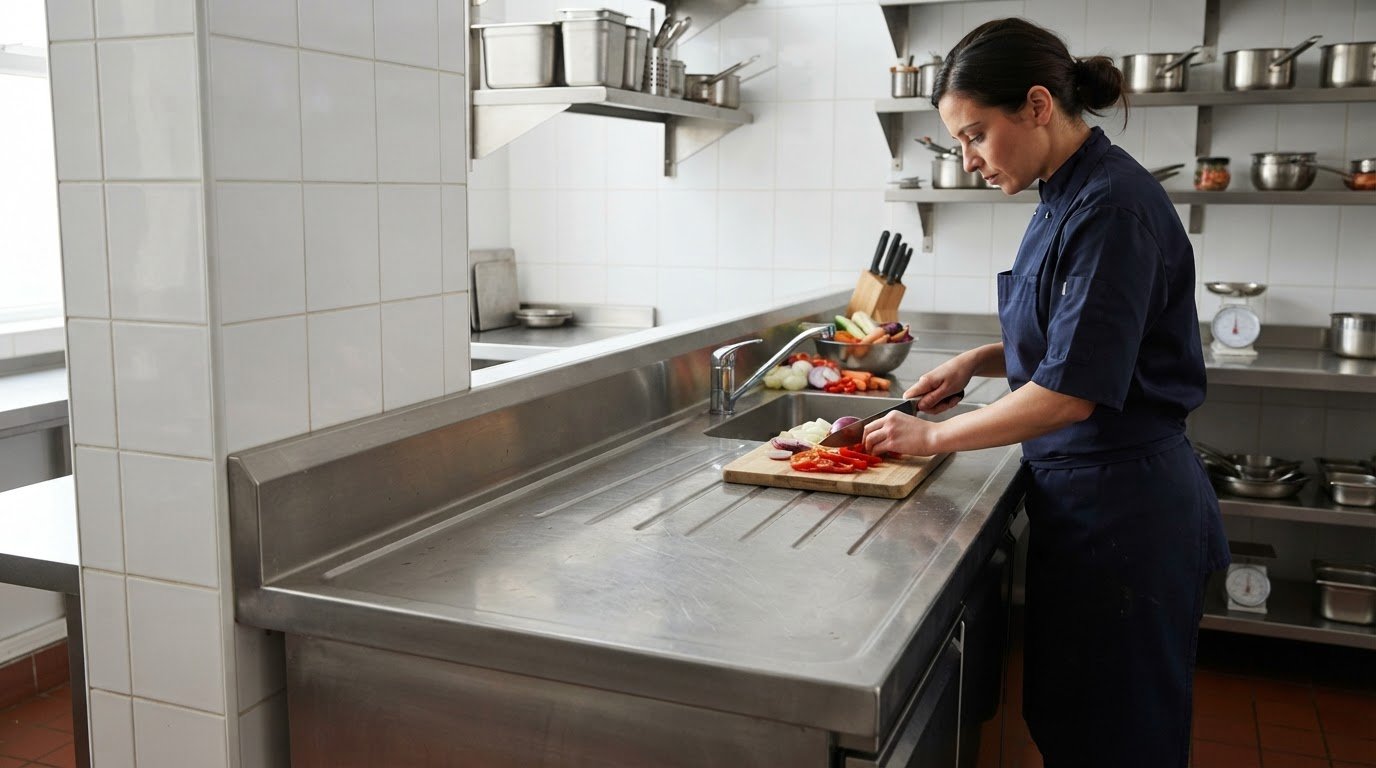
Custom details can shape both the working surface and its visual character. Recessed drainers, drainer grooves and modular panels are available features for commercial worktops. A recessed drainer can sit beside a sink, while grooves can direct water towards a chosen area. Modular panels can organise a larger surface into sections for particular tasks.
Worktop folds also affect the design at the perimeter. One bespoke example uses folds 50mm underneath the worktop. Including this detail in the drawing gives the design team a clear reference for the underside as well as the visible edge. The fold should be considered alongside adjoining cabinets and the intended installation, rather than treated as a separate afterthought.
Material and finish influence how the worktop fits within an architectural scheme. Natural, matte, antique distressed and antique zinc finishes each create a different visual effect. Choose a finish that suits the surrounding surfaces and the room’s character. Samples help assess how the metal looks beside cabinetry, splashbacks and other specified materials. In high-end commercial and residential settings, interior design studios such as heime.design often coordinate bespoke metal fixtures alongside surrounding joinery and finishes to ensure a unified aesthetic.
A well-developed specification brings these decisions together. It records dimensions, joins, edge treatment, finish and the position of each requested feature. For example, a drawing can show a sink, recessed drainer and modular worktop section in relation to one another. This clarifies the intended layout for design and fabrication and gives the finished worktop a defined role.
Even an exceptional design needs practical scrutiny. Check that proposed features suit the tasks at each station, adjoining surfaces remain accessible and the material can withstand the expected conditions. A distinctive surface should still meet the kitchen’s working requirements. Resolving that balance on paper helps prevent aesthetic decisions from compromising functionality.
For a project that needs made-to-measure stainless steel detailing, discuss a bespoke worktop specification as part of the architectural plan.
GEC Anderson Limited: Stainless Steel Worktops
GEC Anderson Limited supplies stainless steel worktops for commercial kitchen projects, with standard, modular and made-to-measure options for different project scales. Its made-to-measure worktops can be specified for a particular size or configuration.
For a coordinated working area, stainless steel sinks, cabinets and doors, and shelving can also form part of the project specification. Drawings or templates help communicate the intended dimensions and how each element relates to the kitchen layout.
Contact GEC Anderson Limited to discuss stainless steel worktops for your project.
Shape the specification around the way your kitchen works
The next step is to turn design intentions into a clear project brief. Identify who will use the kitchen, the activities each area must support and the decisions that need approval. This keeps the specification connected to daily operations, rather than treating the worktop as an isolated component.
For bespoke commercial kitchen worktops, a considered brief gives the project team a shared basis for progressing the design. Bring together the layout, chosen finish and required details, then resolve any outstanding decisions before manufacture. That clarity helps align the finished surface with the wider kitchen plan and the demands of the business.
Move forward with a defined set of requirements and a clear view of how the space should function. Contact GEC Anderson Limited to discuss your project and its worktop specification. A focused conversation can help establish the right next step for your kitchen.
Frequently Asked Questions
Can you create bespoke features for commercial worktops?
Yes. Made-to-measure designs can include custom shapes, edge profiles, sink bowls and cut-outs. For example, a project drawing can show a bowl position and the cut-out needed for adjoining equipment. GEC Anderson prepares a pre-production drawing for approval on special orders, helping align the requested details with the intended worktop before production begins.
Can you make worktops with integrated sinks or upstands?
Integrated sinks can be incorporated into made-to-measure stainless steel worktops, with seamless edges available as part of the design. Stainless steel splashbacks provide an adjoining surface at the wall. Show the sink position and the relationship between the worktop and splashback in the drawing to clarify the arrangement before ordering.
Do you fit industrial kitchen worktops?
GEC Anderson offers measuring and installation services for stainless steel products, including worktops for industrial kitchens. Installation can be planned alongside the specified worktop and its supporting cabinets. State whether the project is supply-only or includes measuring and installation, so the scope and site coordination are clear from the outset.
What materials are best for bespoke commercial kitchen worktops in the UK?
The most suitable material depends on the kitchen’s tasks and working conditions. Stainless steel grades vary in their resistance to corrosion, so choose one suited to the kitchen’s working conditions. Grade 316 offers enhanced corrosion resistance where salt, acidic foods or aggressive cleaning agents are present, making exposure an important specification factor.
What worktop surfaces meet commercial kitchen requirements for hygiene and durability?
Choose a surface and design that support the kitchen’s cleaning routine and intended use. GEC Anderson’s stainless steel surfaces are hygienic and resistant to hot pans, cutting and vandalism. For routine care, follow the grain when applying cleaning material, rinse with cold water and dry with a soft cloth. This helps preserve the surface and its appearance.
How do stainless steel, granite, quartz and solid-surface worktops compare for commercial kitchens?
Stainless steel is a durable option with hygienic surfaces and resistance to hot pans, cutting and vandalism. Quartz is non-porous, while granite and solid-surface materials should be assessed against the kitchen’s use, cleaning routine and design requirements. Rather than assume one material suits every operation, consider the full specification, including joins, edges and expected exposure at each station.
How are bespoke commercial kitchen worktops measured, designed and installed?
The process starts with the required dimensions, shape, edge details, bowl positions and cut-outs. GEC Anderson provides a pre-production CAD drawing for a special order, which the customer approves before production. Templates are not required for every order; a site visit may be arranged for measurements or templates when installation is required. The project can be specified as supply-only or with measuring and installation.
What are the risks of choosing unsuitable worktop materials or installation?
An unsuitable material may not withstand the kitchen’s particular conditions. Chloride-containing substances such as salt can cause point-etching on stainless steel if left in contact with the surface. Poorly resolved dimensions or interfaces can also complicate fitting and cleaning around joins or adjoining fixtures. Specify the working conditions and layout clearly, then coordinate the worktop design with its installation requirements.