
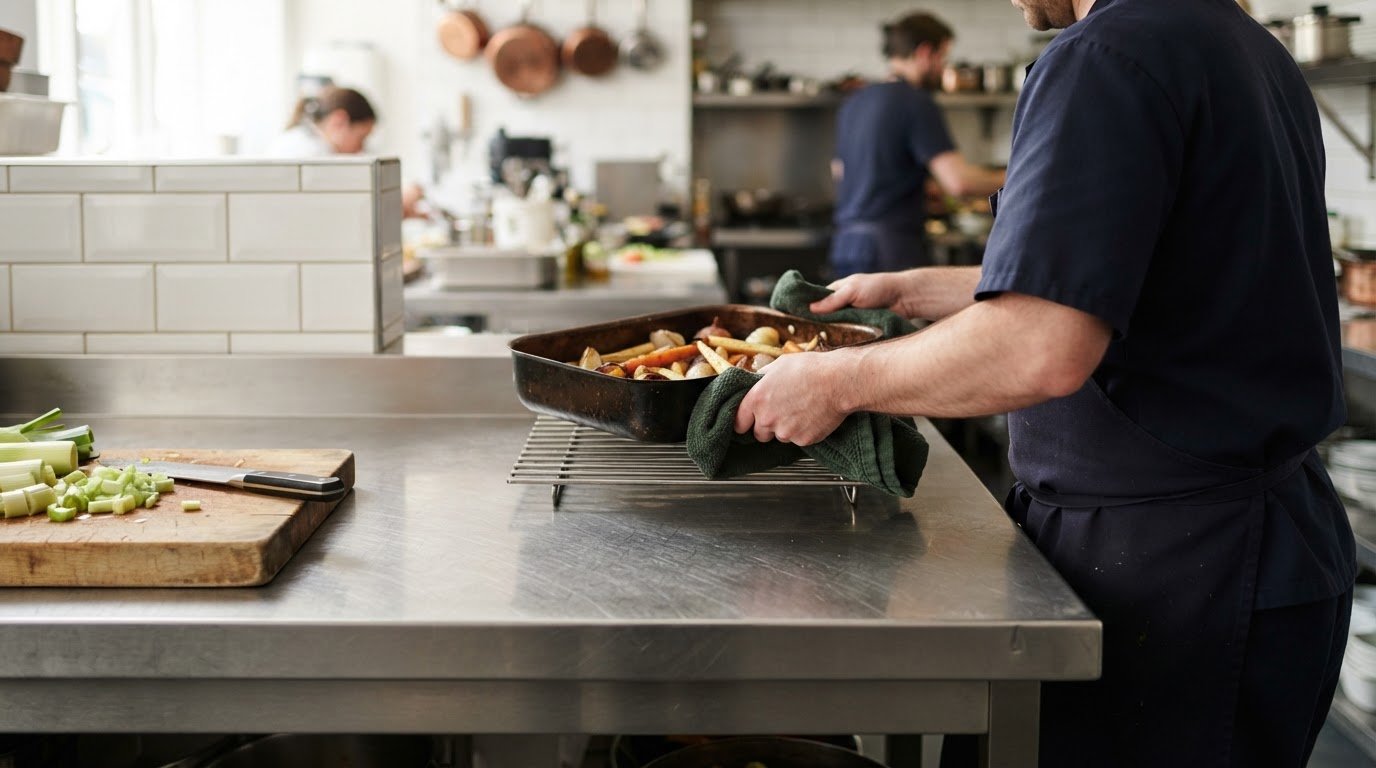
A worktop can be durable without staying mark-free. With care, the durability of stainless steel countertops can extend to 20 years or more: the surface resists heat and staining, but scratches, dents and fingerprints can appear with everyday use. Its appeal is not an untouched finish, but a robust surface that can develop a consistent patina over time.
It’s reasonable to expect a hard-wearing worktop to withstand daily use and remain easy to clean. Stainless steel is heat-resistant and non-porous, although a trivet for hot pans and a chopping board for food preparation help protect its finish. Regular cleaning also keeps fingerprints and water spots in check.
This guide explains how stainless steel responds to heat, scratches and ageing, then compares its practical strengths and care requirements with granite, quartz and wood. You’ll be able to judge which material best suits your priorities, whether you prefer a surface that develops character through use or one that keeps a more uniform appearance.
Key Takeaways
- Stainless steel resists heat and staining, but using a trivet helps protect its finish from hot cookware.
- Use a chopping board to limit scratches; everyday marks can gradually blend into a consistent patina.
- Compare materials by their upkeep as well as appearance: wood needs regular oiling, whilst stainless steel can show fingerprints and water spots.
- Choose the surface that suits how you cook and how you want your worktop to age, whether that means a developing patina or a more uniform appearance.
- With care, stainless steel worktops can last 20 years or more, making long-term maintenance part of the material choice.
Heat resistance
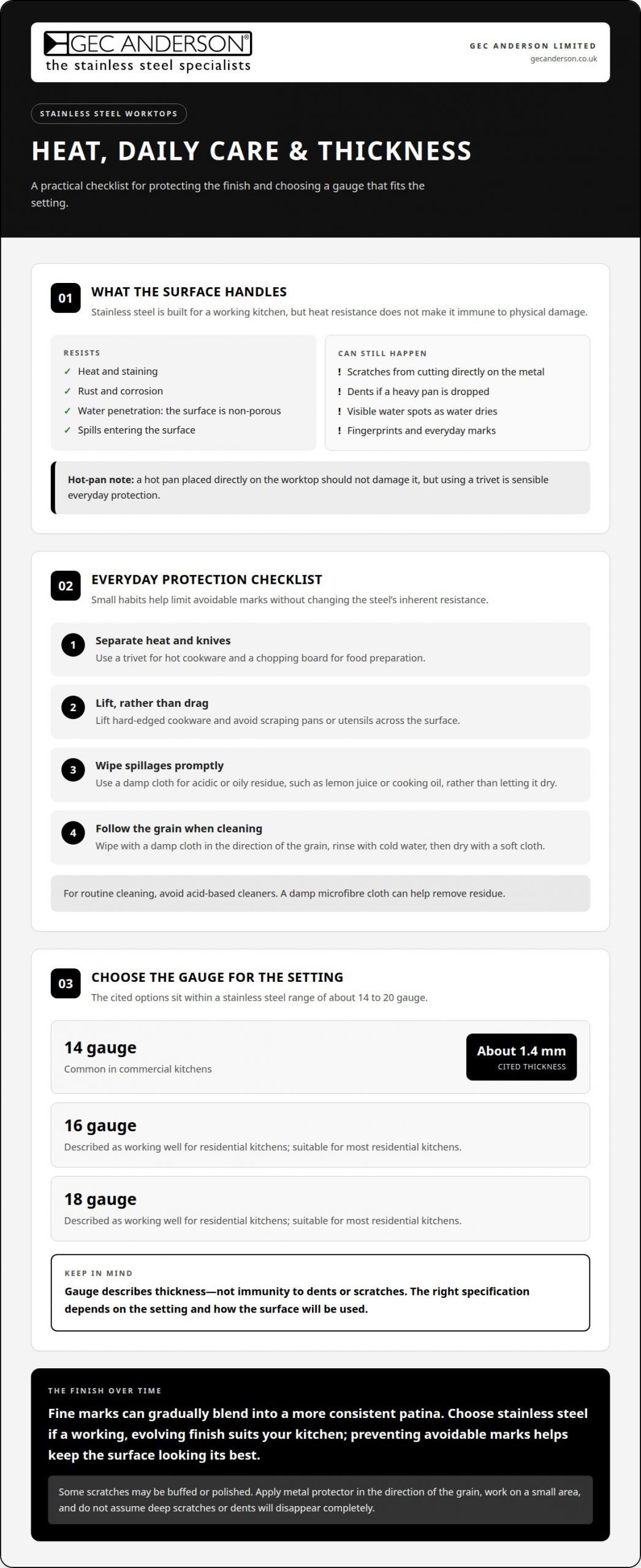
Yes. Stainless steel resists heat, staining, rust and corrosion, and spills do not penetrate its non-porous surface. A hot pan placed directly on the worktop should not damage it, although using a trivet remains sensible protection during everyday cooking.
Heat resistance is only one part of performance in a busy kitchen. Wipe up acidic or oily spillages promptly to help keep the surface clean. Wipe up a splash of lemon juice or cooking oil with a damp cloth rather than leaving residue to dry. Its non-porous surface is resistant to bacteria and germs, and is straightforward to clean and sanitise.
Water cannot penetrate the worktop surface, making stainless steel practical around a sink, where splashes and minor spills are routine. However, water can leave visible spots as it dries. For routine cleaning, use a damp cloth, following the grain, then rinse with cold water and dry with a soft cloth.
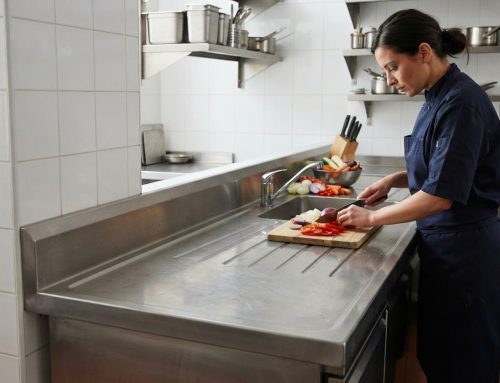
Heat and chemical resistance do not make the surface immune to physical damage. A heavy pan dropped onto the worktop can dent it, while cutting directly on the metal can scratch it. A trivet limits direct contact with hot cookware; a chopping board separates knives from the surface. These habits protect the finish without changing the material’s inherent resistance to heat, water or staining.
Worktop thickness is another specification to consider alongside daily use. Stainless steel is available in gauges from about 14 to 20; the figures below show the cited residential and commercial contexts.
| Option | Thickness or range | Typical context |
|---|---|---|
| 14 gauge | About 1.4 mm | Common in commercial kitchens |
| 16 gauge | Within the available 14-20 gauge range | Suitable for most residential kitchens |
| 18 gauge | Within the available 14-20 gauge range | Suitable for most residential kitchens |
Gauge describes thickness, not immunity to dents or scratches. For a residential kitchen, 16- or 18-gauge steel is described as working well; commercial kitchens commonly use 14-gauge. The right specification depends on the setting and how the surface will be used.
Choose stainless steel if heat resistance, easy cleaning and resistance to staining matter most. Use a trivet and chopping board to reduce avoidable marks.
Protecting stainless steel from scratches
Everyday use can scratch stainless steel, but marks do not necessarily mean the surface has failed. The practical choice is whether you want to minimise visible wear or accept a finish that changes gradually.
Scratches and patina
A scratch is a visible mark; with repeated use, individual fine marks can blend into a more consistent patina. This gradual change distinguishes stainless steel from materials chosen to retain a uniform appearance. For example, cookware moved across the same preparation area may leave fine marks that become less distinct as the surface develops its character.
Impact can leave dents as well as scratches, and scuffs may add to the visible signs of use. These marks affect appearance, but they don’t alter the fact that stainless steel can remain a functional work surface. The key decision is aesthetic: a lived-in, evolving finish may suit a working kitchen, whilst a pristine look demands more care.
Prevent avoidable marks by using a chopping board instead of cutting directly on the worktop. Lift hard-edged cookware rather than scraping it across the surface. When planning a kitchen, consider where preparation and appliance use will take place; concentrated activity in one area can make wear more noticeable there.
Polishing out scratches
Some scratches can be buffed out and polished, though the result depends on the mark and the finish. For a small scratch, metal protector can be applied in the direction of the grain. Following the grain matters: rubbing across it can create marks that contrast with the surrounding surface.
Work carefully and treat a small area at a time. First, identify the grain, then apply the protector in that direction. Avoid vigorous circular rubbing, which works against the linear finish. If the mark remains visible, polishing may help; don’t assume every deep scratch or dent will disappear completely.
Prevention is more reliable than repeated correction. Use a board for chopping, avoid dragging utensils or pans, and wipe away residue with a damp microfibre cloth. For cleaning, follow the grain and avoid acid-based cleaners. These steps help limit new marks while keeping the surface clean.
Some stainless-steel surfaces can be sealed to help prevent scratching, but this doesn’t make the worktop scratch-proof. A protective treatment is best understood as one part of care, alongside careful use and appropriate cleaning. If the kitchen’s design prioritises a consistent finish, account for visible wear when choosing the material and planning its use. If a developing patina is acceptable, routine precautions can reduce unnecessary damage without preventing normal kitchen work.
Comparison with granite, quartz and wood
Stainless steel, granite, quartz and wood differ in composition, surface behaviour and upkeep. Compare how each material responds to daily preparation, visible wear and cleaning, rather than treating durability as a single quality.
Stainless steel has a non-porous surface that resists corrosion and staining, but it can show scratches and dents with use. Those marks may become part of its appearance over time. It is a practical choice for a kitchen where easy cleaning and a working finish matter more than keeping the surface looking untouched.
Quartz worktops typically contain around 5-10% resin. Quartz does not dent or scratch in the same way as stainless steel, so it presents a different balance between surface behaviour and the character that develops with use. If reducing visible marks is a priority, that distinction may matter. Stainless steel, by contrast, can retain an even, silvery appearance despite hits and scratches, although individual marks may still be visible.
Granite is another option to assess against your kitchen’s practical and visual requirements. Rather than asking simply whether granite or metal is “harder”, consider the appearance you want, how you prepare food and the maintenance you are willing to undertake. If a naturally varied look is central to your design, granite may suit that preference. If you want a continuous metallic finish, stainless steel aligns more closely.
Wood brings a warmer material character, but it needs regular oiling to maintain its condition. Include that ongoing care in your decision, alongside how the worktop will be used. A household prepared to oil a wooden surface may value its appearance; someone prioritising an easy-to-clean work area may favour stainless steel. Each material has a different relationship with maintenance and visible wear.
Use these questions to narrow the options:
- Surface appearance: Would you welcome stainless steel’s evolving patina, or prefer quartz’s different response to scratches?
- Maintenance: Are you prepared to oil wood regularly, or do you prefer a surface cleaned with a damp cloth?
- Material character: Does granite, quartz, wood or metal best suit the look and use of your kitchen?
Choose stainless steel for a hard-working, cleanable surface that can show signs of use; choose quartz if its distinct scratch and dent behaviour better suits your priorities. Consider granite and wood by weighing their appearance and care requirements against your everyday kitchen routine.
Stainless steel worktop durability
Stainless steel worktops combine corrosion resistance with a chemically inert working surface. With care, they can last 20 years or more, although dents and scratches may become part of their appearance.
Worktop lifespan
A lifespan of 20 years or more makes stainless steel a long-term material choice, rather than a surface selected only for its initial appearance. Commercial kitchens use it for its durability under demanding conditions. In a home, the outcome depends on daily use and care: wiping spills, using chopping boards and limiting impacts helps preserve the worktop’s condition.
Long-term value
Long-term value depends on more than the purchase price. Consider expected service life, cleaning, installation requirements and how you want the finish to age. Stainless steel resists corrosion and staining, but visible marks may not suit someone who expects a consistently pristine appearance. A worktop that lasts longer is not automatically better value if its evolving finish conflicts with your priorities.
Stainless steel grades
Gauge and grade describe different specifications. Gauge indicates the sheet’s thickness, while grade refers to the steel specification; don’t treat the terms as interchangeable. Available countertop gauges range from about 14 to 20. About 14-gauge steel is around 1.4 mm thick and common in commercial kitchens, whilst 16- or 18-gauge is described as suitable for most residential kitchens.
Thickness is one factor in durability, not a guarantee against dents. A heavy pan can still mark the surface if dropped, so consider how the worktop will be used. In a household kitchen, frequent preparation and cookware movement make a chopping board and careful handling useful. In a commercial setting, material specification and installation are important parts of the overall decision.
Worktop prices vary by specification and project requirements, so an initial figure alone cannot show long-term value. Assess the chosen gauge, dimensions, finish and installation alongside expected upkeep. Compare those factors with the worktop’s anticipated service life and the cleaning it requires. Avoid treating a low purchase price as proof of better value, or assuming a thicker sheet removes the possibility of surface damage.
Stainless steel is also recyclable and can be reused indefinitely, supporting material recovery at the end of its useful life. This is a further consideration alongside durability, but it doesn’t replace choosing a suitable specification. For a practical decision, weigh longevity, appearance, upkeep and the demands of the room together. The best worktop is the one whose performance and ageing suit how that space is used.
Stainless steel countertop durability and ageing
Stainless steel ages visibly, but a changing appearance does not necessarily mean the worktop has stopped performing. Fine scratches can blend into a consistent patina, giving the surface a natural finish shaped by everyday kitchen use.
That developing character distinguishes stainless steel from surfaces expected to remain visually uniform. A mark from a utensil or pan may stand out at first, then blend with other fine scratches over time. Dents from impacts can remain more apparent, so a patina does not remove damage. It describes how smaller marks can become less distinct as the worktop is used.
Shine also changes with routine contact. Fingerprints and water spots can show on stainless steel, particularly under direct kitchen lighting. For routine cleaning, use a damp cloth, following the grain. Rinse with cold water and dry with a soft cloth to remove marks without resorting to a more aggressive method.
For an even finish, make cleaning direction part of your regular routine. If the grain runs from the sink towards the preparation area, wipe in that direction rather than using circular strokes. Remove minor spills with a damp cloth, then rinse with cold water and dry with a soft cloth. Avoid cleaners containing strong acids.
Occasional polishing can help maintain shine, but it need not erase every sign of use. Small scratches can be treated with metal protector applied along the grain, while deeper marks may remain visible. Choose the level of intervention according to the finish you want: a lightly polished surface retains more lustre, whilst a patina accepts a more lived-in appearance.
- For a brighter finish: wipe with the grain and polish occasionally.
- For a natural patina: clean spills and fingerprints, but accept softened fine marks.
- For a visible scratch: apply metal protector in the direction of the grain.
These approaches reflect different expectations, not different levels of care. A hygienic worktop still needs regular cleaning, whether its owner prefers a brighter sheen or a gently aged surface. The practical test is whether normal use and visible change suit the kitchen’s design. For example, a working preparation area may make a developing patina feel appropriate, while a highly reflective scheme may call for more frequent wiping and polishing.
Decide how you want the surface to look after years of cooking, not only on installation day. If a resilient metal finish suits your kitchen, explore stainless steel worktops as an option for the space.
GEC Anderson Limited
GEC Anderson Limited helps you apply the durability considerations in this guide to a kitchen or washroom project. Its stainless steel worktops, sinks, cabinets and doors, and shelving support a coordinated approach to material selection and layout.
Consider the surface finish, expected use and how you want the metal to age alongside the wider space. These factors help clarify whether stainless steel suits your priorities and how related elements can work together. GEC Anderson supplies standard, modular and made-to-measure products for projects of different scales.
For advice on stainless steel products for your project, contact GEC Anderson Limited.
Plan a worktop around the way you live
Before settling on a material, picture the finished kitchen in daily use. Where will preparation happen? Which areas need to connect visually, and what kind of finish will feel right as the room becomes familiar? These decisions turn an assessment of the durability of stainless steel countertops into a practical specification, rather than a choice based on appearance alone.
Consider how the worktop will relate to the surrounding cabinetry, sink and overall layout. A clear view of these relationships helps shape a coherent scheme and keeps everyday function central to the design. It also gives you a useful starting point for specifying the project’s requirements and the qualities you want the finished space to express.
When you’re ready to develop those ideas, contact GEC Anderson Limited to discuss your project. A considered specification can bring lasting purpose and clarity to the heart of your kitchen.
Frequently Asked Questions
How durable are stainless steel countertops for everyday kitchen use?
Stainless steel is a durable choice for regular food preparation, cleaning and cooking. It resists corrosion and staining, making it practical for a busy kitchen, although impacts and sharp tools can cause dents and scratches. Its non-porous surface is straightforward to clean. If you value function over a permanently unmarked appearance, the durability of stainless steel countertops may suit your everyday routine.
How scratch-resistant are stainless steel countertops, and how visible are scratches?
Stainless steel can scratch, and fine marks may be visible, particularly on a polished finish or under strong light. Repeated small marks can blend into a more even patina as the surface ages. For example, regular chopping in one spot can create localised wear, so use a board and vary preparation areas. A metal protector may help treat small scratches when applied with the grain.
How long do stainless steel countertops typically last?
With care, stainless steel countertops can last 20 years or more. Their useful life depends on the quality of the installation, the way the surface is used and the care it receives. For example, cleaning spills promptly and avoiding repeated heavy impacts can help preserve its condition. A longer-lasting worktop may still acquire visible marks, so consider whether its changing appearance suits your kitchen.
What thickness and grade of stainless steel is best for a countertop?
The appropriate specification depends on the worktop’s size and intended use. Domestic grade EN 1.4301, also known as 18/8 or AISI 304, is distinct from acid-resisting grade EN 1.4401, also known as 18/12 or AISI 316/319. Available sheet gauges include 1 mm, 1.25 mm, 1.5 mm and 2 mm. The factory selects gauge according to product size, so grade and thickness aren’t interchangeable measures.
How do stainless steel countertops compare with granite, quartz and laminate for durability?
Stainless steel resists corrosion and staining, but can scratch or dent. Quartz doesn’t dent or scratch in the same way, and typically contains around 5-10% resin. Granite and laminate vary in composition and finish, so assess the actual surface against your priorities: resistance to impacts, marks and stains, plus the upkeep you’ll accept. Wood, unlike steel, needs regular oiling to maintain its condition.
How should stainless steel countertops be cleaned and maintained?
For routine cleaning, apply a general-purpose cream cleaner to a damp cloth or sponge and rub gently with the grain. Rinse thoroughly with cold water, then dry with a soft cloth rather than leaving the surface to air-dry. If discolouration remains, repeat the cleaning process. Remove salt or other chloride-containing materials promptly, as prolonged contact can cause localised corrosion.
Can dents or scratches in stainless steel countertops be repaired?
Small scratches can sometimes be treated with metal protector, applied in the direction of the grain; polishing may also improve their appearance. Deeper scratches and dents are harder to disguise, and not every mark will disappear completely. For instance, a light surface scratch may respond better than a dent caused by a heavy impact. Use a chopping board to reduce further scratching during food preparation.
What are the disadvantages and common durability problems of stainless steel countertops?
Common drawbacks include visible fingerprints, water spots, scratches and dents. Strong acids can also dull or corrode the surface, whilst chloride-containing materials such as salt can cause localised corrosion if left in contact. Rust marks may come from iron or carbon steel touching the surface, rather than from the stainless steel itself. Regular cleaning, prompt spill removal and careful use help limit these problems.