
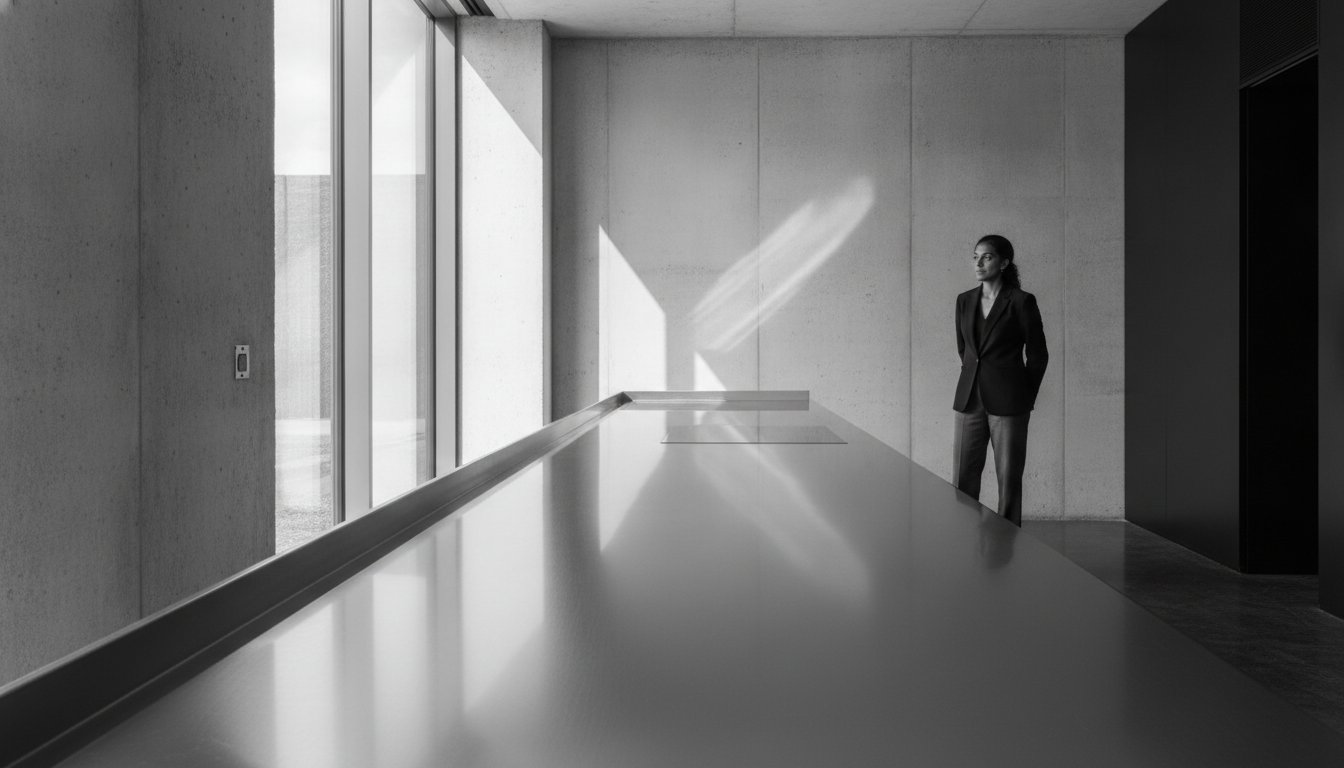
A single poorly finished seam or an incorrectly specified material grade can transform a visionary architectural concept into a maintenance liability within months. You’ve likely experienced the frustration of fabricators who don’t quite grasp the subtlety of your design intent, resulting in fixtures that lack the precision your project demands. Specifying bespoke stainless steel fixtures for architects requires more than just an eye for aesthetics; it’s a balance of metallurgical science and master craftsmanship.
This 2026 design guide ensures you master the technical nuances of stainless steel to achieve a seamless, “work of art” finish that remains hygienic and structurally sound for over 50 years. We’ll examine the impact of the latest UK steel trade measures on 304 and 316-grade availability, whilst providing a clear roadmap for ISO 9001 and BS EN 1090 compliance. From understanding the new Eurocode standards to mastering the geometry of minimalist profiles, you’ll gain the expertise to specify installations that offer both permanence and professional excellence.
Key Takeaways
- Identify the precise metallurgical requirements for different environments, ensuring you specify the correct grade for long-term durability and acid resistance.
- Explore how bespoke stainless steel fixtures for architects can achieve a seamless “work of art” finish whilst meeting the stringent hygiene standards of the NHS and scientific sectors.
- Understand the design possibilities of made-to-measure worktops, including lengths up to 5 metres that eliminate traditional joining constraints and bacteria traps.
- Learn to navigate the pre-production phase with CAD drawing approvals to ensure every custom detail aligns perfectly with your architectural intent.
- Gain practical insights into maintaining the aesthetic integrity of stainless steel through specific cleaning protocols that support a 50-year product life-cycle.
Defining Architectural Stainless Steel Fabrication for Modern Design
Architectural fabrication transcends simple structural utility, representing a distinct discipline where precision engineering meets design intent. Whilst standard metalwork focuses primarily on load-bearing capacity, precision-engineered architectural fixtures prioritise the seamless integration of form and function. For the specifier, the goal is to achieve a “work of art” finish that withstands the rigours of high-traffic environments without compromising the original vision. This requires a consultative approach where technical wisdom and craftsmanship meet to solve complex spatial challenges.
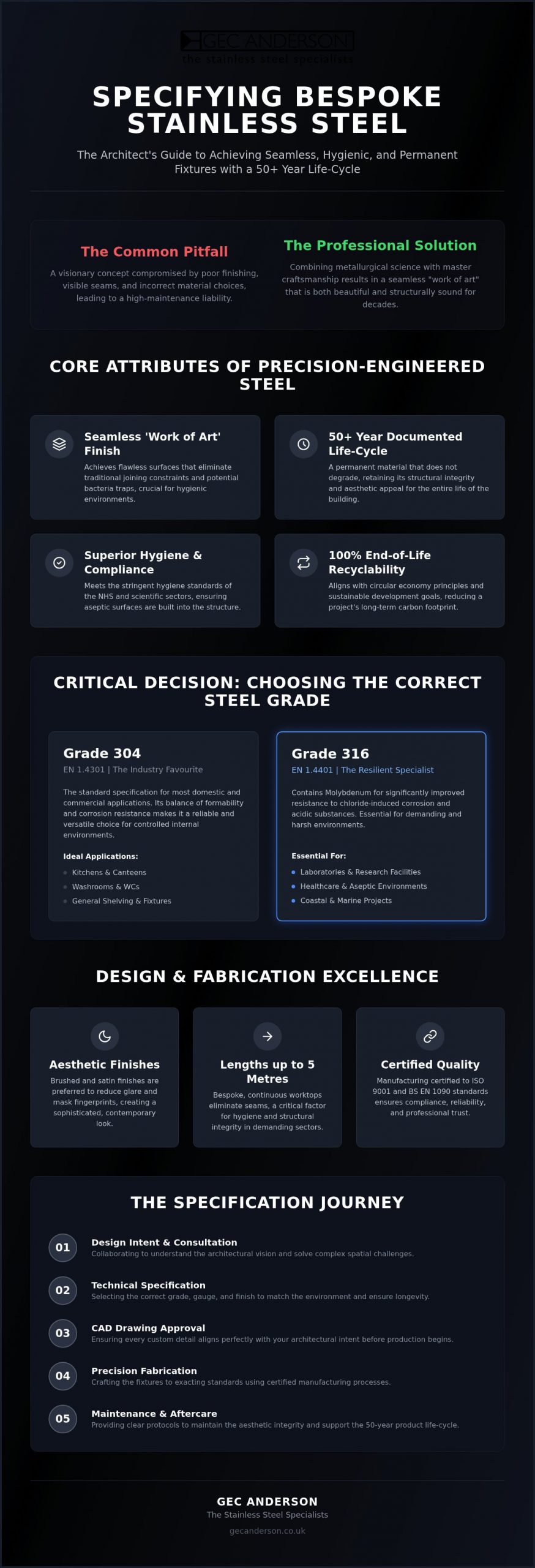
The distinction lies in the detail. Generic fabrication often leaves visible seams or inconsistent finishes, which become points of failure in aseptic environments. In sectors like healthcare and science, where the NHS requires strictly hygienic surfaces, the ability to produce seamless worktops up to 5 metres in length is essential. These bespoke stainless steel fixtures for architects eliminate bacteria traps, ensuring that hygiene is built into the physical structure of the room. These installations don’t just meet industrial standards; they exceed them by providing a foundation of professional trust and reliability through ISO 9001 certified manufacturing.
The Aesthetic Shift: From Utility to Design
Modern fabrication techniques have facilitated a shift towards minimalist and contemporary schemes. Brushed or satin finishes are now preferred over high-polish alternatives, as they effectively reduce glare and mask fingerprints in public spaces. This aesthetic precision allows bespoke stainless steel fixtures for architects to blend into high-end residential or commercial interiors, providing a cool, understated backdrop that complements other premium materials. It’s a move away from the purely industrial look towards a more sophisticated, polished verbal identity in design.
Sustainability and the Circular Economy
Sustainability is no longer a secondary consideration for the modern specifier. Stainless steel is a permanent material, meaning it doesn’t degrade over time if specified correctly. Its inherent stainless steel properties include 100% end-of-life recyclability, aligning perfectly with the circular economy. By specifying a product with a documented 50-year life-cycle, architects can significantly reduce a project’s long-term carbon footprint. This permanence offers a compelling value proposition, as the material retains its structural integrity and aesthetic appeal for the duration of the building’s life.
- Precision-engineered seams for superior hygiene and bacteria control.
- Satin finishes for reduced maintenance and aesthetic longevity in public spaces.
- Material permanence supporting a documented 50-year building life-cycle.
- Full recyclability to meet stringent sustainable development goals.
Technical Specification: Grades, Gauges, and Precision Steel Design
Precision in architectural design is underpinned by metallurgical accuracy. Specifying the correct material grade is not merely a technicality; it’s a prerequisite for the 50-year life-cycle promised in modern briefs. Whilst the aesthetic of two finished surfaces may appear identical to the untrained eye, their chemical composition determines their performance over decades. For the specifier, understanding these nuances is the difference between a fixture that maintains its integrity and one that succumbs to environmental stressors.
Grade Selection: Matching Material to Environment
EN 1.4301, commonly known as AISI 304, remains the standard specification for the majority of domestic and commercial applications. Its balance of formability and corrosion resistance makes it the favourite choice for kitchens, washrooms, and general shelving. It’s reliable, versatile, and perfectly suited for controlled internal environments where hygiene is a priority but chemical exposure is limited.
More demanding environments require the enhanced properties of EN 1.4401 (AISI 316). This grade contains molybdenum, an alloying element that significantly improves resistance to chloride-induced corrosion and acidic substances. Grade 316 is the essential specification for laboratories, healthcare facilities, and projects located in coastal areas. When specifying bespoke stainless steel fixtures for architects in these sectors, Grade 316 ensures the installation remains aseptic and structurally sound despite frequent exposure to harsh cleaning agents or saline air.
Gauge and Structural Integrity
The gauge, or thickness, of the steel is equally critical to the success of the installation. Premium architectural fixtures typically utilise gauges ranging from 1.2mm to 2.0mm, depending on the application. Selecting the appropriate thickness is vital for preventing “oil-canning”, a term used to describe the visible surface deflection or “popping” that occurs in large, unsupported spans of thinner metal.
A 1.5mm or 2mm gauge provides the necessary rigidity for heavy-duty worktops and cabinets. This thickness allows for the seamless welding of integrated sinks without warping the surrounding surface, supporting the “work of art” finish that defines high-end fabrication. Precision polishing then follows, where the grain direction must be meticulously managed to align with the room’s orientation. This aids both light reflection and ease of maintenance, as cleaning is always most effective when following the grain. If you’re refining a technical brief, consulting technical product references can ensure your gauge and grade selections are optimised for the intended application.
- Grade 304: Ideal for standard commercial kitchens and residential interiors.
- Grade 316: Recommended for laboratories, hospitals, and coastal projects.
- 1.5mm – 2mm Gauges: Ensures structural rigidity and prevents surface deflection.
- Grain Alignment: Critical for aesthetic consistency and maintenance efficiency.
Bespoke vs. Modular: Navigating Made-to-Measure Stainless Steel
Navigating the specification process requires a clear distinction between fully bespoke fabrication and precision modular systems. Whilst both approaches utilise the same high-grade materials discussed previously, they serve different architectural objectives. Choosing the correct path depends on the spatial constraints of the project and the specific hygiene requirements of the end-user. For many specifiers, the ideal solution often lies in a hybrid approach that combines the absolute freedom of made-to-measure elements with the structured efficiency of modular units.
The Seamless Advantage of Bespoke Fabrication
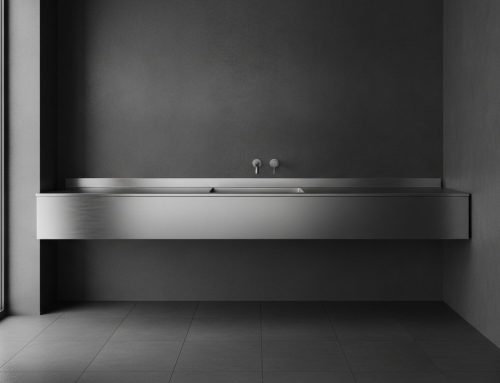
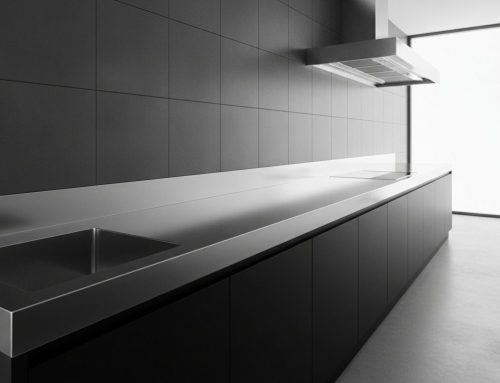
The primary benefit of specifying bespoke stainless steel fixtures for architects is the ability to create continuous, uninterrupted surfaces. Made-to-measure worktops can be fabricated in lengths up to 5 metres without a single join, a feature that is practically impossible with standard off-the-shelf components. This lack of seams isn’t merely an aesthetic preference; it’s a critical functional requirement in environments where bacteria control is paramount.
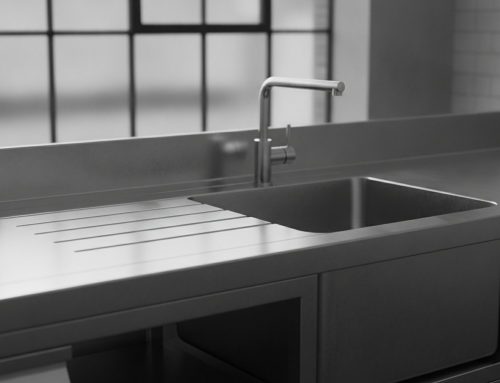
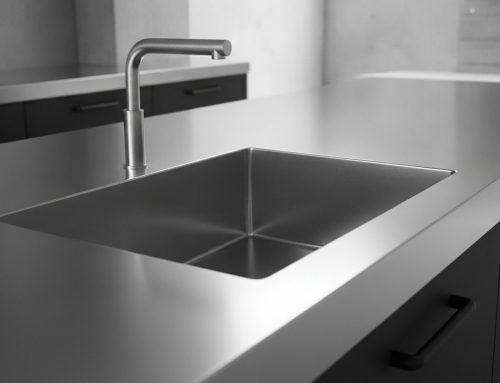
Custom fabrication allows for complex L-shapes and U-shapes with returns of up to 2.3 metres, all finished to a “work of art” standard. By integrating Series A sink bowls directly into the worktop surface, the transition becomes completely smooth. This eliminates the silicone gaps and crevices where grime and pathogens typically accumulate. Architects can also specify custom edge profiles and integrated splashbacks to create a unified, monolithic appearance that fits the exact footprint of the room.
Decimetric®: Precision Modular Solutions
When project timelines or budgets require a more structured approach, the Decimetric® system provides a professional alternative without sacrificing quality. This modular system operates on 100mm increments, allowing for the rapid configuration of cabinets, doors, and shelving. It’s a logical, methodical way to organise space, particularly in laboratories or commercial kitchens where standardisation can lead to greater operational efficiency.
Utilising the Decimetric® system doesn’t mean compromising on the brand’s established heritage of technical excellence. These modular units are manufactured to the same ISO 9001 standards as bespoke items, ensuring a consistent finish across the entire installation. By combining modular storage with a bespoke worktop, architects can manage project costs effectively whilst still achieving a seamless, high-end result that meets the specific needs of the client.
- Bespoke Worktops: Lengths up to 5 metres and returns up to 2.3 metres without visible joins.
- Integrated Sinks: Series A bowls welded seamlessly to eliminate bacteria traps.
- Decimetric® Logic: 100mm modular increments for efficient space planning and reduced lead times.
- Hybrid Specification: Combining modular cabinetry with custom surfaces for optimal value.
Sector-Specific Applications for Architectural Fixtures
The transition from technical specification to site-specific application requires an understanding of the unique stressors each environment imposes. Whilst the material properties of stainless steel remain constant, the design logic must shift to meet the specific demands of the end-user. Whether the priority is infection control in a clinical theatre or vandal resistance in a public transport hub, the versatility of the material allows for a tailored response that maintains aesthetic excellence.
Clinical Excellence in Healthcare Specification
In healthcare and scientific research, the physical environment is a critical component of the infection control strategy. NHS trusts and private laboratories require aseptic surfaces that can withstand aggressive decontamination protocols without degrading. Specifying bespoke stainless steel fixtures for architects in these settings ensures that sluice sinks, basins, and worktops are completely seamless. These smooth transitions are vital; they eliminate the microscopic crevices where pathogens reside, significantly reducing the risk of hospital-acquired infections (HAIs). Medical-grade sanitaryware must be specified for its long-term resilience, providing a permanent solution that remains hygienic through decades of intensive use.
Durability for High-Traffic Public Spaces
Public infrastructure presents a different set of challenges, primarily centred on durability and the prevention of deliberate damage. For transport hubs and government buildings, the focus shifts to vandal-resistant fixtures that don’t sacrifice the professional appearance of the facility. Stainless steel mirrors, WCs, and urinals provide a robust alternative to fragile materials, ensuring that high-traffic washrooms remain operational and clean.
The V90 shelving system is particularly effective in these high-demand environments, offering a stable and hygienic storage solution for everything from school laboratories to hospital pharmacies. Our experience with major infrastructure projects, including the London Underground and the National Gallery, demonstrates that architectural intent can be maintained even in the most demanding public settings. To see how these principles apply to your specific sector, you can view our range of stainless steel worktops and sinks designed for professional use.
Commercial, Leisure, and Residential Versatility
Beyond the clinical and industrial, bespoke stainless steel fixtures for architects are increasingly favoured in high-end commercial and residential projects. In the hospitality sector, professional-grade durability is brought into the front-of-house, with theatres, galleries, and restaurants utilising the material for its sleek, minimalist aesthetic. In private residences, architects specify these fixtures to bring a sense of industrial precision and permanence to kitchens and washrooms. This cross-sector appeal is a testament to the material’s ability to balance functional necessity with a high-end, “work of art” finish that complements contemporary design schemes.
- Healthcare: Sluice sinks and aseptic surfaces designed for NHS infection control.
- Education: Vandal-resistant sanitaryware and robust shelving for schools.
- Infrastructure: Proven solutions for transport hubs and public galleries.
- Residential: Bringing professional-grade longevity to domestic interiors.
The Specification Journey: From Drawing to Maintenance
The transition from a conceptual drawing to a physical installation is where architectural intent is either realised or lost. A successful outcome for bespoke stainless steel fixtures for architects relies on a methodical, logical workflow that begins with technical consultation and ends with precise maintenance. This consultative approach ensures that the aesthetic excellence and structural integrity discussed in previous sections are preserved throughout the product’s 50-year life-cycle. It’s a journey characterised by professional trust and a shared commitment to functional efficiency.
The CAD Approval and Fabrication Process
Once an initial quotation is accepted, the process moves into a phase of rigorous technical verification. GEC Anderson Limited issues comprehensive pre-production CAD drawings for every custom project, providing the architect with a final opportunity for sign-off. This step is critical. It ensures that every dimension, edge profile, and sink integration aligns perfectly with the site conditions before fabrication begins. For complex layouts, site visits and templating provide an additional layer of security, ensuring a perfect fit for fixtures that must integrate with existing structural elements.
The fabrication itself is a balance of modern technology and traditional craftsmanship. Automated laser cutting provides the necessary precision for the Decimetric® modular components, whilst manual welding and polishing by master craftsmen create the seamless, “work of art” finish. Deliveries from GEC Anderson Limited are then coordinated to match the specific project programme. This ensures that the fixtures arrive on-site in the correct sequence, reducing the risk of damage and allowing for a steady, measured installation process.
Preserving the Finish: Essential Maintenance
Longevity is a core attribute of premium stainless steel, yet it’s not synonymous with a lack of care. To ensure bespoke stainless steel fixtures for architects maintain their professional appeal, specific maintenance protocols must be passed to the end-user. The most vital of these is the “Cold Water Rule”. You must never rinse the surface with warm or hot water, as this can cause streaks and encourage mineral buildup. Always use cold water for rinsing and never leave the surface to air dry. Air-drying is a primary cause of unsightly water spots and surface discolouration.
When cleaning, it’s essential to follow the grain of the steel to avoid scratching the satin finish. For the removal of calcium deposits or limescale, use only vinegar or a 10% acetic acid solution. In more stubborn cases, a diluted nitric acid (1:4) may be used, but standard domestic cleaners should be avoided if they contain harsh abrasives. After cleaning, always dry the surface thoroughly with a soft cloth. This simple but disciplined routine prevents material degradation and ensures the installation remains as hygienic and visually striking as the day it was commissioned.
- Technical Sign-off: Pre-production CAD drawings ensure every bespoke detail is verified.
- Precision Fabrication: A combination of laser cutting and manual polishing for a seamless finish.
- The Cold Water Rule: Always rinse with cold water and dry with a soft cloth to prevent spots.
- Correct Chemistry: Use only vinegar or 10% acetic acid for calcium removal; avoid warm water.
- Grain Discipline: Always follow the direction of the grain during cleaning to preserve the texture.
Securing the Longevity of Your Architectural Vision
The integration of high-performance materials into a project is a commitment to both the client and the built environment. As explored throughout this guide, achieving a “work of art” finish requires a rigorous focus on technical specification and maintenance discipline. By choosing bespoke stainless steel fixtures for architects, you’re not just selecting a functional surface; you’re investing in a legacy of hygiene and structural permanence that defines the professional standard for 2026 and beyond.
GEC Anderson Limited has operated as a specialised UK manufacturer since 1962, refining the balance between industrial resilience and aesthetic precision. Our ISO 9001 certified processes and technical CAD support ensure that every unique requirement is met with absolute clarity. This established heritage provides the professional trust needed to deliver installations that remain functional and visually striking for their entire 50-year life-cycle, ensuring that your design intent is preserved without compromise.
We invite you to request a technical quotation for your bespoke stainless steel project. We look forward to supporting your next design with the precision and expertise your architectural vision deserves.
Frequently Asked Questions
What is the best grade of stainless steel for architectural fixtures?
The choice of grade depends entirely on the installation environment. EN 1.4301, or AISI 304, is the favourite for standard domestic and commercial washrooms or kitchens. For laboratories, hospitals, and coastal projects, EN 1.4401 (AISI 316) is essential. This acid-resisting grade contains molybdenum, which provides superior protection against chloride-induced corrosion. Specifying the correct grade ensures the 50-year life-cycle expected of bespoke stainless steel fixtures for architects.
Can stainless steel worktops be made without any visible joins?
Yes, made-to-measure stainless steel worktops can be fabricated without visible joins or seams. This seamless finish is a hallmark of premium architectural fabrication, creating an aseptic surface that is both aesthetically stunning and highly hygienic. By eliminating joints, you remove potential bacteria traps. This is particularly critical in healthcare and scientific settings where maintaining a sterile environment is a primary design objective for the specifier.
What is the maximum length for a bespoke stainless steel worktop?
The maximum length for a single, continuous made-to-measure stainless steel worktop is 5 metres. For more complex configurations, such as L-shaped or U-shaped layouts, the maximum return length is 2.3 metres. These generous dimensions allow architects to design expansive, seamless surfaces that are impossible to achieve with standard modular components. This provides greater design freedom whilst maintaining the structural integrity and hygiene required for professional installations.
How should architects clean and maintain bespoke stainless steel fixtures?
Maintenance begins with applying a general-purpose cream cleaner using a damp cloth, always following the grain direction. Once cleaned, the surface must be rinsed thoroughly with cold water and dried immediately with a soft cloth. It’s vital to avoid warm water and air-drying, as these cause discolouration and spots. This disciplined routine preserves the satin finish and ensures the installation remains hygienic for its entire life-cycle.
Is stainless steel a sustainable choice for modern architectural projects?
Stainless steel is an exceptionally sustainable material for modern projects. It is 100% recyclable at the end of its life and typically offers a product life-cycle of approximately 50 years. This permanence reduces the need for frequent replacements, lowering the overall carbon footprint of a building. Specifying bespoke stainless steel fixtures for architects aligns with circular economy principles by using a material that retains its value and utility indefinitely.
What is the difference between made-to-measure and modular stainless steel systems?
Made-to-measure fixtures are fully customised to fit specific site dimensions, allowing for seamless lengths up to 5 metres. In contrast, modular systems like Decimetric® utilise 100mm increments to provide flexible, professional-quality furniture layouts. Whilst made-to-measure offers absolute design freedom and zero joins, modular systems provide a structured, efficient solution that can reduce lead times whilst maintaining the brand’s established technical excellence and aesthetic finish.
How do I remove rust stains or discolouration from stainless steel surfaces?
Surface discolouration or light rust stains are usually caused by foreign iron particles. These are removed by applying a dry cleaning powder with a damp cloth, followed by a cold water rinse and soft-cloth drying. For calcium deposits, use only vinegar or 10% acetic acid. If rust has persisted, use a dry nylon fibre brush or diluted nitric acid at a ratio of one part HNO3 to four parts water.
Why is cold water recommended for rinsing stainless steel fixtures?
Cold water is recommended because warm or hot water can lead to surface streaking and accelerate the buildup of mineral deposits. When warm water evaporates, it often leaves behind synthetic detergent residues or calcium spots that dull the finish. Using cold water for rinsing, followed immediately by drying with a soft cloth, ensures the stainless steel retains its original shine and remains free from the discolouration associated with air-drying.