
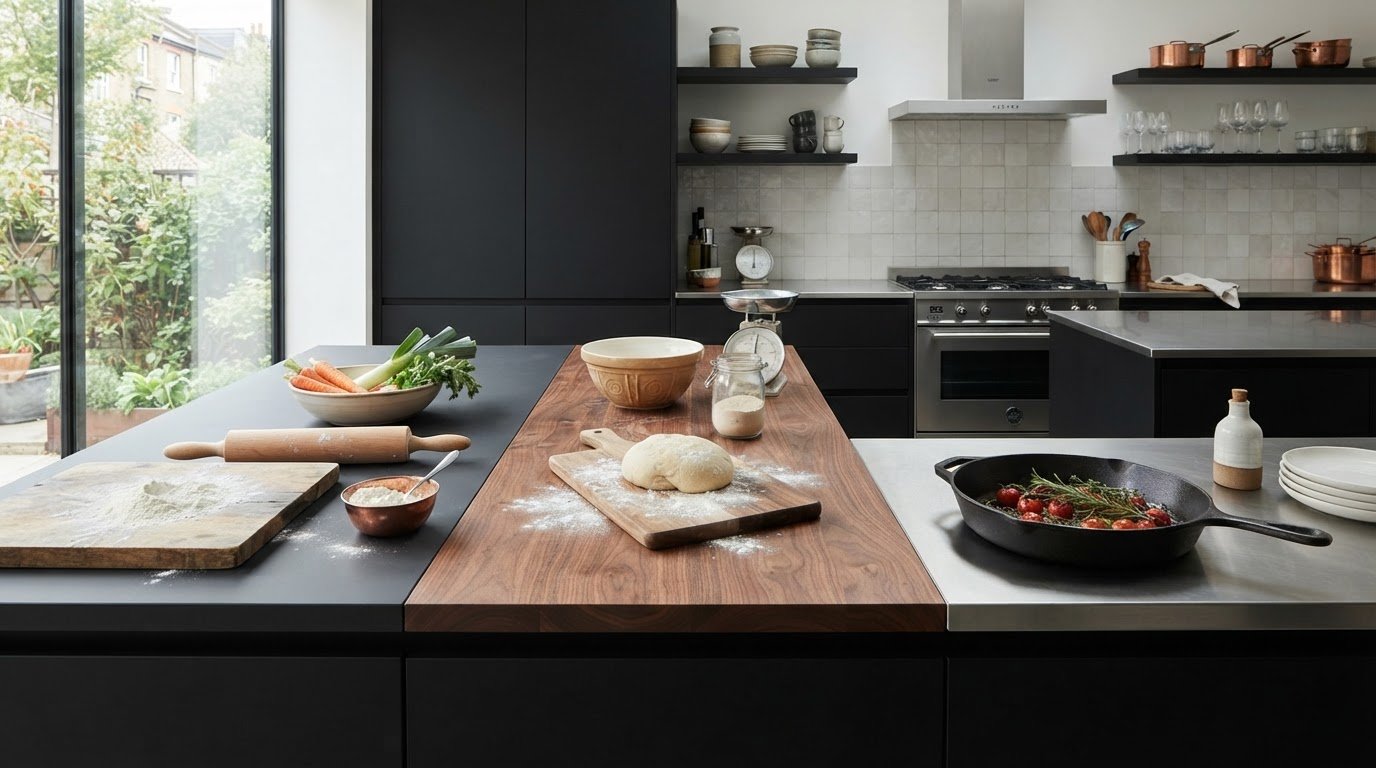
The best worktop for keen cooks may not be the one that needs the least attention. Stainless steel suits a busy cooking area where hygiene, durability and heat resistance matter, whilst wood brings warmth but needs regular care; laminate offers an easy-clean, budget-friendly surface, with more limitations around heat, cuts and damaged edges. The right choice depends on how you cook and what you expect the surface to withstand.
Frequent baking, hot pans and intensive preparation all place different demands on a worktop. It’s also reasonable to weigh everyday cleaning and long-term upkeep alongside the initial cost, rather than choosing on appearance alone.
This comparison explains how laminate, wood and steel differ in cost, maintenance and long-term use, including the compromises each material brings to a working kitchen. You’ll find practical guidance for matching a surface to your cooking habits, from dough preparation to handling hot cookware, and a decision guide to help narrow the choice.
Key Takeaways
- Compare laminate, wood and steel by the demands of your cooking routine, not appearance alone.
- Factor ongoing care into your choice: timber needs periodic oiling, whilst laminate is straightforward to clean.
- Protect any surface from direct contact with hot pans and use a chopping board for food preparation.
- Weigh initial cost against durability, repairability and the upkeep you are prepared to undertake.
- Consider using different materials in separate kitchen zones to balance practical performance with warmth and character.
What maintenance does each worktop material need?
Choose a kitchen worktop by balancing daily cleaning, durability, appearance and the care you’ll maintain. Laminate needs little routine attention, while solid wood benefits from regular oiling. Natural stone may need sealing, and stainless steel offers a hygienic, durable surface that can show fingerprints and scratches over time.
These figures exclude installation; the fitted cost per metre depends on the layout, cut-outs, joins, edge details and fitting work.
For hot cookware, use a trivet rather than placing pans directly on quartz, granite or porcelain. Quartz can be damaged by extremely high heat, while granite has high heat resistance. Porcelain is heat-resistant, but a trivet remains the prudent way to protect the surface.
| Material | Durability | Maintenance | Appearance and practicality | Budget consideration |
|---|---|---|---|---|
| Laminate | Medium; vulnerable to heat and knife cuts | Simple routine cleaning | Wide choice of colours and finishes | |
| Solid wood | Can mark, scorch or move with moisture and temperature | Oil every three to six months; wipe standing water promptly | Warm, classic character that develops a patina | |
| Stainless steel | Very high durability; dents and scratches can occur | Clean routinely; fingerprints may show | Hygienic, durable and heat-resistant | Depends on the design and specification |
| Granite | Hard-wearing and heat-resistant | Seal to improve stain resistance | Every slab has individual patterns | Costs depend on material and installation |
| Quartz | Stain-resistant, but edges can chip after impact | No regular sealing; avoid abrasive cleaners | Consistent appearance and straightforward upkeep | Costs depend on material and installation |
Use that comparison alongside your cooking habits. A baker who values a warm, classic finish may accept timber’s care routine, whilst a cook prioritising straightforward cleaning may prefer laminate or quartz. Granite requires sealing, but its heat resistance can suit frequent cooking.
Solid wood needs periodic treatment in line with its finish and the manufacturer’s guidance. Oil solid timber every three to six months, and wipe away water promptly, especially around the sink. If marks accumulate, wood can be sanded and refinished, giving it a practical route to renewal.
Granite and marble need attention to sealing, although marble is more prone to staining and scratches. Quartz is non-porous, resists common stains and doesn’t need regular sealing; clean it with warm soapy water and a soft cloth. Avoid abrasive cleaners, which may scratch its surface.
Stainless steel suits cooks who value hygiene and a hard-working surface, but fingerprints and scratches become part of its developing patina. According to UK Government guidance, food worktops should be smooth, free of cracks or joints, non-absorbent and easy to clean.
Choose by ranking the surface qualities you use most, then match them to the maintenance you’ll consistently undertake.
So… what is the best kitchen worktop?
No single surface suits every kitchen: stainless steel, granite, quartz and wood serve different cooking and design priorities. Match the chosen material to your regular tasks, household use and tolerance for visible wear.
For hot pans and heavy use, granite handles high heat, whilst porcelain resists heat and scratches. Stainless steel is heat-resistant and durable, but can dent or scratch; use a chopping board on every surface rather than cutting directly on it.
Quartz and stainless steel are practical choices for stain resistance and everyday cleaning. Quartz is non-porous and resists common stains; steel is hygienic, although fingerprints and surface marks can show.
In the UK, specialist kitchen worktop suppliers and fabricators provide worktops and installation. The material, layout, cut-outs and edge details shape the specification and fitting involved.
Stainless steel for cooking zones
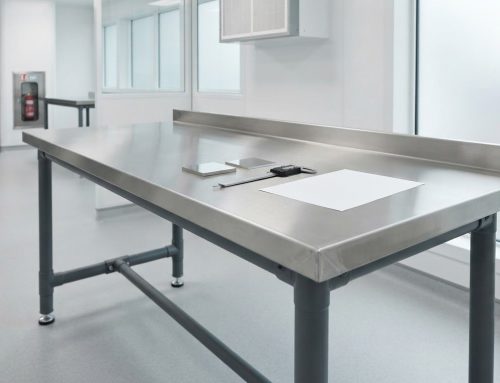
Stainless steel suits a dedicated cooking or preparation zone where hygiene, durability and heat resistance matter. Unlike wood, it doesn’t need periodic oiling; unlike laminate, it isn’t vulnerable to heat in the same way. Its contemporary appearance brings a professional character, although fingerprints, scratches and dents can become visible through everyday use.
Use chopping boards to protect the surface from knife marks. A steel preparation area can also be balanced with warmer timber or natural stone elsewhere, creating distinct zones without requiring one material throughout the kitchen.
Worktops for different cooking habits
For regular baking, marble stays cool and suits dough and confectionery, but acidic ingredients can etch it. Timber offers warmth and can be sanded and refinished, though it needs periodic oiling and careful treatment around standing water. For a household prioritising simple daily cleaning, quartz resists common stains and avoids regular sealing.
Consider who uses each area and how: a baking station has different demands from a surface beside a hob or sink. A contrasting island material can give baking or serving its own practical role.
Durable and hygienic worktops
Granite combines high heat resistance with hard-wearing performance, while stainless steel is durable and hygienic for active cooking. Porcelain resists heat and scratches, but its edges can chip if struck sharply. Each material has a different wear profile, so durability means choosing the surface that suits the work it will regularly do.
According to UK Government guidance, food worktops should be smooth, free from cracks or joints, non-absorbent and easy to clean. Fewer joints can reduce places where debris and bacteria collect.
Stain-resistant and easy-clean worktops
Quartz is non-porous, resists common stains and needs no regular sealing. Clean it with warm soapy water and a soft cloth; avoid abrasive cleaners, which may scratch the surface. Stainless steel is also straightforward to clean, but fingerprints may be more apparent than on a patterned natural stone finish.
Granite needs sealing to improve stain resistance, whilst marble is more prone to stains and scratches and requires regular sealing. Choose quartz for low-maintenance stain resistance, or granite if natural variation and heat resistance take priority.
Budget-friendly laminate, wood and steel
Laminate, timber and stainless steel suit different budgets and cooking routines. In the UK, compact laminate costs £40-£120 per m² for the material, while solid timber costs £150-£350 per m². These are material prices, not fitted totals; installation depends on the layout, cut-outs, joins and edge details.
For a kitchen project, the complete laminate cost reflects more than the surface area. Sink cut-outs, joins, edge treatment and fitting work all affect the final specification. Compare the full scope of work rather than relying on a material price per square metre alone.
Laminate gives budget-conscious kitchens access to a wide range of colours and designs. Modern finishes can mimic marble, stone or wood, giving the room a classic or contemporary appearance without natural stone. It’s lightweight and easy to clean, but heat, knife cuts and deep scratches can damage it. Use a chopping board and trivet, and wipe spills near joins promptly.
Edges and joins deserve particular attention. Water ingress can damage laminate if an edge or joint is compromised, so avoid leaving standing water around the sink. A chipped or cut surface is also less straightforward to refresh than solid wood, which can be sanded and refinished. This makes careful everyday use part of laminate’s long-term value.
Solid timber brings natural warmth and develops a patina through use. It also asks for more regular care: oil solid timber every three to six months, following the finish’s maintenance guidance. Wipe standing water promptly, especially near the sink, because moisture and temperature changes can make timber move. Hot pans can scorch wood, so use a trivet.
Refinishing is a useful distinction. Sanding can refresh marked timber, whereas a deep scratch or damaged laminate edge may remain visible. Timber therefore offers a route to renewal, but its upkeep takes time. Consider whether the character of changing wood outweighs the convenience of a lower-maintenance surface.
Stainless steel has no comparable material price in this comparison, so assess it through its intended use and specification rather than assuming it is a budget option. Its high durability and heat resistance can suit an active cooking zone. Fingerprints, scratches and dents can appear, developing a patina rather than a uniform, untouched finish.
- Choose laminate if keeping initial material costs down and selecting from varied designs matter most.
- Choose timber if warmth, character and the option to sand and refinish justify regular oiling.
- Consider steel for a hard-working area where durability and heat resistance take priority.
For a kitchen used daily, compare purchase and fitting costs with maintenance, repair options and the finish you want over time.
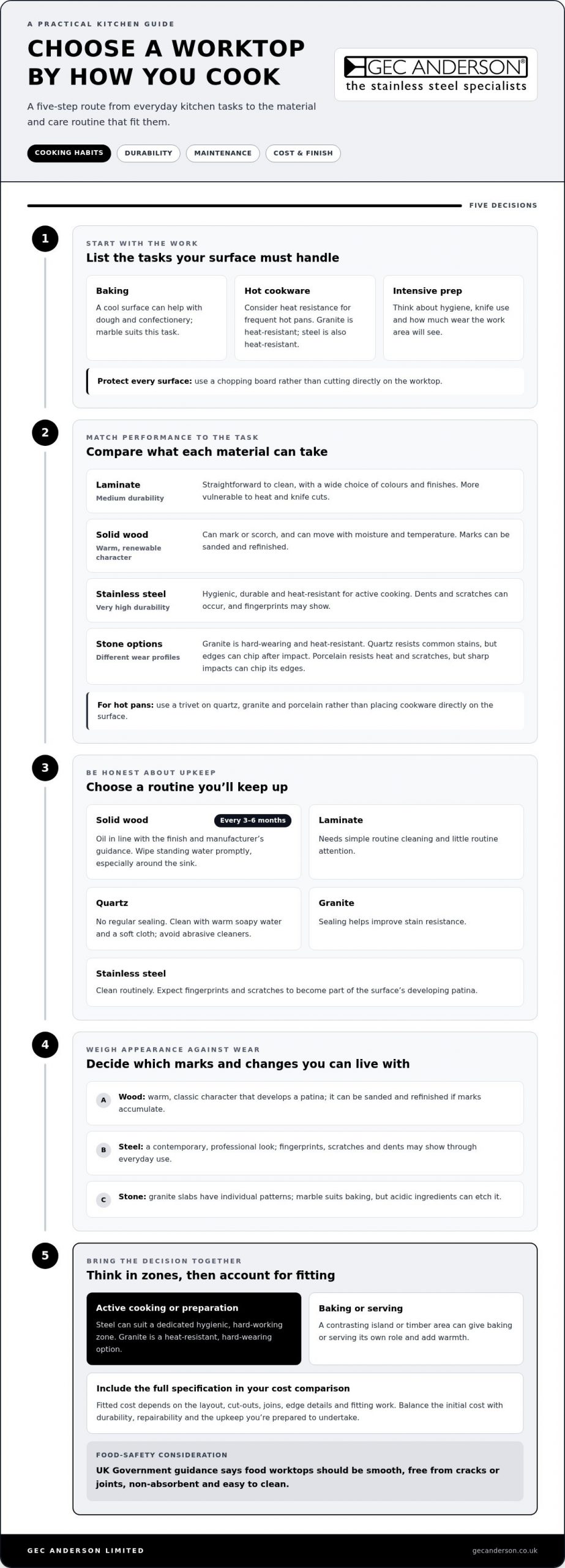
Choosing a worktop for long-term use
Long-term performance depends on how heavily a kitchen is used and how much maintenance its owner will undertake. Granite handles high heat and heavy use, but needs sealing to help protect against stains. Timber can deepen in appearance and develop a patina, although moisture and temperature changes can make it move. Match the material’s ageing behaviour to the way you cook.
Stainless steel is highly durable and heat-resistant, making it practical around a hob or preparation area. Scratches and dents can occur, and fingerprints may show as the surface develops a patina. This changing finish may suit a contemporary kitchen, but it differs from materials chosen for a more consistent appearance. Consider how visible marks will affect the worktop’s appeal over time.
Repair and upkeep also influence service life. Solid wood can be sanded and refreshed, giving it a way to recover from surface marks. It needs periodic oiling, and standing water should be wiped away promptly, particularly near a sink. Granite requires sealing, whilst quartz needs no regular sealing but can chip at the edges if struck by a heavy object.
Porcelain resists heat, scratches and UV exposure, but sharp impacts can chip its edges. Professional fabrication and installation are required, so the edge details and handling matter. Porcelain and sintered worktops have a stated lifespan of 20 years or more. That figure provides a useful comparison, but the kitchen’s day-to-day use and care still shape the surface’s condition.
Think beyond the main run. A granite island may provide a heat-resistant working area, whilst a timber surface elsewhere can introduce warmth. Combining materials can create functional spaces, but each surface brings its own cleaning and maintenance routine. Plan where chopping, baking and hot-pan handling happen before assigning materials to zones.
Design details also affect long-term satisfaction. Worktop thickness, edge profile, sink reveal, unsupported spans and join planning all influence the finished result. Check how the selected surface sits alongside cabinetry, flooring and splashbacks. Comparing samples with the chosen cabinet finish helps assess colour and texture in the actual design, rather than in isolation.
Use this practical sequence before settling on a specification:
- Identify the busiest cooking and preparation spaces, then prioritise the material’s relevant performance.
- Decide whether you’ll maintain timber with periodic oiling or prefer a surface without regular sealing.
- Review edges, joins and sink details, where impact or water can affect the worktop.
- Compare samples beside cabinetry and consider whether the material’s patina will retain its appeal.
A durable choice is not simply the hardest surface. It is the one whose maintenance, ageing and practical limits suit your kitchen’s daily use.
Worktops for keen cooks and bakers
The best worktop for keen cooks depends on the tasks it must support. Baking dough, handling hot pans and preparing acidic ingredients place different demands on a surface. A practical choice weighs heat and scratch resistance alongside hygiene, cleanability and the finish homeowners want to see every day.
For frequent baking, marble stays cool and suits dough and confectionery. However, it’s softer and more porous than granite or quartz, so acidic ingredients can etch it and spills may mark the surface. Treat marble as a specialist baking area if its visual appeal matters, rather than assuming it will remain pristine under intensive use.
Granite handles high heat and heavy use, which can suit cooks moving pans between the hob and preparation area. Each slab has individual patterns and colour depth, so its appearance varies. Granite needs sealing to help protect against stains. Use a trivet for hot cookware and a chopping board for knives, preserving the finish during everyday preparation.
Porcelain resists heat and scratches, making it a practical option for demanding cooking. Its edges can chip if struck sharply, so careful handling matters around heavy pans and cookware. Quartz offers strong stain resistance and straightforward cleaning, but it has moderate heat resistance. Use trivets rather than placing hot pans directly on either surface.
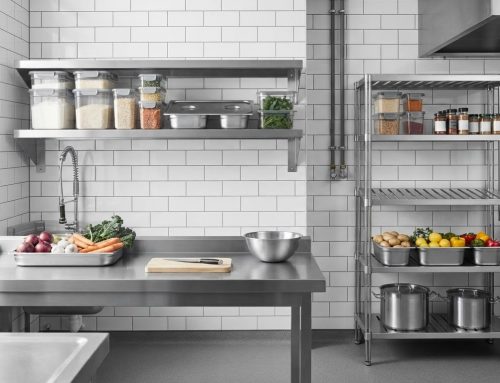
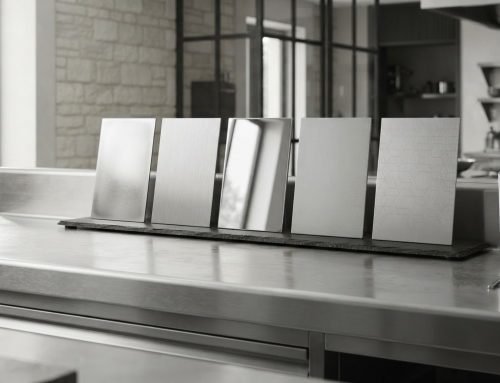
Stainless steel suits a busy preparation zone where hygiene, durability and heat resistance are priorities. It can show fingerprints, scratches and dents, developing a patina through use. That changing surface gives an active kitchen a professional character, but differs from homeowners’ preference for an uninterrupted, uniform finish.
Timber brings warmth and character to baking and serving spaces, but moisture and heat need attention. Standing water should be wiped away promptly, particularly around sinks, and hot pans need a trivet. Solid wood can be sanded and refreshed, giving homeowners a way to address marks rather than expecting the surface to remain unchanged.
For food preparation, the UK Government says worktops should be smooth, free of cracks or joints, non-absorbent and easy to clean. This makes joins, edges and the surface around a sink relevant to the practical specification, not just visual details.
- Choose marble for cool pastry work if you accept its vulnerability to etching and marks.
- Prioritise granite or porcelain for heat resistance, while protecting surfaces from direct pan contact.
- Use stainless steel for a durable, hygienic preparation zone, allowing for its developing patina.
- Consider timber where warmth and refinishing matter, and regular care fits your routine.
Many kitchens can combine materials: a resistant surface near cooking, with timber or stone on an island. Explore worktop options for an active kitchen when planning a dedicated preparation zone.
GEC Anderson Limited: Stainless Steel Worktops
GEC Anderson Limited supplies stainless steel worktops for cooks prioritising a durable, hygienic surface in preparation or cooking zones. Stainless steel’s heat resistance and practical cleanability make it a considered choice for active kitchens, whilst its visible scratches and developing patina suit homeowners comfortable with a finish that records use.
Worktops are available as standard, modular or made-to-measure, helping suit different project scales. Stainless steel sinks can be coordinated with the work surface, with cabinets and doors or shelving also available for kitchen layouts requiring a consistent material approach.
For a project where stainless steel fits your cooking priorities, contact GEC Anderson Limited to discuss your requirements.
Plan a kitchen that works with your cooking
Before settling on a finish, map the way you move through the kitchen. Mark where ingredients are prepared, where hot pans are handled and where baking needs uninterrupted space. This simple workflow plan can show whether one continuous surface suits you or separate materials would serve distinct tasks better.
Also consider how the room may be used over time. A surface chosen for daily meal preparation should work for the household’s routines, not just the initial design. The best worktop for keen cooks is one that supports those routines whilst fitting the kitchen’s wider layout.
For a stainless-steel preparation area, GEC Anderson Limited offers Stainless Steel Worktops, Stainless Steel Sinks and Stainless Steel Cabinets & Doors. These can inform a coordinated specification for a kitchen planned around practical use.
Contact GEC Anderson Limited to discuss your kitchen requirements and take the next step towards a considered design.
Frequently Asked Questions
How do finishes, thickness and edge profiles affect your worktop?
They shape the worktop’s appearance and how it fits the kitchen layout. Standard quartz and granite worktops are typically 20mm or 30mm thick, whilst 12mm is common for porcelain and sintered slabs. Thickness, edge profile, sink reveal, unsupported spans and join planning affect the finished result. For example, consider edge detailing alongside the sink position and cabinet support, rather than choosing a profile in isolation.
How do you choose the right worktop for your home?
Start with your cooking routine, then decide how much maintenance you’ll realistically do. A household that bakes frequently may value a cool pastry surface, whilst regular pan cooking makes heat resistance more relevant. Consider who shares the kitchen, where food preparation happens and whether the island serves as a dining space. Compare samples with the cabinet finish and surrounding materials to assess the whole room together.
What Makes a Cook’s Kitchen?
A cook’s kitchen supports preparation, cooking and cleaning without unnecessary obstacles. A larger sink can help with washing bulky pans, and a double sink can separate washing from rinsing. Tall taps make large pots easier to access; a flexible detachable hose can add practical reach. Keep preparation space close to the sink and cooking zone, and plan worktop joins so they don’t interrupt the main working area.
Which kitchen worktop materials are best for keen cooks?
The right material depends on the tasks you do most. Granite suits cooks who value natural variation and high heat resistance; porcelain offers heat and scratch resistance. Stainless steel provides a durable, hygienic preparation surface, whilst quartz is useful where stain resistance and straightforward cleaning matter. For pastry work, marble stays cool, but its susceptibility to etching makes it a more considered choice for a busy, all-purpose surface.
How do quartz, granite, porcelain and stainless steel worktops compare for cooking?
Quartz offers a consistent engineered appearance and resists common stains, but hot pans need a trivet. Granite has individual slab patterns and handles heat well, though sealing is part of its care. Porcelain resists heat and scratches, but sharp impacts can chip its edges. Stainless steel suits active preparation, with scratches and fingerprints contributing to a visible patina as the surface is used.
What are the pros and cons of wood, laminate and solid-surface worktops for keen cooks?
Wood can be sanded and refreshed, but needs ongoing care around moisture and heat. Laminate is lightweight and easy to clean, although heat, knife cuts and water ingress at damaged edges can be weaknesses. Solid-surface worktops can have discreet joins, integrated sinks and coved upstands; they’re repairable, but generally less heat- and scratch-resistant than quartz or porcelain.
Which worktop materials need sealing or regular maintenance?
Granite needs sealing to improve stain resistance, while marble requires regular sealing and care. Solid timber needs periodic oiling, with the finish and manufacturer’s guidance determining its care routine. Quartz doesn’t need regular sealing, but avoid abrasive cleaners. For stainless steel, remove salt or chloride-containing materials promptly, clean along the grain, rinse with cold water and dry with a soft cloth.
What worktop thickness, edge and finish are practical for a busy kitchen?
Choose thickness and edge details to suit the material, cabinet support and sink arrangement. Quartz and granite commonly come in 20mm or 30mm thicknesses; porcelain and sintered slabs commonly use 12mm. A carefully planned edge can support the intended visual proportion, while join locations and unsupported spans affect the finished layout. Around a sink or island, consider how the profile will meet adjacent surfaces and cabinetry.