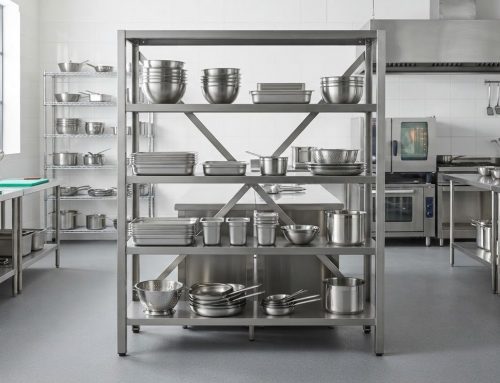

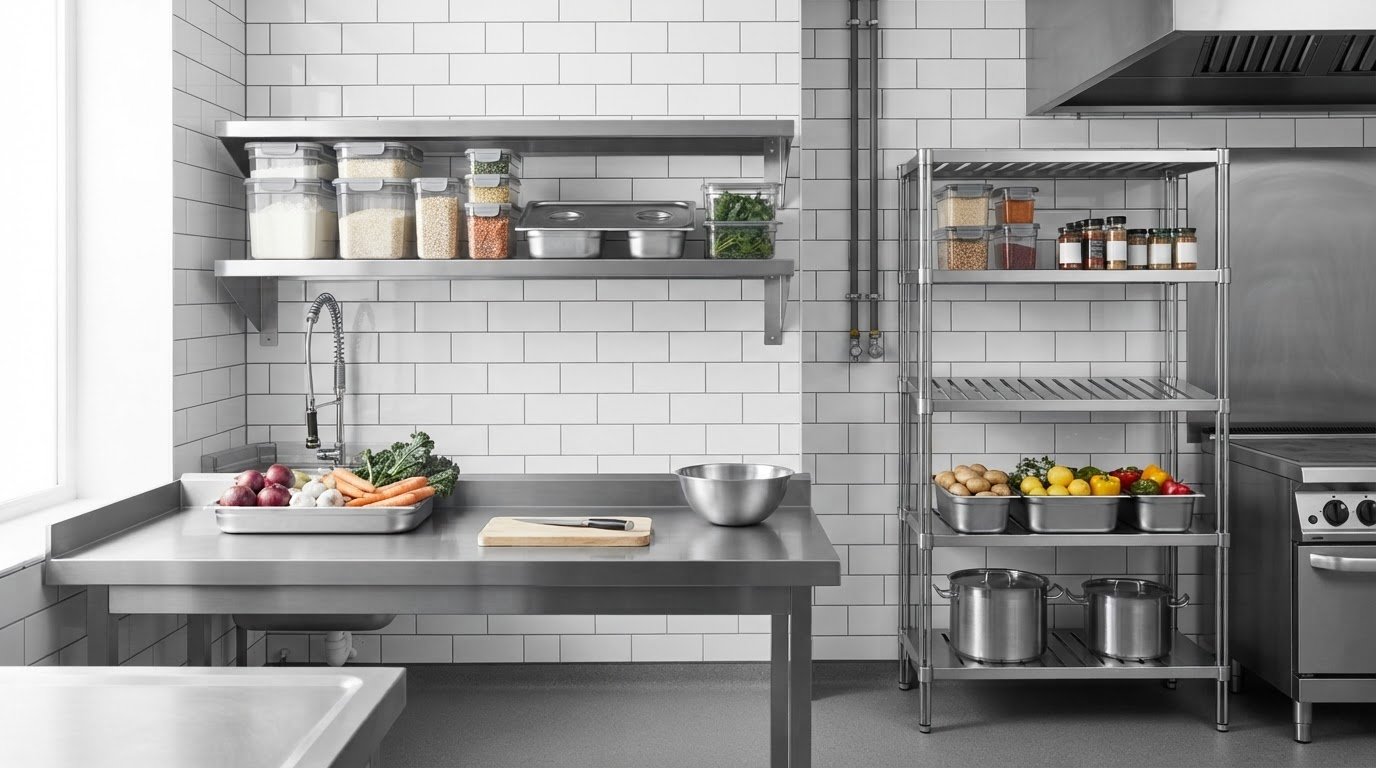
Wall-mounted shelving is a practical option for catering kitchens, and food grade stainless steel shelving is available in 304 grade, with wall shelves in lengths from 600 mm to 1,500 mm. Modular units can also be configured with shelf support points spaced every 150 mm, allowing shelf positions to be adapted to stored items.
Choosing food grade stainless steel shelving involves more than selecting a material. It should suit the room, the way food is stored and the demands of daily cleaning, while making effective use of the available space.
This guide explains the benefits of 304 stainless steel, where wall-mounted and modular shelving can fit, and how adjustable shelves and legs can support a practical kitchen layout. It also covers what kinds of food are suitable for storage on catering shelves, so you can assess options against your kitchen’s workflow and storage requirements.
Key Takeaways
- Choose shelving around the foods you store, your cleaning routine and the space available, then compare solid, slatted and wire surfaces for suitability.
- Wall-mounted shelves made from 304-grade stainless steel are available in lengths from 600 mm to 1,500 mm, offering a way to use wall space efficiently.
- Modular shelving has support points spaced every 150 mm and can hold up to 10 shelves, helping you adapt the layout to changing storage needs.
- Consider how shelf construction, placement and access affect cleaning and day-to-day food handling when planning a hygienic kitchen layout.
- Explore how stainless steel worktops, sinks, cabinets and shelving can be coordinated to support a functional catering kitchen.
WHAT’S THE BENEFIT OF STAINLESS STEEL CATERING SHELVES?
Food grade stainless steel shelving supports organised storage in catering kitchens, cold rooms and wet rooms. The right choice depends on what you store, the space available and your cleaning routine.
Food and Catering Storage Uses
A shelving unit can separate ingredients, containers and catering equipment, keeping frequently used items accessible without occupying worktops. One shelving overview lists a capacity of up to 50 kg, while modular units are initially supplied with four shelves. Match the layout to the stored load and the space needed for safe access.
Stainless steel shelving can suit kitchens, wet rooms and cold rooms. For freezer storage, assess the operating conditions alongside the shelving specification. Clinical settings are another use; in pharmaceutical environments, keep products in their appropriate packaging and storage conditions, with shelving arranged for clear organisation.
How much does stainless steel catering shelving cost in the UK? Cost depends on the unit’s dimensions, shelf style and load requirements, as well as whether the design is modular or wall-mounted. Installation requirements can also affect the overall project cost.
Cleaning and Hygiene Features
Accessible surfaces and straightforward shelf layouts make cleaning easier. When comparing designs, check that corners and joins can be reached with the cleaning equipment used in your kitchen, and leave enough space to clean beneath and behind the unit. Construction matters as much as material.
What features make stainless steel shelving easy to clean and hygienic? Smooth, accessible surfaces and a layout with few hard-to-reach areas make routine cleaning more manageable. How should stainless steel shelving be installed, cleaned and maintained? Position it securely and leave access for cleaning. Use a suitable detergent, rinse away residue and dry the surfaces. Check fixings, joints and shelves as part of routine cleaning.
Comparing Shelf Materials
How do stainless steel shelves compare with aluminium, plastic and chrome-plated shelving? Stainless steel is a durable choice for commercial kitchens. Aluminium is lighter, while plastic avoids metal corrosion, but each material may suit different loads and cleaning demands. Chrome-plated shelving depends on its surface coating, so damage to the coating can expose the underlying metal.
Compare materials against the daily task, not appearance alone. A solid shelf provides a continuous surface; slatted and wire styles allow more airflow around stored items. Consider the containers you use, your cleaning method and how easily staff can see and retrieve supplies. These practical differences help identify the shelving unit that best suits the room.
Corrosion, Contamination and Damage Risks
Stainless steel can still be damaged by unsuitable cleaning products, abrasive tools or prolonged contact with residues. Scratches and damaged joints can make surfaces harder to clean, and corrosion may occur if the material is exposed to unsuitable conditions. Follow the shelving care instructions and choose products suited to its finish.
Help prevent cross-contamination through good storage practice: separate raw and ready-to-eat foods, keep containers clean and avoid placing food directly on shelves. During routine cleaning, check for sharp edges, loose fixings, staining and surface damage. Address visible defects promptly to protect the shelf’s condition and keep stored items clean.
What type of food can be stored on catering racking?
Catering racking can hold packaged ingredients, sealed containers and kitchen supplies, provided the shelves suit the load and storage conditions. Choose a surface with the items, handling practices and cleaning routine in mind. Keep food in suitable containers rather than placing it directly on the shelving.
Solid shelves provide a continuous surface for trays, tubs and smaller containers. Slatted shelves have a more open design, while wire shelves offer visibility through the unit and suit items that do not need a solid base. Choose a style to suit the packaging and task. Containers should sit securely without rocking or slipping between gaps.
Plan storage for orderly handling. Group similar ingredients, separate items that need different conditions, and leave room to remove containers without disturbing nearby stock. For example, arrange clearly labelled tubs by use or preparation stage. A hygienic layout is one staff can keep organised and clean as stock changes.
For load planning, a shelving overview lists a maximum capacity of 50 kg for a shelf. Treat that figure as the stated limit, not as a target for every configuration. Consider the combined weight and distribution of containers, and place heavier items where the unit’s design supports them. Shelf thickness alone doesn’t establish a safe load capacity; the complete shelf and support arrangement matter.
What sizes and configurations of stainless steel shelving are available for UK kitchens? Listed modular units are available in widths of 900 mm, 1,200 mm and 1,500 mm, with heights of 1,700 mm and 2,200 mm. Configurations are offered with four or five shelves, and each modular unit is initially supplied with four shelves.
Modular shelves can be repositioned to suit changing containers and stock, rather than fixing every level to one use. Support points spaced every 150 mm allow shelf positions to be adjusted to the items stored. Plan the clear height between levels around the tallest containers, then retain practical access for lifting and cleaning.
Before selecting a shelving unit, measure the available floor area and consider how staff will reach each level. Compare solid, slatted and wire options against your containers, then review the load limit and shelf spacing. Explore stainless steel shelving as part of planning a storage layout suited to your kitchen.
Do you offer food industry wall mounted shelving?
UK specialist commercial catering suppliers list wall-mounted shelves made from 304-grade stainless steel. For a project requiring delivery or installation, include transport access, wall construction and fixing requirements in the installation plan; these determine how a shelf can be brought in and secured.
A listed commercial wall shelf measures 1,200 mm, whilst wall shelves are available in lengths from 600 mm to 1,500 mm. That range helps kitchens use wall space above preparation areas, sinks or storage zones. Measure the usable wall section first, allowing room for adjacent equipment and routine cleaning.
Wall-mounted shelving keeps the floor clear, making it easier to sweep and wash beneath. It can suit frequently used items such as sealed ingredient containers, trays or utensils. Position shelves so staff can reach items without leaning over work surfaces or obstructing doorways and work routes.
Before installation, assess the wall material and the shelf’s intended load. The right fixing method depends on the wall construction and the forces the shelf will experience during use. Mark the position, check that the shelf will sit level, and secure the fixings before loading it.
Freestanding shelving offers a different solution when storage needs to move between work areas or use floor space. It can be useful where walls cannot support shelving or the kitchen layout changes. Wall-mounted shelves suit fixed storage zones; freestanding units suit locations where access around the unit matters.
Compare both arrangements against the kitchen’s daily work. A wall shelf above a sink can keep clean utensils accessible, while a freestanding unit can hold containers near a preparation area. Leave enough clearance for cleaning and movement, and place goods where staff can retrieve them without shifting other items.
For UK buyers, the relevant suppliers are commercial catering equipment specialists listing food-grade wall shelves. Plan delivery and installation around the chosen shelf length, access route and wall fixing requirements. A wall-mounted stainless steel shelving option can form part of a considered storage layout where fixed, accessible storage is needed.
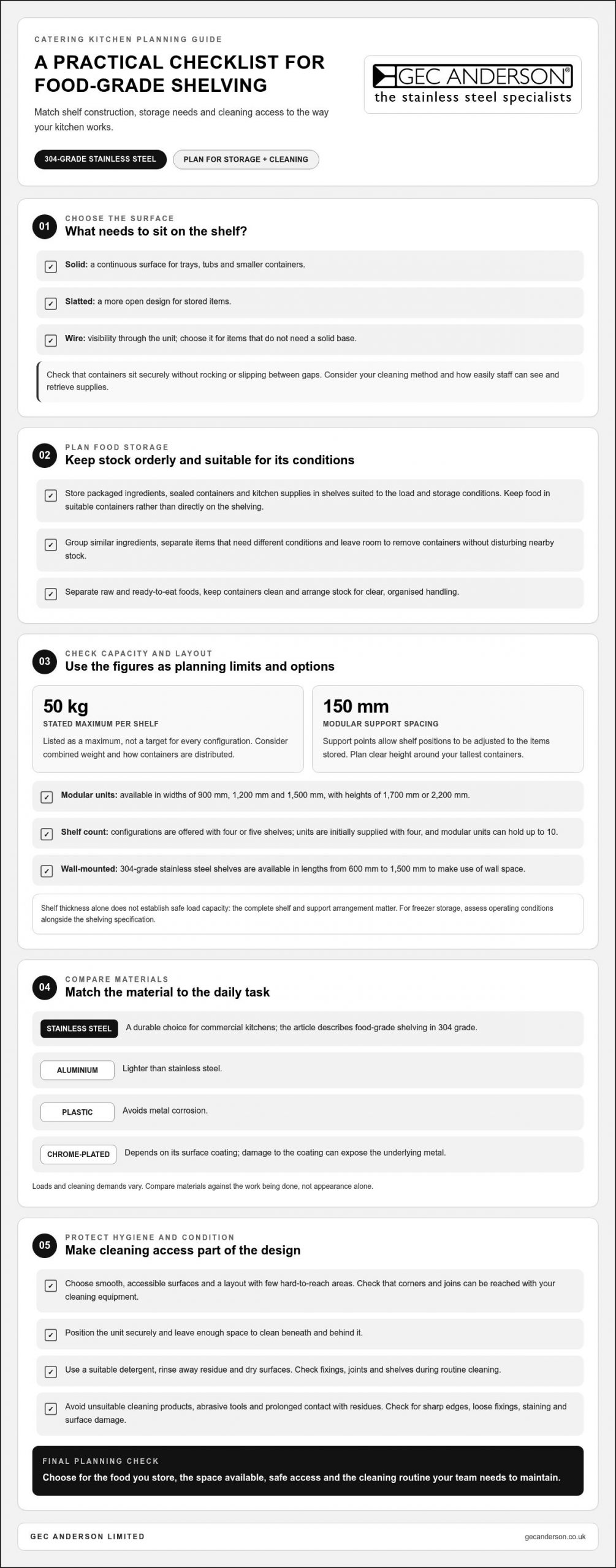
Adjustable shelves and legs
Adjustable shelving has supports that can be repositioned, while adjustable legs help level a unit on an uneven floor. Welded designs have fixed joints; boltless designs assemble without conventional bolts; adjustable units allow shelf positions to be changed.
Adjustable Shelf Positions
Modular shelving support points are spaced every 150 mm, so shelves can be placed at different heights to suit stored items. A unit can hold up to 10 shelves, although modular units are initially supplied with four. Choose the number and spacing around the containers, trays or equipment in your kitchen, leaving enough room to remove each item safely.
Plan shelf positions around the tallest items before loading the unit. For example, a large ingredient container may need more clearance than a stack of trays. Keep frequently used goods within easy reach, and place heavier items on lower shelves where the unit’s design allows.
Adjustable Legs
Adjustable feet help compensate for an uneven floor, allowing the unit to stand level instead of rocking. This matters in a busy kitchen, where staff place or remove containers throughout a shift. Set the feet evenly, then check that the frame is stable before loading the shelves.
Let floor conditions and cleaning access guide placement. Leave room to clean around the feet, and avoid locations where water or food residue routinely collects. In wet environments, check the feet and nearby floor during routine cleaning to spot movement or residue early.
Welded, Boltless and Adjustable Designs
Welded shelving has permanently joined components, creating a fixed frame that arrives assembled or in sections designed to be joined. Boltless shelving uses interlocking components instead of conventional bolts, which can simplify assembly and later reconfiguration. Adjustable shelving describes the ability to change shelf positions, not a separate joining method.
These features can overlap: a boltless unit may also have adjustable shelf supports. Choose according to whether the kitchen needs a fixed installation, straightforward assembly or a layout that can change with stock. Check how the supports engage and whether the shelves remain secure after repositioning.
For a practical layout, measure the space, identify the largest stored items and mark the required shelf levels. Then check the unit’s capacity and support arrangement before loading it. The 150 mm support spacing provides a defined adjustment interval, while the maximum of 10 shelves describes the modular unit’s stated configuration limit. Keep each shelf accessible for cleaning and daily stock rotation.
Review the layout as the kitchen’s storage needs change. If new containers need more clearance, reposition shelves within the support pattern rather than forcing items into a crowded space. A stable frame, level feet and secure shelf supports help keep storage orderly as requirements change.
What UK food hygiene rules apply to shelving in commercial kitchens and food premises
For UK food premises, shelving should support clean storage and help prevent contamination. Assess the surface, layout and cleaning access together. A stainless steel finish alone does not make a storage area hygienic; daily handling and maintenance matter too.
Plan shelving around the food and nearby work. Keep sealed ingredients separate from cleaning chemicals, and store containers so staff can identify their contents. Position shelves away from drips or splashes from sinks and preparation areas. A clear layout helps staff clean surfaces and spot spills.
Choose shelves with surfaces and joints that staff can reach during cleaning. Check the underside, brackets, corners and wall behind each shelf, where residue can collect. For example, a wall shelf above a worktop should leave enough room to wipe both surfaces. Avoid overcrowding, which can block access and conceal spills.
Include shelving in the kitchen’s cleaning routine. Remove stored items, clean the shelf with a suitable product, then rinse or dry it as the product instructions require. Return only clean containers and food packages. Check for residue, damage and loose fixings at the same time, and record findings through the site’s established cleaning procedures.
Organise storage to help prevent cross-contamination. Keep raw and ready-to-eat foods apart in separate, clearly identified containers or designated shelf areas. Store food in closed packaging or suitable containers, not directly on shelving. For example, group sealed ingredient tubs and keep them away from cleaning materials.
Inspect shelving during installation and routine cleaning. Look for sharp edges, corrosion, damaged finishes, loose brackets and surfaces that are difficult to clean. If damage creates a hygiene concern, remove affected items and address the defect before using that area for food storage. Keep access routes clear so staff can clean around freestanding units.
Hygiene requirements vary with the food, work process and room conditions. A dry store for sealed ingredients has different cleaning demands from a wet preparation area. Set the layout and cleaning method to suit each use, and review them when the menu, equipment or storage practices change.
For a kitchen layout that needs accessible, cleanable storage, plan your stainless steel shelving around the room, stored goods and cleaning access.
GEC Anderson Limited: Stainless Steel Worktops
GEC Anderson Limited supplies stainless steel shelving for catering kitchens, alongside stainless steel worktops, sinks, cabinets and doors. Products are available in standard, modular and made-to-measure formats, to suit projects of different scales.
Consider the wider kitchen layout when planning shelving. Coordinating storage with worktops and sinks, for example, can help organise preparation and cleaning areas. GEC Anderson supplies stainless steel products for new kitchens and existing spaces being updated. Choose the format that best suits your project requirements.
To discuss stainless steel products for your kitchen, contact GEC Anderson Limited.
Plan a cohesive catering kitchen
Use the shelving decision as a starting point for planning how the whole kitchen works. Map where ingredients arrive, where preparation takes place and where clean equipment is stored. This helps you decide how food grade stainless steel shelving should work alongside surfaces, sinks and storage, rather than treating each element as a separate purchase.
GEC Anderson Limited supplies stainless steel worktops, sinks, cabinets and doors. These products can help create a consistent specification for a new kitchen or an existing space being updated. A clear project brief, with priorities for storage, preparation and cleaning, gives you a practical basis for deciding what the room needs.
Contact GEC Anderson Limited to discuss stainless steel products for your kitchen. A considered plan is a strong foundation for an efficient, well-organised catering space.
Frequently Asked Questions
What are the benefits of commercial kitchen shelving?
Commercial kitchen shelving improves organisation, frees preparation surfaces and keeps frequently used stock accessible. For example, a catering team can assign one area to sealed dry ingredients and another to clean trays, reducing rearrangement during service. Choose a layout that supports stock rotation and leaves room to remove containers for cleaning. Shelving works best when positioned to match the kitchen’s workflow, from receiving goods to preparation and service. Clear shelf zones also make low-stock items easier to spot.
What weight capacities do commercial kitchen racking systems support?
Rated capacity depends on shelf construction, dimensions, supports and load distribution. One catering-shelf overview gives a maximum of 50 kg per shelf. Treat this as a shelf-level rating, not the total capacity of the complete rack, and don’t assume every configuration carries the same load. Check the specified limit for the chosen unit, then distribute containers evenly; concentrated loads can place more stress on one area.
Why are food industry racking systems used?
Food industry racking creates dedicated places for ingredients, containers and equipment, helping staff find items and return them consistently. A bakery, for instance, might store sealed flour containers separately from cooling trays and packaging supplies. A planned arrangement can also support stock rotation: place older stock where staff will use it first and keep labels visible. This makes storage easier to manage as production schedules change.
What grades of stainless steel are suitable for food-grade shelving, such as 304 vs 316?
304 and 316 are stainless steel grades used for different material requirements. Product specifications identify 304 as domestic grade EN 1.4301, 18/8, AISI 304, and 316/319 as acid-resisting grade EN 1.4401, 18/12. The latter designation is relevant where acid resistance is a consideration. For food grade stainless steel shelving, match the grade to the environment, cleaning products and exposure expected in the kitchen.
What load capacities do food-grade stainless steel shelves typically support?
There isn’t one capacity that applies to every shelf design. A catering-shelf overview lists up to 50 kg per shelf, but that figure relates to the stated shelf, not every product on the market. Shelf dimensions, supports and construction affect the load rating. Weigh the containers and their contents together, then place them evenly across the shelf. Keep the complete unit’s stated limits in mind when planning storage.