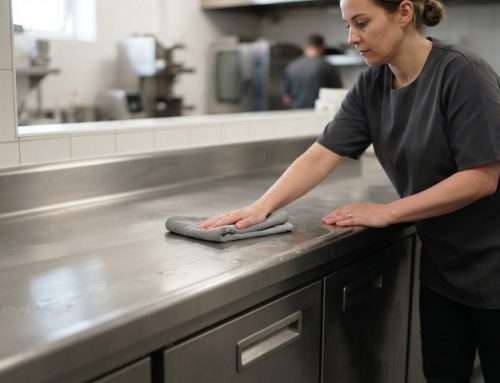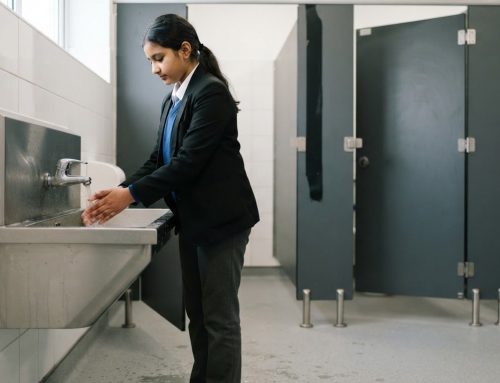

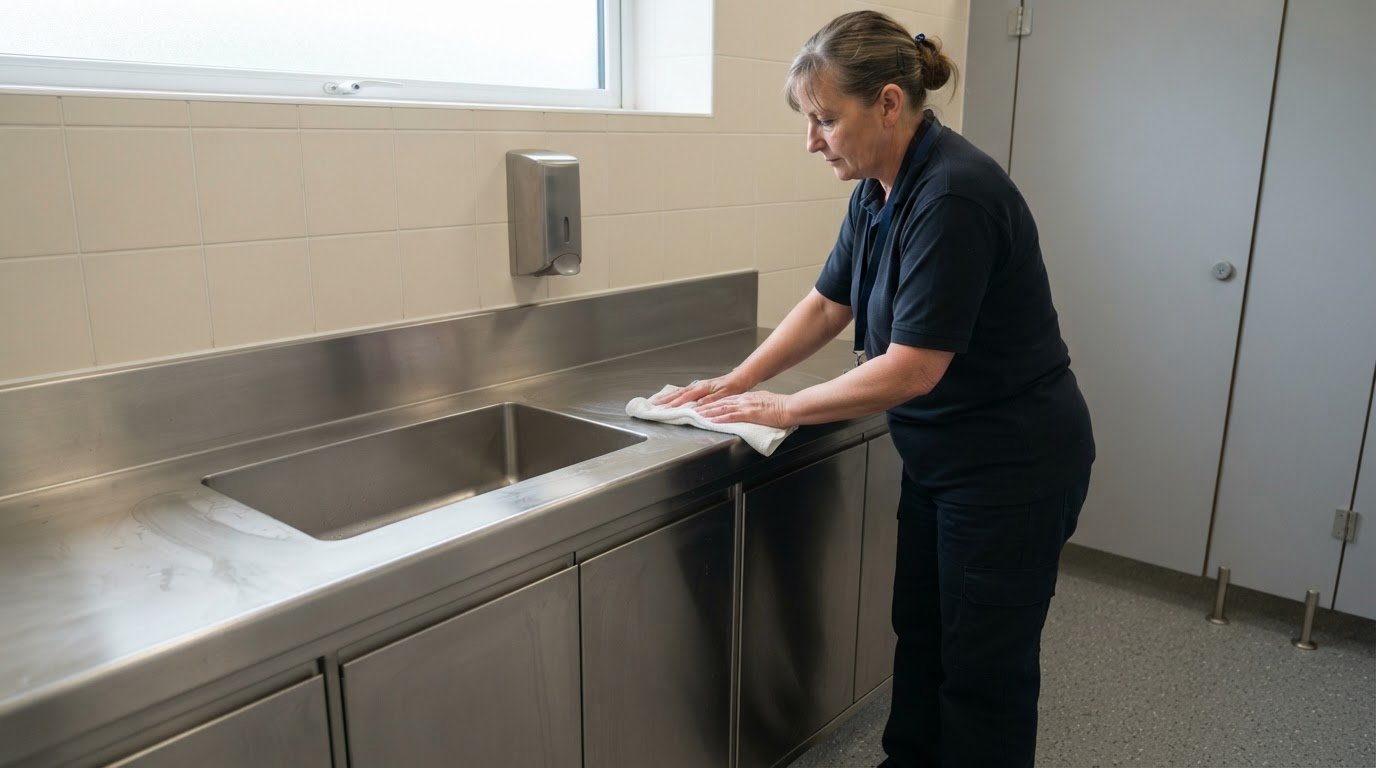
Public toilets are easier to keep clean when their surfaces and layout support routine maintenance. The most practical easy to clean public toilet solutions combine suitable materials with a consistent approach to floors, walls, cubicle doors and touchpoints, where missed marks can quickly affect the whole space. Reducing unnecessary contact and dealing with mess promptly also helps keep facilities presentable between scheduled cleans.
Keeping a public washroom presentable is an ongoing operational task, not simply a matter of cleaning the floor and toilet bowls. A clear routine helps staff work methodically and spot areas that need attention—a principle highlighted by commercial janitorial providers like Cleanit Maintenance Systems when managing high-traffic public facilities.
This article explains practical cleaning steps, material choices that are straightforward to maintain, and ways to reduce mess between cleans. It also shows how considered fittings and surfaces can support day-to-day upkeep, helping facility teams make informed decisions about maintenance and refurbishment.
Key Takeaways
- Build a repeatable cleaning routine that addresses floors, walls, cubicle doors and frequently touched surfaces in a clear sequence.
- Choose finishes and fittings with day-to-day maintenance in mind, and consider how material selection can support a more resilient washroom.
- Use visible cleaning schedules, clear user signage and timely restocking to help keep facilities presentable between scheduled cleans.
- Plan the layout around practical cleaning access, user comfort and accessibility, using BS 6465 Part 1, identified by British Standards Institution as relevant to public toilets.
- Consider stainless steel worktops, sinks, cabinets and shelving where these fit the requirements of a public washroom project.
How to improve public toilets?
Improve a public toilet by combining practical cleaning access with touchless controls and accessible facilities. For UK projects, British Standards Institution identifies BS 6465 Part 1 as a British Standard relevant to public toilets; the UK legislation register lists the Public Lavatories (Turnstiles) Act as dating from 1963.
Touchless controls and accessible use
Sensor taps, soap dispensers and automatic flushing reduce contact with shared controls. Specify controls that are easy to operate, including for people with limited reach or dexterity. Sensors should respond reliably to normal use, while remaining accessible to staff for cleaning and maintenance.
Set realistic expectations for hygiene technology. Antimicrobial coatings and automatic systems do not replace routine cleaning, and a coating’s performance depends on its material and use. Treat a coating as one design consideration, not a substitute for removing soil, disinfecting surfaces as directed or maintaining the facility.
Water use and maintenance costs
To reduce water use, consider sensor-operated taps and flushing controls that prevent unnecessary running or repeated activation. Pair them with regular checks for leaks and faulty sensors. Usage-monitoring sensors can also flag maintenance needs, helping teams address faults before they disrupt daily operation.
Maintenance depends on access as well as technology. Choose controls staff can reach without dismantling surrounding finishes, and include them in scheduled inspections. Blocked sensors and leaking fittings can undermine efficient operation, so prompt fault reporting and a clear maintenance routine matter.
Accessible provision requires more than an automatic tap. Plan spacious stalls, grab bars, and sinks and hand dryers reachable from a seated position. Clear signs, tactile indicators, easy-to-open doors and barrier-free entrances with ramps can improve access and navigation. Keep routes to facilities clear, including at portable toilets, so users can reach the entrance without avoidable obstruction.
In accessible toilets, position grab bars to support movement between the toilet and nearby space. Keep handwashing facilities within seated reach and ensure doors are manageable for people with different mobility needs. Consider these details together: a reachable sink offers little benefit if the route to it is obstructed.
For portable facilities, assess the location and approach as part of the layout. A clear route, usable entrance and sufficient space around the unit support practical access. In permanent facilities, apply the same care to door swings, circulation space and the relationship between cubicles and handwashing areas.
Use BS 6465 Part 1 as a relevant British Standard reference when planning public toilets, rather than treating one fitting as a complete accessibility solution. The Public Lavatories (Turnstiles) Act is listed as dating from 1963 by the UK legislation register; that date alone does not establish which present-day requirements apply to a particular project. Assess the facility’s design, location and intended users together.
To improve hygiene and access, map the user journey from entrance to cubicle, basin and exit. Identify touchpoints, restricted routes and controls that are difficult to operate. Then prioritise changes that remove barriers and make routine cleaning and maintenance more straightforward.
Cleaning floors, walls, cubicle doors and touchpoints
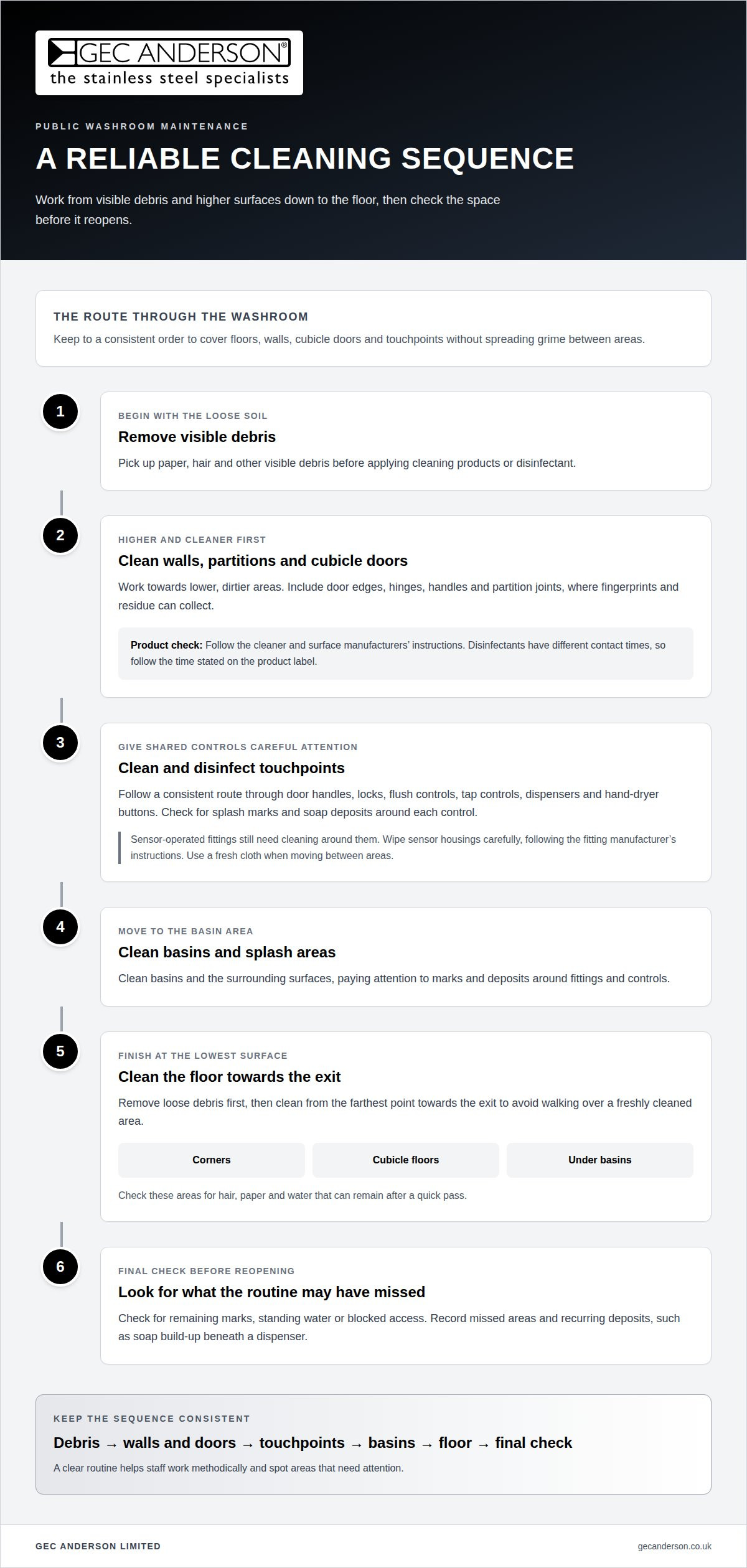
A reliable cleaning sequence helps staff cover the whole washroom without transferring soil between surfaces. Experienced workplace contractors such as Brilliant Office Cleaning advocate systematic workflows to maintain high hygiene standards across shared facilities. Start by removing visible debris, then apply cleaning products and disinfectants according to their labels. Follow product instructions closely, as disinfectants have different contact times.
Work from cleaner, higher surfaces towards lower, dirtier areas. Wipe walls and cubicle doors before cleaning the floor, so loosened dust and drips can be removed afterwards. Pay particular attention to door edges, hinges, handles and partition joints, where fingerprints and residue collect. Use a fresh cloth when moving between areas to avoid spreading grime.
Follow a consistent route when cleaning touchpoints. Include door handles, locks, flush controls, tap controls, dispensers and hand-dryer buttons. Sensor-operated fittings still need cleaning around them; wipe sensor housings carefully, following the fitting manufacturer’s instructions. Check for splash marks and soap deposits around each control.
Choose a floor-cleaning method suited to the finish and type of soil. Remove loose debris first, then clean from the farthest point towards the exit to avoid walking over a freshly cleaned area. Pay attention to corners, cubicle floors and the space beneath basins, where hair, paper and water can remain after a quick pass.
Which cleaning products and methods are safe for public toilet materials? Use products and tools suited to each surface, following the material and cleaner manufacturers’ instructions. Remove debris before applying disinfectant, and leave it on the surface for the contact time stated on its label.
A practical routine can be organised as a short checklist:
- Remove paper, hair and other visible debris before applying products.
- Clean walls, partitions and cubicle doors, including handles and edges.
- Disinfect high-touch controls using the stated contact time.
- Clean basins and surrounding splash areas, then finish with the floor.
- Look for remaining marks, standing water or blocked access before reopening the area.
Cleaning staff should record missed areas or recurring deposits, such as soap build-up beneath a dispenser. These observations can reveal where a fitting’s position makes wiping difficult or where the routine needs a clearer sequence. Stainless steel cabinets or doors may suit refurbishments where easily wiped surfaces are a priority; cleaning still depends on using the right method for the finish.
For projects reviewing washroom finishes and fittings, consider washroom surface options as part of the cleaning plan. Selecting surfaces alongside the routine helps staff reach edges, maintain touchpoints and finish each task systematically.
Keeping toilets cleaner between scheduled cleans
A scheduled clean sets the baseline, but use continues between visits. Combine a regular timetable with checks prompted by visible mess, heavy use or depleted supplies. This keeps attention on actual conditions rather than relying on the timetable alone.
How often should public toilets be cleaned in the UK? Set a regular schedule, then adjust checks to usage and observed conditions. Busy periods, spills and empty dispensers are practical signals that attention is needed between planned cleans.
Make cleaning activity visible. Display when the washroom was last cleaned and when it is due to be cleaned again. A clear record helps staff see whether the next visit is approaching and gives users a straightforward indication of maintenance. Keep the notice legible and update it after each completed clean.
Use signs to encourage considerate use. A concise request to leave the cubicle, basin and floor tidy can remind visitors to dispose of paper properly and report spills. Place the message near the exit or another visible point, without obstructing access or essential instructions. Signs support staff routines, but do not replace cleaning or replenishment.
Automatic sanitation systems can support consistent cleanliness between scheduled visits. Smart sensors can monitor toilet use and cleanliness, then signal when supplies need replenishing or maintenance is required. For example, a low-soap alert can direct staff to a dispenser before the next planned round. Responding promptly helps prevent minor issues from affecting the user experience.
Small user behaviours also affect cubicle conditions. Encourage visitors to close the toilet lid before flushing as a simple hygiene practice. Keep the request simple and place it where it can be seen before use. Check that the lid and surrounding area remain clean during staff rounds.
Between scheduled cleans, staff can prioritise these practical checks:
- Look for visible spills on floors and around basins, then arrange prompt cleaning.
- Check soap and paper dispensers, refilling them when supplies run low.
- Review sensor alerts for faults, restocking needs or cleanliness concerns.
- Confirm the cleaning notice reflects the latest completed visit and next planned clean.
- Remove waste that is overflowing or obstructing a cubicle or entrance.
Record recurring issues, such as repeated spills beside a basin or frequent dispenser shortages. These patterns can inform staff rounds, supply placement and maintenance priorities. A simple log turns observations into practical adjustments, helping teams maintain a cleaner facility between full cleans without relying on signs or technology alone.
Toilet materials and vandal resistance
Material choice affects cleaning access, repair needs and how well a public washroom withstands demanding use. Assess each surface alongside its cleaning method, fixture design and exposure to damage.
Vandal-resistant toilet materials
For a high-use cubicle, consider how doors, partitions and fittings withstand impact, scratching and repeated cleaning. Robust materials can help limit damage, but no surface makes a facility vandal-proof. Review the complete assembly, including fixings, edges and exposed hardware, rather than judging a panel by its face alone.
Assess each project by identifying likely damage points, then selecting materials and fittings suited to those conditions. A door edge or loose handle may need as much attention as the main panel. Choose construction that lets staff inspect and clean around components without leaving narrow, inaccessible gaps.
Easy-clean features and surfaces
Smooth, accessible surfaces are easier to wipe than details with deep recesses or awkward joints. Look closely at corners, seams and the space around basins, where splash residue can collect. A practical finish must also tolerate the cleaning products and methods specified for that material.
For each proposed surface, match the cleaning routine to the manufacturer’s care instructions. This helps avoid abrasive tools or unsuitable chemicals that could damage the finish. Consider how staff will reach the whole surface, including behind fittings and along the base of a partition.
How do wall-hung toilets compare with floor-mounted toilets for cleaning? A wall-hung toilet leaves the floor beneath the pan accessible for wiping, while a floor-mounted model has a base and surrounding junction to clean. The choice should account for installation design, maintenance access and the cleaning routine.
Compare materials by function, not appearance alone. Cubicle doors, basin surrounds and floors face different demands, so one finish may not suit every area. For example, a surface exposed to frequent splashing needs a cleaning method that reaches its edges and surrounding joints. A well-planned layout can reduce hard-to-reach transitions.
How much do easy-clean public toilet fixtures and surfaces cost in the UK? The total project cost depends on the chosen materials, dimensions, number of fixtures, installation requirements and condition of the existing facilities. Specify these elements together, since changes to the layout or finish can affect the work required.
Before choosing, map the surfaces and fittings that need regular cleaning, then assess durability and access together. A durable cubicle door, for example, can still create a maintenance challenge if its hinges and lower edge are difficult to reach. This joined-up assessment helps balance cleaning effort, repair access and resilience.
What features make public toilets easy to clean?
Cleanability depends on how surfaces, fittings and circulation space work together. During design, trace the cleaner’s route through the room and identify corners, edges and connections that are difficult to reach. A basin surrounded by dispensers or pipework, for example, may leave little room to wipe the wall and work surface thoroughly.
Planning easy to clean public toilet solutions means treating access as part of the specification, not an afterthought. Review each fitting in relation to its neighbours. A tap positioned close to a wall can create a narrow gap, while an obstructed floor area can slow routine cleaning. Small layout decisions affect the effort required every day.
Use this design review to identify potential obstacles:
- Check that cleaners can reach the full basin, its surrounding surface and the wall behind it.
- Allow access around dispensers and fittings for wiping, replenishment and inspection.
- Review corners and junctions where partitions meet walls or floors.
- Position bins and stored supplies so they don’t obstruct cleaning routes.
- Match proposed finishes with the cleaning products and tools intended for the facility.
Consider the space around fittings as well as their visible surfaces. A shelf close to a corner may make dust and residue harder to remove. A dispenser can also complicate cleaning if another fixture blocks refill access. During specification, consider whether staff can reach, clean and maintain each element without moving adjacent equipment.
Plan maintenance access before work begins. Staff should be able to inspect fittings and replenish dispensers without disturbing surrounding finishes. Map routine tasks against the proposed layout to see whether a small change in position could improve access for cleaning and upkeep.
Easy to clean public toilet solutions also depend on coordinating surfaces with the facility’s maintenance plan. Keep care instructions available to staff and match the cleaning method to each finish. This gives teams a clear basis for choosing suitable products and tools, while helping prevent avoidable damage from unsuitable cleaning practices.
Review the washroom as a series of connected cleaning zones. The basin area, for example, includes the bowl, tap, work surface and adjacent wall. Cubicles need access around doors and partitions, while clear circulation space helps staff move between areas. A layout designed for these tasks is more practical to maintain than one planned only for appearance.
For a facility refurbishment, discuss washroom design requirements and include cleaning access in the specification from the outset.
GEC Anderson Limited
GEC Anderson Limited supplies stainless steel products for public washrooms where cleaning access and durability matter. Stainless Steel Worktops, Stainless Steel Sinks, Stainless Steel Cabinets & Doors and Stainless Steel Shelving are available as standard, modular or made-to-measure products to suit different layouts and project scales.
Consider these options during a refurbishment or new facility project when existing surfaces, storage or work areas make routine cleaning difficult. Share the intended layout and practical requirements to develop a specification around the washroom’s use, available space and maintenance needs.
For a considered approach to public washroom materials and fittings, contact GEC Anderson Limited to discuss your project.
Plan the next washroom improvement
Start with a clear project brief. Record which areas are hardest to maintain, where fittings restrict access and which surfaces need attention most often. Use these observations to shape a specification around cleaning routines, user needs and the existing layout. This turns the aim of easy to clean public toilet solutions into practical design decisions, rather than a collection of unrelated upgrades.
For a refurbishment, consider how proposed changes will work together once the washroom is in use. Materials and fittings should suit their position, maintenance requirements and the people using the facility. A coordinated specification gives project teams a practical basis for planning while keeping operational needs in view.
When you’re ready to discuss suitable stainless steel elements for your public washroom project, contact GEC Anderson Limited. A considered brief is a strong starting point for creating a facility that is easier to maintain and ready for its daily demands.
Frequently Asked Questions
How can cleanliness be consistently maintained?
Consistent cleanliness depends on clear task ownership and a reliable handover between staff. Use a cleaning record that distinguishes completed tasks from faults needing attention, such as a damaged dispenser or blocked basin. This helps the next team understand what remains unresolved, rather than treating each visit as a fresh start. Review recurring issues with facilities staff and adjust responsibilities or maintenance priorities accordingly.
Which public toilet materials and finishes are most hygienic and durable?
Stainless steel is a practical option for public washroom surfaces that need hygienic, durable construction. Its finish still requires suitable care: apply a general-purpose cream cleaner with a damp cloth, following the grain, then rinse with cold water and dry with a soft cloth. Remove chloride-containing materials, such as salt, promptly because they can cause point-etching. Careful cleaning helps preserve the finish.
What are the easiest-to-clean public toilet layouts and fixtures?
Layouts with accessible work surfaces and fewer difficult joints are simpler to maintain. An integrated sink and worktop with seamless edges, for example, can reduce the joins staff need to clean around. Keep the surrounding area clear enough to reach the basin, tap and adjacent surfaces. During specification, consider how cleaners will access each connection and whether routine maintenance can be carried out without disturbing neighbouring fixtures.
How do touch-free taps, flushes and dispensers reduce cleaning needs?
Touch-free taps, flushes and dispensers reduce the number of controls users need to handle, but they don’t remove the need for cleaning. Doors, cubicle locks and other fittings remain contact points. Include sensor housings and nearby surfaces in the cleaning plan, and make sure staff can reach them without moving other fittings. This keeps attention on the whole user journey, not only the automated controls.