
A rust mark on stainless steel doesn’t automatically mean the surface itself is corroding. Before using a cleaner or abrasive, identify the mark and choose a method that won’t compromise the finish. If you’re wondering how to remove rust from stainless steel safely, start by considering how long the mark has been there: a recent stain needs a different treatment from one that has persisted.
Rust staining can come from foreign iron or carbon steel, or from water with a high iron content. It’s also worth taking care when cleaning: rubbing across the grain, using an unsuitable substance, or leaving residue behind may affect the surface. Removing the stain is only part of the job. The source of the mark and the way you finish cleaning matter too.
This guide explains how to choose a method for recent or persistent rust, apply it with the grain, and finish with a cold-water rinse and soft-cloth dry. It also covers possible causes of staining and ways to reduce the risk of further marks. The steps follow GEC Anderson Limited’s stainless steel care guidance, including the precautions needed for a stronger treatment.
Key Takeaways
- Rust-coloured marks can come from foreign iron or carbon steel, or from high-iron water, rather than corrosion of the stainless steel itself.
- Learn how to remove rust from stainless steel by matching the method to whether the mark is recent or persistent.
- Follow the grain when cleaning, then rinse with cold water and dry with a soft cloth.
- Remove chloride-containing substances such as salt promptly, and don’t leave water or synthetic-detergent solutions on the surface.
- A persistent mark may indicate deeper surface damage. Check the care guidance before choosing a treatment.
Why rust appears on stainless steel and what the mark may mean
A rust-coloured mark is visible staining, but its appearance alone can’t show whether the stainless steel beneath it has corroded. Stainless steel resists corrosion because of its composition and the protective surface it forms. For an overview of what stainless steel is, see the material’s general properties. Resistance isn’t immunity, and rust from another source can settle on the surface.
GEC Anderson Limited’s care guidance identifies contact with foreign iron or carbon steel as one possible source. Water running over a steel object, for example, may carry iron residue onto a stainless steel surface. Water with a high iron content can also leave a rust stain after droplets evaporate, even if no rusty object has touched the area. Where poor water quality causes recurring marks on metal fixtures, water treatment providers such as A Clear Alternative can help address mineral impurities at the source.
Chloride-containing substances, including salt, are another concern. If they remain on the surface, they may contribute to corrosion. The location and pattern of a mark can offer clues about its source, but they can’t confirm the depth of any damage. Consider how long it has been there before deciding how to remove rust from stainless steel.
Can stainless steel develop rust stains?
Yes. Rust may transfer from foreign iron or carbon steel and stain the surface without indicating corrosion of the stainless steel itself. A stain may also occur alongside deeper surface damage, particularly if it has persisted. Colour alone can’t distinguish between these possibilities, so don’t assume that cleaning will remove every mark completely. Consider the likely source and how long the stain has remained before choosing a method.
What can cause rust marks on stainless steel?
Consider whether iron or carbon steel has been in contact with the surface, or whether droplets of high-iron water have dried there. Salt and other chloride-containing materials are a separate concern because lingering deposits can affect the surface. These causes may leave similar-looking marks, so note where the stain appears and what may have contacted the area. This helps you choose the next cleaning step without treating every mark as the same problem.
How to remove recent rust from stainless steel
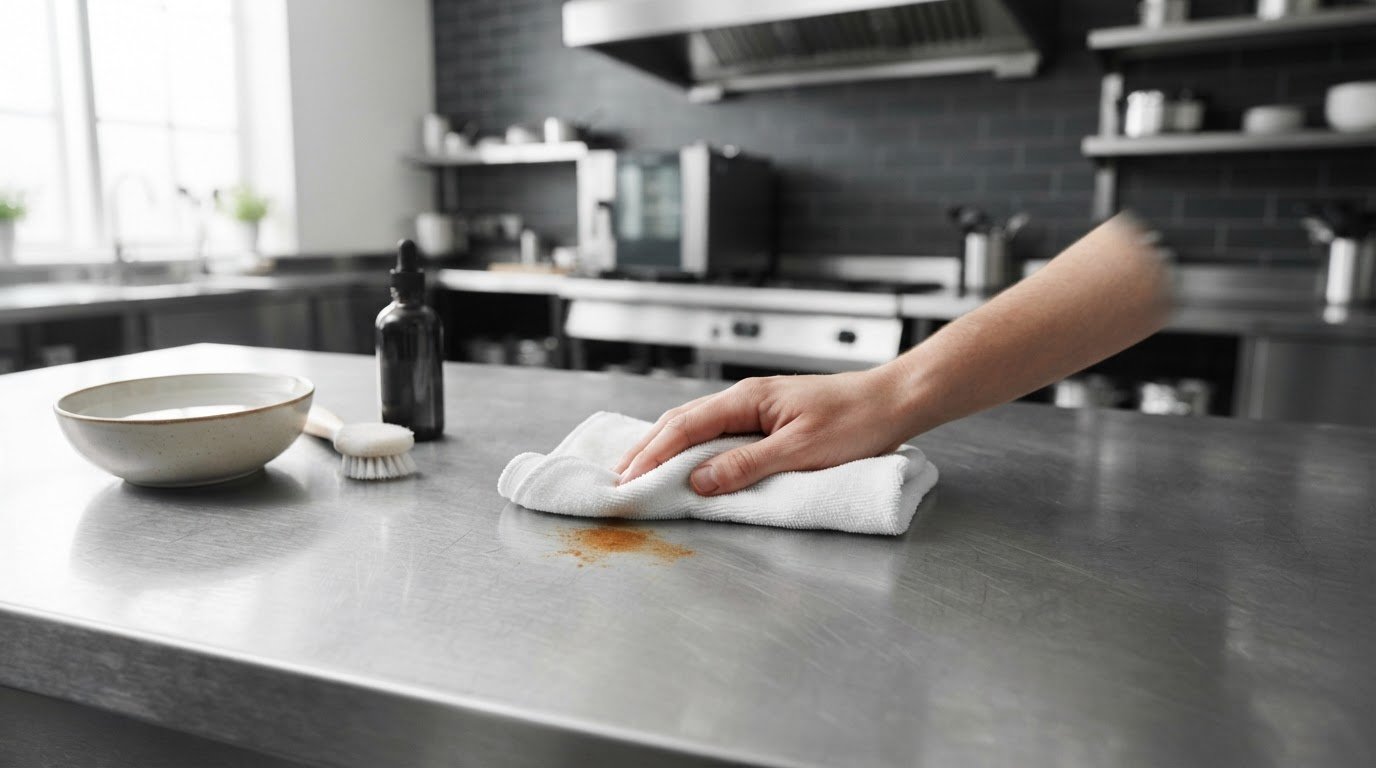
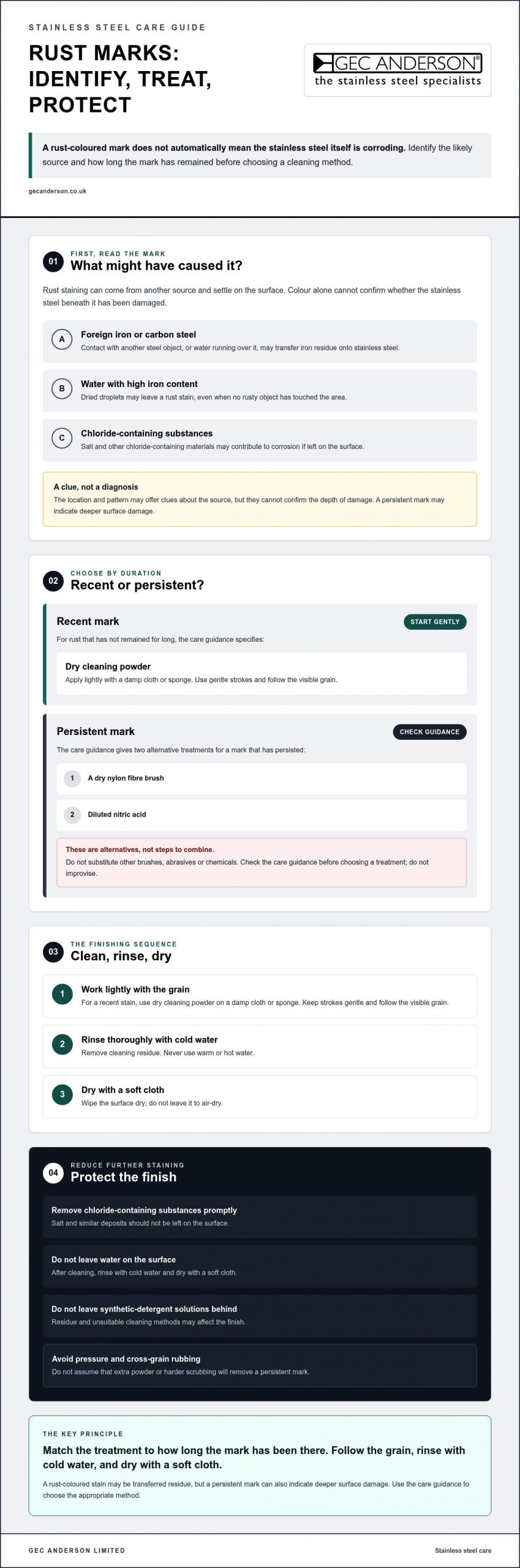
For rust that hasn’t persisted for long, GEC Anderson’s care guidance specifies dry cleaning powder applied lightly with a damp cloth or sponge. Use gentle strokes and follow the visible grain of the stainless steel. Avoid pressing hard or rubbing across the grain, as unsuitable cleaning technique can affect the finish.
The step-by-step method for a fresh rust stain
Complete the whole sequence, including rinsing and drying. These steps remove cleaning residue and prevent water from being left on the surface.
- Apply lightly: Put dry cleaning powder on a damp cloth or sponge. Work gently on the mark, following the grain.
- Rinse with cold water: Rinse the area thoroughly. Never use warm or hot water.
- Dry with a soft cloth: Wipe the surface dry. Don’t leave it to air-dry.
Use this method only for rust that hasn’t remained for long. If the mark is small, focus on that area rather than scrubbing across a wider section. For general advice on how to safely clean stainless steel, the American Cleaning Institute has a separate guide. For rust staining, follow the care instructions for your particular surface.
What to do if the mark remains
If the stain doesn’t clear, don’t assume that more powder or extra pressure will solve it. A persistent mark has different specified treatment options, and repeated rubbing may risk affecting the finish. The care guidance gives two options for rust that has persisted: a dry nylon fibre brush or diluted nitric acid. They are alternatives, not steps to combine. Don’t improvise with other products or tools.
GEC Anderson Limited’s care information can help you match a treatment to the condition of the stain. After cleaning, rinse with cold water and dry with a soft cloth. For further guidance on maintaining stainless steel, consult GEC Anderson Limited stainless steel care information.
How to treat persistent rust without choosing the wrong method
A mark that has remained for an extended period needs a different approach from a recent stain. GEC Anderson Limited’s care guidance specifies two options: a dry nylon fibre brush or diluted nitric acid. Choose one, not both, and don’t substitute other brushes, abrasives or chemicals. Neither treatment can guarantee complete removal if the surface has been damaged.
When is a dry nylon fibre brush specified?
A dry nylon fibre brush is one option specified for rust that has persisted for an extended period. Keep the brush dry and work in the direction of the stainless steel grain. Long-standing staining may indicate deeper, potentially permanent surface damage, so the mark may not disappear completely. If it remains, don’t switch to an unlisted tool or apply greater force.
What precautions apply to diluted nitric acid?
The other specified option is nitric acid diluted at exactly one part HNO3 to four parts water. This is a strong acid, not a general-purpose cleaning solution. Ensure good ventilation and follow the usual rules for handling strong acids. If you aren’t equipped to handle it appropriately, don’t improvise. Seek suitable guidance before proceeding.
After either treatment, rinse the surface thoroughly with cold water, never warm or hot water, then dry it with a soft cloth. Don’t leave it to air-dry. This final sequence applies to both options: it clears residue and avoids leaving water on the stainless steel.
To decide how to remove rust from stainless steel, first consider whether the mark has persisted. Use one of the two specified treatments only for long-standing rust. If the finish looks affected, remember that cleaning may address staining but can’t necessarily reverse deeper damage. Follow the product-care guidance rather than testing stronger or unlisted methods.
How to reduce further staining and avoid damaging stainless steel
Careful routine cleaning can help limit repeat staining and protect the surface finish. Remove salt and other chloride-containing materials promptly instead of allowing them to remain on the stainless steel. These deposits may contribute to corrosion. Paying attention to spills and residue also makes it easier to spot a developing mark before it has persisted.
Which substances should be removed promptly?
Remove salt and other chloride-containing material as soon as practical. Avoid exposing the surface to strong, concentrated mineral or organic acids, which can cause dull greyish discolouration or, in more severe cases, deeper cuts in the surface. A stronger chemical isn’t necessarily a better rust treatment. Use only the method specified for the mark and follow the care guidance for the surface.
Take care not to leave residue behind. Water or solutions containing synthetic detergents can cause grime or discolouration if they remain on the stainless steel. A surface that looks clean after wiping may still be wet, so include rinsing and drying rather than treating them as optional finishing steps.
Why rinsing and drying technique matters
After every cleaning step, rinse thoroughly with cold water. Never use warm or hot water. Then dry the surface with a soft cloth; don’t leave it to air-dry, as lingering droplets may leave marks. Whenever you apply cleaning material, follow the grain of the stainless steel. This consistent technique removes residue while reducing the risk of marking the finish through unsuitable rubbing.
These habits support the stain-removal methods described above, but they don’t replace choosing the right treatment. When deciding how to remove rust from stainless steel, first consider whether the mark is recent or persistent, then use the specified method for that condition. Finish with a cold-water rinse and soft-cloth drying after each cleaning step.
The same principles apply across stainless steel surfaces in wet environments. If you are specifying or maintaining stainless steel mirrors for washrooms, the same care routine — cleaning with the grain, rinsing with cold water and drying with a soft cloth — applies to those products too.
For guidance on caring for stainless steel products, read GEC Anderson’s stainless steel care guidance.
Maintaining GEC Anderson stainless steel with careful cleaning
Start by identifying the mark, then choose the method intended for its condition. Recent rust and rust that has persisted for an extended period have different treatments, so don’t substitute methods or add unlisted products. Whatever the stain, rinse thoroughly with cold water and dry with a soft cloth. Never leave the surface to air-dry.
A simple stainless steel cleaning checklist
- Assess the mark: Consider whether it appears recent or has remained for an extended period. Its appearance alone can’t confirm whether there is deeper surface damage.
- Choose the specified method: For a recent mark, use dry cleaning powder lightly with a damp cloth or sponge. For persistent rust, use one specified option: a dry nylon fibre brush or diluted nitric acid, handled with the required precautions.
- Clean with care: Follow the stainless steel grain whenever you apply cleaning material. Don’t increase pressure or improvise if the mark doesn’t clear.
- Finish properly: Rinse thoroughly with cold water after cleaning, then dry with a soft cloth.
Consistency matters. Lingering water or cleaning residue can contribute to grime or discolouration, while unsuitable rubbing or chemicals may affect the finish. These steps provide a practical sequence for how to remove rust from stainless steel, but they can’t guarantee that every mark will disappear.
When to seek product-specific care guidance
If a stain remains after the appropriate treatment, or the surface looks deeply marked, proceed cautiously. Persistent marks may indicate deeper, potentially permanent surface damage. A description or image alone can’t establish the condition of the steel, so don’t assume a visible mark is only surface residue or that further cleaning will restore the finish. Refer to care guidance for the specific product. For a stainless steel sink, use sink-specific cleaning instructions rather than assuming every surface should be treated identically.
GEC Anderson’s manufacturer care guidance is a useful reference for maintaining its stainless steel products. Explore GEC Anderson’s stainless steel products and care information for advice relevant to your surface.
Keep stainless steel looking its best with careful care
The right method depends on how long a rust mark has remained. For a recent stain, apply the specified dry cleaning powder lightly with a damp cloth or sponge. Persistent rust calls for one of the limited methods in the care guidance and may indicate deeper, potentially permanent surface damage.
When considering how to remove rust from stainless steel without overlooking the finish, follow the grain whenever you apply cleaning material. Rinse thoroughly with cold water, then dry with a soft cloth. Don’t assume every mark has the same cause or that every stain can be removed completely.
GEC Anderson supplies stainless steel products for residential and professional environments and provides cleaning and maintenance guidance. Explore GEC Anderson stainless steel products and care guidance for information relevant to your surface.
With a methodical approach and product-specific care guidance, you can clean with greater confidence. Visit GEC Anderson’s website for care information relevant to your stainless steel surface.
Frequently Asked Questions
Can stainless steel rust?
Yes, stainless steel can develop rust stains, and in some cases the surface itself may be affected. A visible mark may come from foreign iron or carbon steel that has contacted the steel, rather than proving corrosion beneath it. High-iron water can also leave a stain after droplets evaporate. The mark’s colour alone can’t show the extent of any damage, so don’t assume every stain will come off completely.
How do you remove a fresh rust stain from stainless steel?
For rust that hasn’t persisted for long, apply dry cleaning powder lightly with a damp cloth or sponge, following the stainless steel grain. Work gently rather than scrubbing forcefully. Rinse thoroughly with cold water, then dry with a soft cloth. Never use warm or hot water or leave the surface to air-dry. This is the specified method for a recent mark and the practical starting point for how to remove rust from stainless steel.
What removes long-standing rust from stainless steel?
For rust that has persisted for an extended period, the specified options are a dry nylon fibre brush or diluted nitric acid at one part HNO3 to four parts water. They’re alternatives, not treatments to combine. If using the acid, ensure good ventilation and follow the usual rules for handling strong acids. After either method, rinse thoroughly with cold water and dry with a soft cloth. Long-standing marks may reflect deeper, potentially permanent surface damage.
Can vinegar remove rust from stainless steel?
Vinegar isn’t one of the specified treatments for rust stains in GEC Anderson’s care guidance. The guidance lists vinegar for calcium deposits and identifies separate methods for recent and persistent rust. Don’t use vinegar as an improvised rust treatment. Choose the method that matches how long the rust has remained, then rinse with cold water and dry with a soft cloth.
Why has rust appeared on my stainless steel sink or worktop?
Rust staining on a stainless steel sink or worktop may come from foreign iron or carbon steel that has touched the surface. Water with a high iron content can also leave rust-coloured marks after droplets evaporate. Salt and other chloride-containing materials are a separate concern because they can contribute to corrosion if left in contact with stainless steel. The stain’s appearance alone doesn’t confirm whether the surface beneath it is damaged.
Should I use hot water or let stainless steel air-dry after cleaning?
No. After cleaning, rinse the stainless steel thoroughly with cold water, never warm or hot water, then dry it carefully with a soft cloth. Don’t leave it to air-dry. Water or cleaning solution left on the surface can contribute to grime or discolouration, so rinsing and drying are essential parts of the process. Follow the grain whenever you apply cleaning material.