
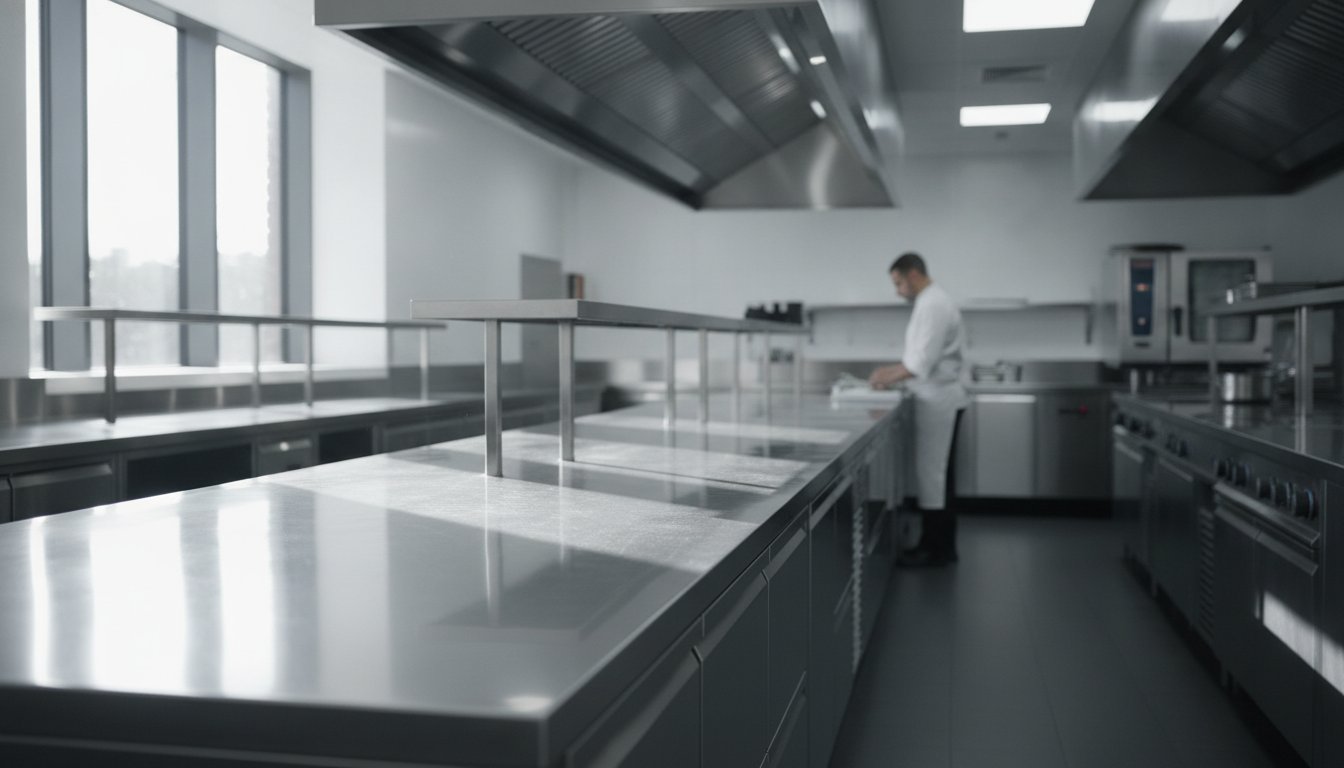
Could a single design choice define the operational success of your kitchen for the next half-century? Most head chefs and facility managers understand that the relentless pace of professional food service demands equipment that refuses to fail. You’re likely familiar with the frustration of inferior materials that dent, corrode, or harbour bacteria in hidden crevices. When considering the benefits of stainless steel in commercial kitchens, it’s clear that this material is not merely a surface choice but a fundamental pillar of food safety and structural longevity.
This guide explores why high-grade, bespoke stainless steel remains the unrivalled standard for those who prioritise precision and hygiene. You’ll discover how the transition from standard fixtures to seamless fabrication ensures absolute compliance with food safety laws whilst creating a polished, professional environment. We will examine the technical advantages of specific steel grades, the long-term value of a 50-year life cycle, and the functional superiority of join-free surfaces in high-traffic British environments.
Key Takeaways
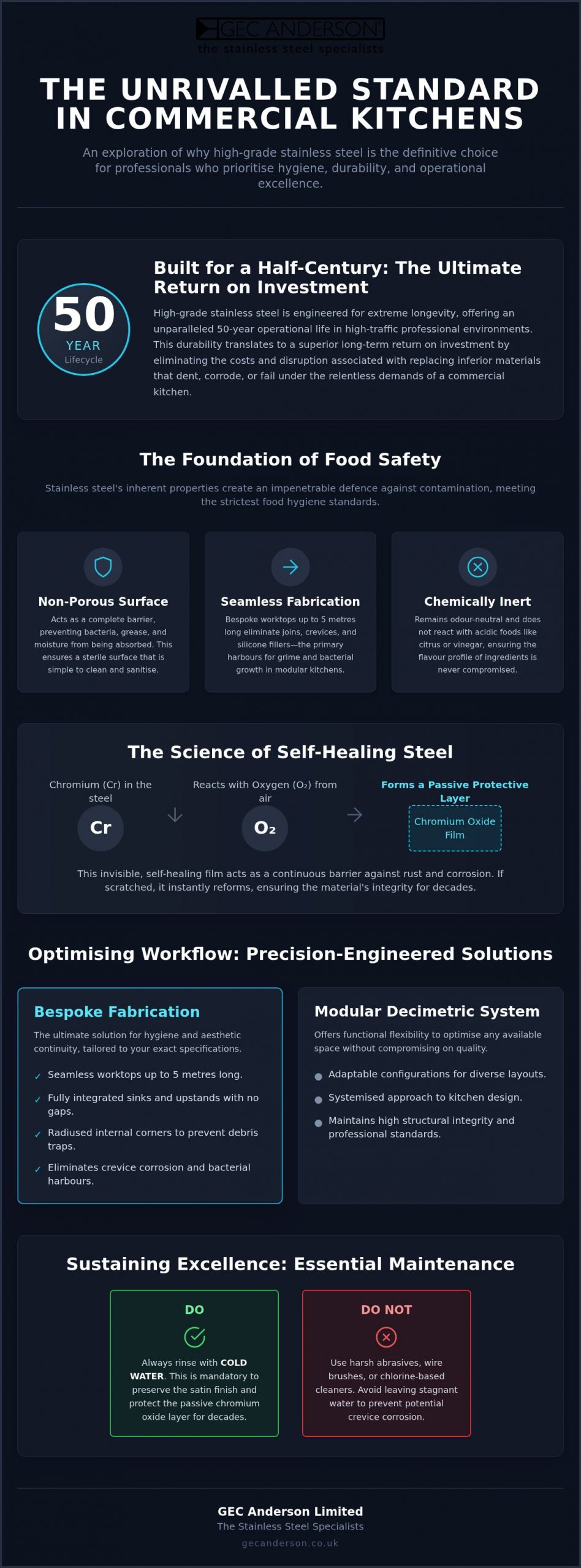
- Understand why a 50-year product lifecycle provides the ultimate return on investment for commercial specifiers and high-traffic professional environments.
- Learn how non-porous surfaces and seamless joinery represent the primary benefits of stainless steel in commercial kitchens by eliminating bacterial harbours.
- Discover how bespoke fabrication enables seamless worktop lengths of up to 5 metres, ensuring both aesthetic continuity and superior hygiene.
- Explore the functional flexibility of the modular Decimetric system to optimise available kitchen space without compromising on structural integrity.
- Identify critical maintenance requirements, such as the mandatory use of cold water for rinsing, to preserve the satin finish and material health for decades.
The Essential Role of Stainless Steel in Modern Food Service
The evolution of the professional kitchen reflects a broader commitment to public health and operational efficiency. For decades, chefs relied on wooden blocks and stone slabs, materials that were prone to warping, cracking, and cross-contamination. The shift to metal surfaces was accelerated by the 1915 Sheffield invention of “rustless” steel, which provided a durable alternative that could withstand the heat and moisture of a busy service. This innovation didn’t just improve equipment longevity; it fundamentally changed the standards of food safety by providing a surface that is physically robust and chemically inert. It’s a material that has defined the professional landscape for over a century.
One of the most significant benefits of stainless steel in commercial kitchens is its inherent ability to meet international HACCP (Hazard Analysis and Critical Control Point) requirements. By providing a surface that refuses to harbour pathogens, it allows teams to maintain a sterile environment without the constant need for material replacement. This reliability ensures that the kitchen remains a safe space for preparation, even under the most demanding conditions.
Meeting Regulatory Standards in the UK
UK food hygiene legislation requires that all surfaces in contact with food be smooth, washable, and non-toxic. Stainless steel satisfies these criteria perfectly. During Environmental Health Officer (EHO) inspections, the presence of well-maintained stainless steel surfaces is often seen as a mark of professional competence. Architects and specifiers favour the material for public sector and high-traffic projects because it remains odour-neutral and won’t affect the flavour profile of delicate ingredients. It’s a reliable choice for environments where cross-contamination isn’t just a risk but a legal liability.
The Passive Layer: Science Behind the Shine
At a molecular level, the material’s performance is driven by its chromium content. This element reacts with oxygen to create a transparent chromium oxide film. This film acts as a barrier against rust and corrosion, essentially making the material self-healing. This is a core component of the properties of stainless steel that makes it so valuable in a kitchen setting. Because the metal is non-porous, it prevents the absorption of grease, moisture, and pathogens. Even amongst acidic ingredients like citrus or vinegar, the surface remains pristine, ensuring that the structural density of the worktop or sink is never compromised by bacterial penetration. This density is what allows the material to last for 50 years or more in a commercial setting.
The Hygiene Benefits of Stainless Steel in Commercial Kitchens
Hygiene in a professional food environment is a matter of both operational pride and legal necessity. One of the primary benefits of stainless steel in commercial kitchens is its non-porous surface, which acts as an impenetrable barrier against microscopic contaminants. Unlike timber or certain composite stones, stainless steel doesn’t absorb liquids, fats, or food particles. This prevents the development of deep-seated bacterial colonies that can thrive in the pores of inferior materials. It’s a material that supports a sterile workflow, ensuring that your preparation surfaces remain as clean at the end of a shift as they were at the start.
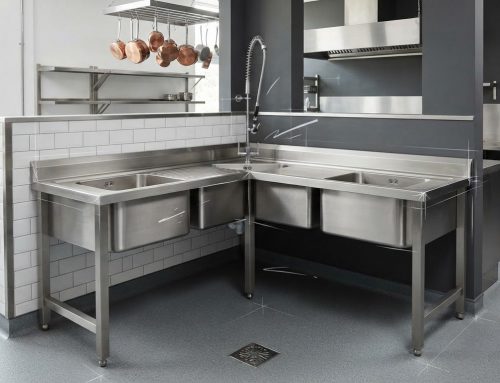
The physical structure of the kitchen also dictates its sanitary potential. Whilst modular furniture is a common choice, it often introduces gaps and joins where grime inevitably accumulates. In contrast, bespoke fabrication allows for seamless worktop lengths of up to 5 metres. These continuous surfaces eliminate the silicone-filled joins that frequently fail in high-moisture environments. By removing these failure points, you significantly reduce the risk of cross-contamination across different preparation zones. For those seeking the highest standards, integrating made-to-measure stainless steel sinks directly into the worktop ensures there are no lips or edges to trap debris.
Eliminating Bacterial Harbours
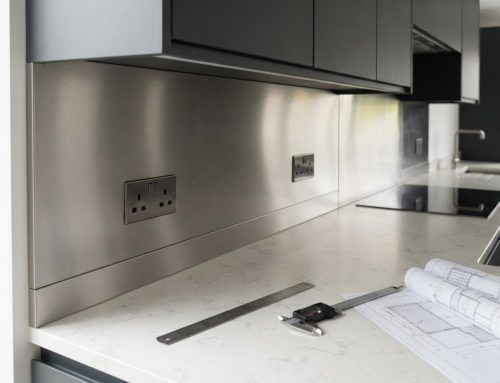
A significant risk in kitchen design is crevice corrosion. This occurs when food particles or stagnant water become trapped in tight spaces where oxygen cannot circulate, eventually compromising the metal’s protective film. Bespoke design mitigates this by utilising radiused internal corners and integrated splashbacks that flow naturally from the work surface. This design philosophy is essential for maintaining an aseptic environment. An aseptic surface is one that is specifically engineered to be free from pathogenic micro-organisms, thereby ensuring a sterile foundation for food preparation and healthcare catering alike.
Material Grades for Specific Zones
Technical specification is key to long-term hygiene. Most professional environments utilise Grade 304 (EN 1.4301), which provides excellent resistance to the typical stresses of food preparation. However, selecting the correct stainless steel grades in the food industry depends on the specific chemical exposure of each zone. In areas where surfaces are regularly exposed to high salt concentrations or acidic cleaning agents, specifying Grade 316 (EN 1.4401) is often advisable. The structural integrity of these surfaces is further supported by the material gauge; a thickness of 1.2mm to 1.5mm is typically specified for commercial worktops to prevent the denting that can create new, hard-to-clean bacterial harbours over time.
Durability and Resilience: Why Professional Surfaces Outperform Alternatives
The mechanical endurance of kitchen surfaces is tested daily by the extreme temperatures and physical impacts inherent in professional catering. One of the primary benefits of stainless steel in commercial kitchens is its exceptional thermal stability. Unlike stone or solid surface composites, stainless steel doesn’t crack under thermal shock. It maintains its structural integrity whether it’s supporting a stockpot fresh from the burner or serving as a prep surface in a walk-in freezer. This resilience ensures that the material remains flat and functional, preventing the warping that can ruin a kitchen’s workflow.
Impact resistance is equally critical in high-traffic environments. Heavy-duty cast iron pans and industrial mixers can easily chip or dent softer materials, creating permanent damage and potential hygiene risks. Stainless steel absorbs these impacts without fracturing. Its surface hardness ensures that abrasion from constant cleaning and heavy usage doesn’t lead to the degradation of the finish. This physical toughness is why metal remains the gold standard for areas where equipment is moved frequently and preparation is intense.
Thermal Performance Under Pressure
In high-heat zones, such as the areas directly behind ranges and fryers, stainless steel is the only viable specification for splashbacks. It acts as an effective thermal shield, preventing heat from transferring to the wall structure or damaging the internal cabinetry. This protection is vital for fire safety and for preserving the integrity of the kitchen’s hidden components. Similarly, in cold-storage environments, the metal doesn’t become brittle. It remains easy to clean and structurally sound even at sub-zero temperatures, making it a versatile choice for every zone in the facility.
Long-Term ROI and Life-Cycle Value
Specifiers must look beyond the initial installation cost to understand the true economic value of a material. Laminate and composite surfaces often require replacement within five to ten years due to wear, staining, or heat damage. Conversely, a high-quality stainless steel installation has a typical product life-cycle of approximately 50 years. This longevity represents the ultimate return on investment for commercial operators. By choosing a material that lasts for decades, businesses avoid the recurring costs and operational downtime associated with frequent refurbishments.
The environmental impact of these choices is also significant. Stainless steel is 100% recyclable at the end of its long life, meeting the stringent requirements of modern green building standards. GEC Anderson’s ISO 9001-certified manufacturing ensures that each component is produced with exacting precision, reducing waste during the fabrication process. This commitment to technical excellence means that when you invest in stainless steel, you’re choosing a sustainable, permanent solution that supports both your business’s bottom line and its environmental responsibilities.
Optimising Workflows: Bespoke Fabrication vs Modular Furniture
Efficiency in a professional kitchen is dictated by the spatial relationship between preparation, cooking, and cleaning zones. Whilst the material properties ensure hygiene, the physical configuration of the space determines how effectively a team can operate under pressure. One of the primary benefits of stainless steel in commercial kitchens is the ability to choose between bespoke fabrication and high-quality modular systems, allowing specifiers to tailor the environment to the specific movements of the culinary team.
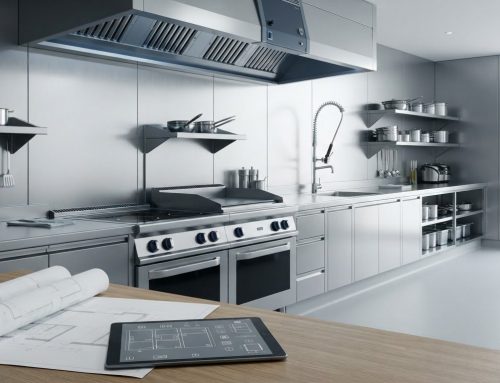
Bespoke fabrication offers the pinnacle of operational flow by maximising every available millimetre of a floor plan. This precision eliminates the “dead zones” often found with off-the-shelf units, where debris and moisture can accumulate. By utilising seamless, join-free worktops in lengths of up to 5 metres, designers can create a continuous surface that supports a logical, uninterrupted workflow. This level of customisation also extends to ergonomics, where worktop heights and returns are adjusted to reduce physical strain, directly improving long-term staff productivity.
The Power of Bespoke Design
True bespoke design allows for the total integration of functional elements. For instance, Series A sink bowls can be welded into custom worktops to create a unified surface that lacks the dirt-trapping lips of inset alternatives. This approach is particularly effective for complex layouts, such as L-shaped or U-shaped configurations, which can be manufactured with a maximum return of 2.3 metres. To ensure absolute accuracy, detailed CAD drawings are produced before manufacturing begins, guaranteeing that the final installation fits the physical reality of the site perfectly. If you are planning a complex project, you can view our range of bespoke stainless steel solutions to see how these elements combine.
Modular Flexibility with Decimetric
In environments where speed of installation and cost-effectiveness are priorities, a modular approach often provides the best balance. The Decimetric system utilises professional-quality furniture based on 100mm increments, offering a structured yet flexible alternative to full customisation. This system allows for the standardisation of storage and preparation areas whilst maintaining the premium material standards expected in a high-end kitchen. By integrating the Stortidy system, operators can organise utensils and supplies with methodical precision, ensuring that everything has a designated place. Balancing these modular units with bespoke worktops often yields a kitchen that is both economically sensible and functionally superior.
Sustaining Excellence: Maintenance for Commercial Longevity
The enduring appeal of a professional kitchen relies as much on its upkeep as its initial specification. While the inherent benefits of stainless steel in commercial kitchens include exceptional resistance to corrosion and impact, the material’s 50-year lifecycle is only achievable through a methodical approach to maintenance. Preserving the satin finish requires more than a simple wipe-down; it demands an understanding of the metal’s physical properties. When cleaning, you must always follow the grain of the surface to avoid creating micro-scratches that can dull the finish over time. This attention to detail ensures the kitchen maintains its polished, high-end appeal throughout its operational life.
Adhering to a structured cleaning regime prevents the degradation of the self-healing passive layer. It’s not just about aesthetics; it’s about functional survival. By following the GEC Anderson maintenance protocol, facility managers can ensure that their bespoke installations remain a reliable asset for decades. This involves using the correct tools and chemicals whilst avoiding common practices that inadvertently damage the material’s integrity.
The Cold Water Rinsing Rule
A critical, often overlooked aspect of stainless steel care is the temperature of the water used during the final rinse. You should never rinse the surface with warm or hot water, as heat can accelerate the deposition of minerals and lead to unsightly discolouration. Instead, always use cold water for rinsing to keep the passive layer stable and the surface pristine. Once rinsed, it’s vital to dry the metal immediately with a soft cloth rather than allowing it to sit. Leaving a surface to air dry allows evaporating moisture to leave behind mineral residues and trapped particles that form a foundation for surface grime. This proactive drying step is the most effective way to prevent water spots and maintain a truly aseptic environment.
Removing Persistent Stains Safely
In regions with hard water, calcium deposits can eventually mar the surface of sinks and worktops. These should be treated with a solution of vinegar or 10% acetic acid, followed by a thorough cold-water rinse and immediate drying. For more persistent surface rust, which often results from contact with plain steel tools rather than the material itself, a more technical approach is required. A solution of nitric acid, mixed at a ratio of one part HNO3 to four parts water, can be applied to restore the surface. When treating these areas, use only nylon fibre brushes to gently agitate the stain without compromising the underlying metal. Never use steel wool or carbon steel brushes, as these will embed particles that cause permanent rust. By following these exacting standards, you protect your investment and ensure the kitchen remains a testament to professional excellence.
Securing the Future of Your Professional Kitchen
Investing in the right infrastructure is a decisive step toward operational excellence. We’ve explored how the benefits of stainless steel in commercial kitchens extend far beyond simple aesthetics. By prioritising non-porous surfaces and seamless fabrication, you eliminate the bacterial harbours that compromise food safety. The 50-year product life cycle provides a level of durability that alternative materials can’t match; it’s a permanent solution for a high-traffic environment.
Whether you require the precision of bespoke fabrication or the structured flexibility of a modular system, the choice of material remains the foundation of a successful kitchen. GEC Anderson has been a specialist manufacturer since 1962, providing technical expertise and ISO 9001-certified quality to prestigious clients including the NHS, the Royal Academy, and Eurostar. With the capability to produce seamless worktops up to 5 metres in length, we ensure your facility meets the highest standards of hygiene and functional design.
Explore GEC Anderson’s bespoke stainless steel solutions for your next project and build a kitchen that stands the test of time.
Frequently Asked Questions
What are the primary benefits of stainless steel in commercial kitchens?
The primary benefits of stainless steel in commercial kitchens include its non-porous nature, which prevents bacterial absorption, and its exceptional resistance to thermal shock and physical impact. Because the material doesn’t crack or warp under pressure, it provides a sterile preparation surface that meets strict UK food safety regulations. Its aseptic properties make it ideal for high-traffic environments where cross-contamination must be eliminated through rigorous hygiene standards.
Which grade of stainless steel is best for a professional kitchen environment?
Most professional environments utilise Grade 304 (EN 1.4301) for general preparation areas due to its excellent durability and corrosion resistance. For more demanding zones, such as laboratory-style kitchens or areas exposed to high salt concentrations, acid-resisting Grade 316 (EN 1.4401) is specified. Choosing the correct grade ensures the installation remains structurally sound and hygienic regardless of the specific chemical exposure or moisture levels in different kitchen zones.
How long does a stainless steel kitchen worktop typically last?
A high-quality stainless steel kitchen worktop typically lasts for approximately 50 years in a commercial environment. This exceptional longevity is a result of the material’s physical toughness and its self-healing passive layer, which protects against rust and oxidation. When manufactured to ISO 9001 standards and maintained correctly, these surfaces provide the ultimate return on investment by delivering one of the most significant benefits of stainless steel in commercial kitchens.
Why is bespoke stainless steel better than modular kitchen units?
Bespoke fabrication is superior because it allows for seamless, join-free surfaces that eliminate the bacterial harbours often found in modular units. By integrating sinks directly into the worktop and removing silicone-filled gaps, you ensure absolute compliance with hygiene laws. Custom designs also maximise every millimetre of available space, allowing for tailored ergonomic heights and returns that significantly improve workflow efficiency and staff comfort in busy professional kitchens.
Is stainless steel truly 100% recyclable?
Yes, stainless steel is 100% recyclable at the end of its life cycle, making it a sustainable choice for modern green building projects. Unlike composite materials that often end up in landfill, stainless steel can be melted down and repurposed without any loss of its inherent properties. This environmental benefit, combined with a 50-year lifespan, makes it one of the most ecologically responsible materials available for professional food service and architectural design.
How do I prevent rust and discolouration on my stainless steel surfaces?
To prevent discolouration, you must always follow the grain during cleaning and use cold water for rinsing. Surface rust often originates from contact with foreign iron or carbon steel materials rather than the stainless steel itself. It’s essential to remove these contaminants immediately using a general-purpose cream cleaner and a soft cloth. Maintaining the material’s passive layer through this specific maintenance protocol is the most effective way to preserve its satin finish.
Can I use boiling water to clean my stainless steel sink?
You should never use boiling, hot, or even warm water for rinsing your stainless steel sink. Heat can accelerate the deposition of minerals and synthetic detergents, leading to unsightly discolouration or dull greyish patches on the surface. To protect the material’s integrity, always use cold water for the final rinse and dry the surface immediately with a soft cloth. This protocol prevents water spots and keeps the finish pristine for decades.
What is the maximum length for a seamless stainless steel worktop?
The maximum length for a seamless, made-to-measure stainless steel worktop is 5 metres. For complex configurations such as L-shapes or U-shapes, the maximum return length is 2.3 metres. This allows for vast, continuous preparation areas that are entirely free from joins, providing the pinnacle of hygiene and aesthetic continuity. These large-scale, join-free sections are a key differentiator in high-end commercial kitchen specifications where bacterial control is the highest priority.