
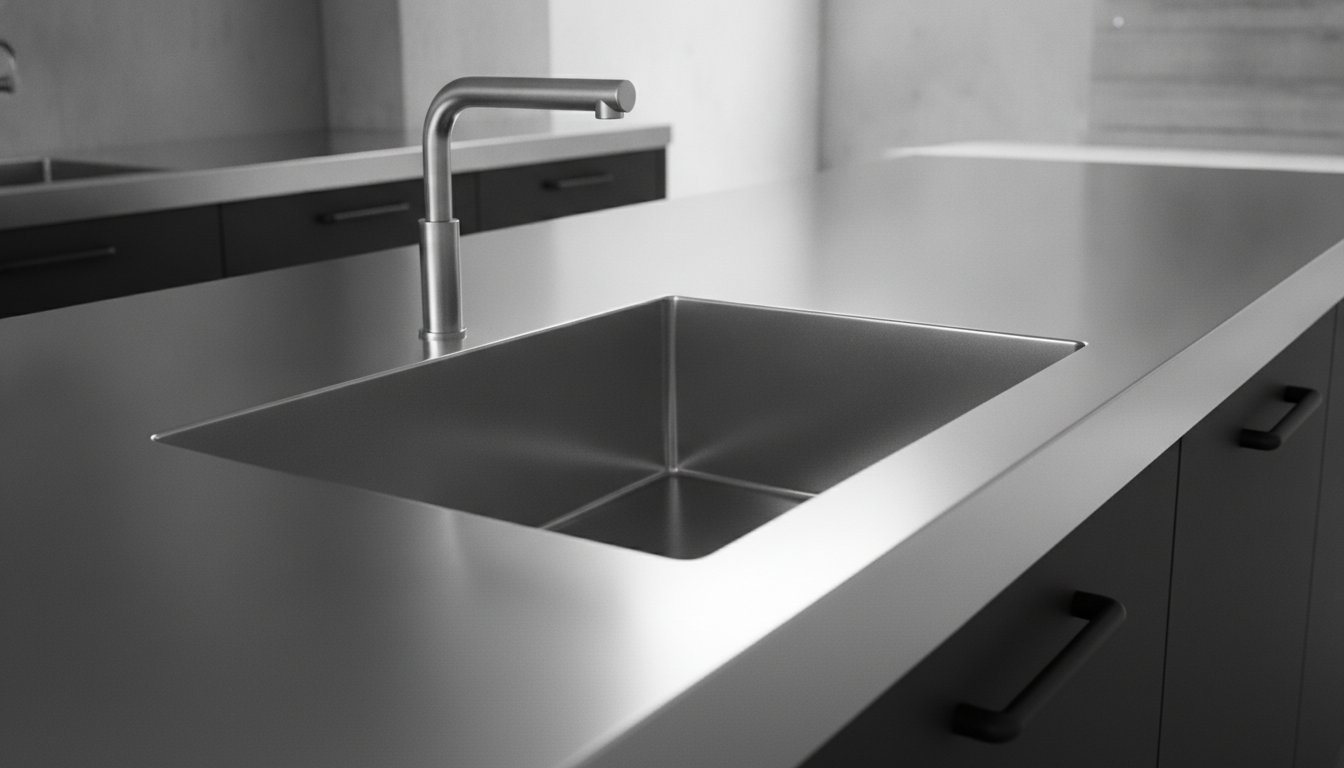
Why do we continue to accept silicone joins as the standard for high-traffic wet zones when they’re the primary failure point for both hygiene and structural integrity? Most architects understand the frustration of seeing a premium project degraded by mould or water ingress around a sink cut-out. Specifying integrated sink and worktop units avoids these common compromises, ensuring that the longevity of the installation matches the quality of your design.
By opting for a fully welded, seamless construction, you provide your clients with an aseptic work surface that prioritises clinical hygiene whilst offering professional-grade durability. This guide explores the technical superiority of bespoke, made-to-measure stainless steel. We’ll detail how precise engineering can transform a utility area into a permanent fixture with a 50-year lifecycle, meeting the exacting standards required for both luxury residential and healthcare environments.
Key Takeaways
- Understand how precision engineering creates a monolithic, aseptic surface by eliminating silicone joins and adhesive seams.
- Compare the hygiene and long-term durability of integrated sink and worktop units against traditional undermount sinks and stone surfaces.
- Identify the correct stainless steel grade for your project, choosing between standard EN 1.4301 and acid-resistant EN 1.4401.
- Learn how to specify bespoke dimensions and select appropriate bowl sizes from the Series A range to suit your design requirements.
- Master the essential maintenance rules, such as using cold water for rinsing, to preserve the material’s finish for its 50-year lifecycle.
What are Integrated Sink and Worktop Units?
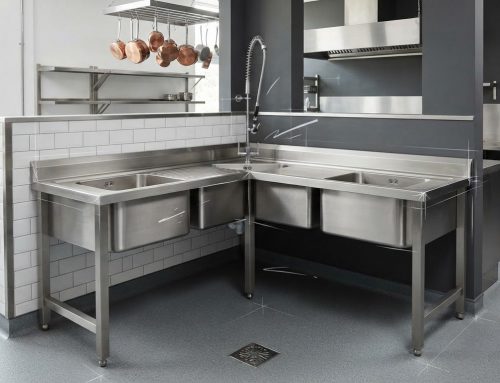
An integrated sink and worktop unit is a single, monolithic architectural component where the sink bowl is fusion-welded and polished into the worktop surface. Unlike traditional installations that rely on mechanical fixings, this method creates a continuous piece of stainless steel. There are no silicone joins, grout lines, or adhesive seams to degrade over time. In modern architectural design, this provides an unbroken metal aesthetic that feels both purposeful and permanent.
Confusion often arises because the term “integrated” is frequently applied to flush-mount stone or composite sinks. However, these still require a microscopic adhesive join or a silicone bead at the interface. True integration, as achieved in professional stainless steel fabrication, involves molecular bonding through welding. This renders the transition between the horizontal surface and the sink bowl completely invisible to the eye and touch, creating a surface that is as functional as it is beautiful.
The Functional Superiority of Seamless Design
The removal of physical joins addresses the most common failure points in kitchen and clinical environments. By eliminating the crevices where dirt and bacteria typically congregate, the surface becomes truly aseptic. This is why integrated sink and worktop units are the standard for NHS hospitals and high-end residential projects alike. They offer a level of hygiene that simply cannot be matched by multi-part assemblies.
Structural integrity is another significant advantage. Because the bowl and worktop are one piece, there’s no risk of the sink dropping or the seal failing due to the weight of water or heavy cookware. This design also provides absolute waterproofing. Moisture cannot seep into the cabinetry below because there are no gaps for it to penetrate, protecting the entire kitchen sub-structure from rot or water damage for the duration of its life.
Material Choice: Why Stainless Steel Leads the Market
Stainless steel remains the preferred material for integrated sink and worktop units due to its exceptional resistance to heat, impact, and thermal shock. It’s also 100% recyclable, aligning with sustainable building practices and circular economy goals. A unique characteristic of the material is its self-healing chromium oxide layer; if the surface is scratched, this microscopic layer reforms instantly in the presence of oxygen to prevent corrosion.
When compared to quartz or laminate, the advantages are clear. Quartz can chip at the edges of a sink cut-out, and laminate is prone to delamination when exposed to heat or moisture. Stainless steel avoids these vulnerabilities entirely. It offers a product lifecycle of approximately 50 years, making it a far more sustainable and cost-effective choice for discerning specifiers who value longevity over temporary trends.
The Engineering Behind Seamless Stainless Steel
The production of integrated sink and worktop units begins with state-of-the-art automated laser cutting to ensure every component is sized with absolute accuracy. Once the parts are prepared, skilled craftsmen perform precision manual welding to fuse the sink bowls directly to the worktop. This isn’t a mere assembly; it’s a structural transformation that bonds the metal at a molecular level.
The polishing stage is where the master craftsman’s skill becomes most evident. By meticulously finishing the welded areas, the transition is rendered completely invisible to the eye and touch. You won’t find the tell-tale ridges or colour variations often seen in lower-quality alternatives. This level of detail is essential for architectural environments where visual purity is as important as functional performance.
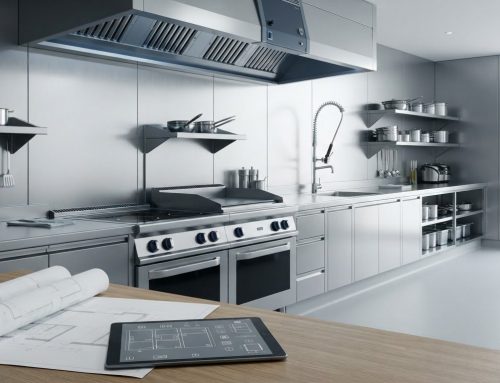
Material thickness, or gauge, is carefully managed to ensure structural integrity and a premium feel. We typically utilise gauges between 1mm and 2mm depending on the specific requirements of the installation. Heavier gauges provide superior rigidity and effectively prevent the “drumming” sound often associated with thinner, domestic-grade sinks. Every project is supported by detailed CAD drawings, allowing for millimetre-perfect fabrication that accounts for every tap hole and edge profile before production commences.
Bespoke vs. Modular (DECIMETRIC®) Systems
Architects can choose between fully bespoke designs or the DECIMETRIC® modular system. While made-to-measure units offer total freedom for unique architectural layouts, the modular system provides professional efficiency by utilising 100mm increments. This allows you to achieve a custom look with standardised components, resulting in faster lead times for time-sensitive projects. You can explore the DECIMETRIC range to see how these increments can streamline your specification process.
Maximum Dimensions and Specification Limits
Planning for integrated sink and worktop units requires an understanding of the physical limits of the material. We can produce single worktop lengths of up to 5 metres, which is ideal for expansive island units or continuous laboratory runs. For L-shaped or U-shaped configurations, the maximum return length for a single section is 2.3 metres. If your design specifies textured finishes, it’s worth noting that maximum sheet sizes are generally 2.4 x 1.15 metres due to the manufacturing constraints of the patterned steel.
Comparing Integrated Sinks with Undermount Alternatives
While undermount sinks are often marketed as a premium solution for stone or laminate surfaces, they possess a fundamental design flaw: the silicone bead. This join is a primary site for bacterial accumulation and eventual degradation. In contrast, integrated sink and worktop units feature a fusion-welded transition that is entirely seamless. This creates a monolithic surface where moisture and grime have no place to settle, ensuring the installation remains as sanitary on its last day as it was on its first.
The durability gap between materials is equally significant. Stone surfaces, while aesthetically pleasing, are susceptible to chipping around the sink aperture, especially when handling heavy professional cookware or equipment. Stainless steel offers a verified 50-year lifecycle and possesses an inherent resilience against impact that brittle materials cannot match. It doesn’t require the periodic chemical sealing that porous stone necessitates, making it a more stable choice for long-term architectural specifications.
Maintenance is simplified because there’s only one material to consider. There are no grout lines or adhesive seams to scrub, and the surface resists staining from acidic liquids or intense heat. From an installation perspective, these units arrive on-site as pre-fabricated, finished components. This eliminates the complexity and mess associated with cutting stone and fitting sinks in situ, ensuring the final result matches the architect’s CAD specification exactly without the risk of on-site error.
Hygienic Performance in High-Traffic Environments
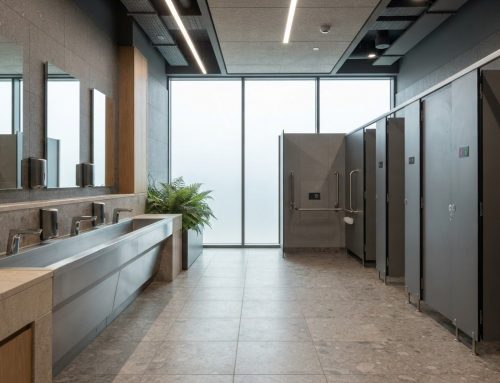
Healthcare environments demand surfaces that can withstand rigorous disinfection protocols without degrading. This is why made to measure stainless steel sinks are the industry standard for clinical settings. The aseptic nature of a welded unit means there are no microscopic gaps for pathogens to colonise. Unlike inset fixtures, integrated sink and worktop units remain stable and sanitary even after decades of exposure to harsh cleaning agents and heavy commercial use, providing a level of reliability that domestic-grade materials cannot provide.
Edge Profiles and Integrated Splashbacks
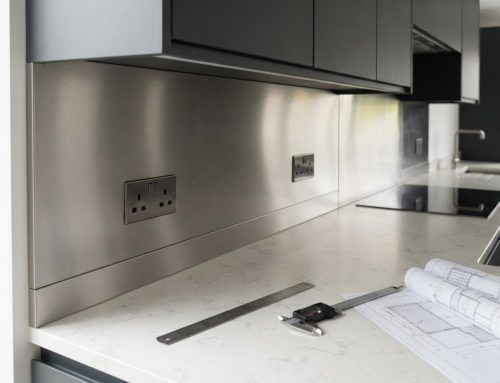
Architects can further enhance the functionality of these units through custom edge profiles. Options include standard square edges, water-drip profiles, or raised marine edges designed to contain spills within the work area. By incorporating integrated upstands and splashbacks during the fabrication process, you create a total hygienic envelope. Specifying Bespoke Stainless Steel Kitchen Worktops with these features ensures that moisture and grime are kept away from the wall structure, protecting the building fabric from water ingress and mould growth.
Specifying Your Unit: Grades, Bowls, and Finishes
Specifying integrated sink and worktop units involves more than just selecting a layout; it requires a precise understanding of material science and functional geometry. The choice of material grade and bowl configuration dictates how the unit will perform in its specific environment. By tailoring these technical details during the design phase, architects ensure that the final installation meets the exact needs of the end user, whether in a high-traffic clinical setting or a refined residential kitchen.
The visual impact of the material is defined by its finish. A satin stainless steel finish provides a sophisticated, low-reflective surface that works equally well across diverse architectural styles. Unlike polished mirror finishes, satin is practical; it effectively masks minor surface scratches that occur over time and maintains its understated, professional appearance throughout its 50-year lifecycle. This finish is achieved through a consistent mechanical process that ensures the worktop and the integrated bowls share a uniform texture and lustre.
Selecting the Right Stainless Steel Grade
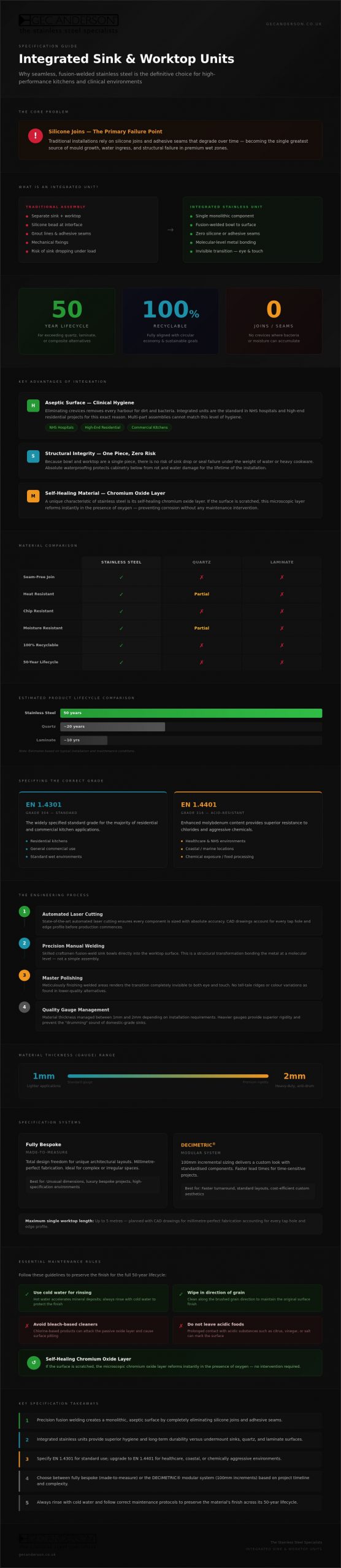
Choosing the correct grade is critical for long-term performance. EN 1.4301 (Grade 304) is the versatile standard for most residential kitchens, schools, and general commercial projects. It offers excellent corrosion resistance and durability for standard use. However, for environments where the surface will encounter aggressive chemicals or high salt levels, EN 1.4401 (Grade 316) is essential. This acid-resistant grade contains molybdenum, which provides vital protection against point-etching and pitting caused by chloride exposure. It’s the only suitable specification for laboratories, heavy industrial facilities, or projects located in coastal areas. For professional culinary environments specifically, our guide to catering grade stainless steel sinks provides a detailed checklist to ensure you select the correct EN grade and gauge thickness for high-traffic kitchen installations.
Bowl Configurations and Custom Drainage
The Series A bowl range provides a vast selection of sizes to suit any functional requirement. You can specify anything from the compact A18 (180 x 340mm) for a secondary prep area to the expansive A70 (700 x 500mm) for industrial-scale cleaning. Mixing bowl sizes, such as pairing an A34 with an A18, allows for the creation of highly efficient workstations. For a comprehensive overview of how these dimensions relate to cabinetry and worktop layouts, our bespoke stainless steel kitchen sink size guide details the precise relationship between kitchen sink sizes and standard UK cabinetry. During the CAD design process, you can precisely position tap holes and accessories to ensure ergonomic flow.
Further customisation includes the integration of drainer grooves or recessed “wet zones” directly into the metal surface. These features are pressed into the worktop before the bowls are welded, ensuring that water is managed effectively without the need for additional components. When designing multi-bowl configurations, the width of the partitions and flanges can be adjusted to maintain structural rigidity whilst achieving the desired aesthetic. You can request a technical consultation to discuss specific bowl layouts and drainage requirements for your project.
Longevity and Maintenance: Preserving Your Investment
Choosing integrated sink and worktop units represents a commitment to a product with a verified lifecycle of approximately 50 years. This permanence is a direct result of GEC Anderson’s ISO 9001-certified manufacturing in the UK, where every unit is built to withstand the rigours of both clinical and high-end residential use. Unlike domestic-grade materials that may degrade or require replacement within a decade, professional stainless steel remains a stable, 100% recyclable asset. Protecting this investment requires an understanding of the material’s specific care requirements to prevent surface contamination and maintain its aseptic properties.
The GEC Anderson Cold-Water Protocol
Preserving the finish of integrated sink and worktop units involves a few non-negotiable rules. You must never rinse the surface with warm or hot water. Always use cold water for rinsing to prevent minerals from bonding to the steel through evaporation. After rinsing, it’s essential to dry the surface with a soft cloth to eliminate the risk of calcium deposits. When cleaning, always follow the grain of the steel; scrubbing across the grain can disrupt the uniform lustre of the satin finish and create microscopic traps for grime.
Managing Calcium and Rust Stains
Calcium build-up from hard water can be safely removed using white vinegar or a 10% acetic acid solution. Apply the liquid to the affected area, allow it to sit briefly, then rinse thoroughly with cold water and dry. If you notice orange spots on the surface, these are typically surface rust stains caused by foreign metallic particles from steel wool or cast-iron cookware rather than the unit itself corroding. Stainless steel is naturally resistant to rust, but it can be “infected” by external contaminants.
Minor surface rust can be addressed using a dry cleaning powder and a damp sponge. For more persistent staining, a dry nylon fibre brush or a heavily diluted nitric acid solution may be required. These methodical steps ensure the chromium oxide layer remains intact, allowing the steel to self-heal and maintain its professional appearance for decades. Technical support is always available to provide guidance on specific cleaning challenges for bespoke installations.
Specifying Permanence and Precision
Specifying integrated sink and worktop units represents a shift from the temporary nature of standard fittings toward true architectural permanence. By eliminating silicone joins and embracing fusion-welded construction, you provide your clients with an aseptic surface that withstands the most demanding environments. This engineering-led approach ensures that the hygiene and structural integrity of the installation remain uncompromised for decades, regardless of the sector.
Since 1962, GEC Anderson has upheld a heritage of British craftsmanship, providing bespoke solutions for prestigious institutions such as the National Gallery and Guy’s Hospital. Our commitment to ISO 9001-certified manufacturing ensures that every unit delivers a typical 50-year product lifecycle. Whether you’re specifying for a high-traffic clinical setting or a refined residential project, our technical team is ready to translate your CAD designs into reality. We invite you to request a bespoke quotation for your integrated unit and discover the benefits of seamless stainless steel. We look forward to partnering with you on your next design.
Frequently Asked Questions
Are integrated sink and worktop units more expensive than stone?
While the initial investment in integrated sink and worktop units may exceed that of some stone alternatives, the long-term value is significantly higher. Stainless steel offers a 50-year lifecycle and requires no periodic chemical sealing or repairs for chips and cracks. When considering the total cost of ownership and the elimination of replacement cycles, professional-grade stainless steel remains a highly cost-effective specification for both commercial and residential projects.
Can I have a bespoke sink size in my integrated worktop?
Yes, we provide extensive flexibility through our Series A bowl range. You can select from various dimensions, ranging from the compact A18 at 180mm wide to the expansive A70 at 700mm. These bowls are fusion-welded into the worktop at your specified location. For unique architectural requirements, we utilise CAD drawings to ensure every bespoke configuration meets your exact dimensions before fabrication begins at our UK facility.
What is the maximum length for a seamless stainless steel worktop?
We can manufacture single, made-to-measure worktop lengths up to 5 metres. This allows for expansive, unbroken surfaces in large kitchens or laboratories without the need for visible joins. For L-shaped or U-shaped configurations, the maximum return length for a single section is 2.3 metres. These limits ensure structural rigidity and facilitate safe transport and installation whilst maintaining the seamless, aseptic aesthetic required for professional environments.
Is stainless steel suitable for a domestic kitchen, or is it too industrial?
Stainless steel is exceptionally well-suited to domestic environments, offering a sophisticated and timeless aesthetic that complements modern cabinetry. Far from being purely industrial, our satin finishes provide an understated lustre that softens the metal’s appearance. It’s a practical choice for private clients who value clinical hygiene and professional-grade durability. For those seeking a complete bespoke solution, Reality Kitchens provides expert design services that integrate these high-performance materials into beautiful, functional homes. The material’s ability to be 100% recycled also appeals to those prioritising sustainable design in residential projects.
How do I prevent scratches on my integrated stainless steel unit?
Scratches are an inherent characteristic of stainless steel and will eventually blend into a uniform patina that enhances the material’s character. To minimise the visibility of new marks, we recommend our satin finish, which masks minor abrasions more effectively than mirrored surfaces. You should avoid using abrasive scouring pads and always follow the grain when cleaning. This ensures the surface retains its professional appearance throughout its extensive 50-year lifecycle.
What is the difference between 304 and 316 grade stainless steel?
EN 1.4301 (304) is the standard grade for residential kitchens and schools, providing excellent corrosion resistance for general use. In contrast, EN 1.4401 (316) is an acid-resistant grade containing molybdenum. This makes it essential for laboratories, coastal locations, or industrial settings where the surface faces exposure to chlorides or aggressive chemicals. Selecting the correct grade ensures the long-term integrity of your integrated sink and worktop units.
Can I integrate a splashback directly into the worktop unit?
Yes, we can integrate upstands and splashbacks directly into the worktop during the fabrication process. This creates a continuous, hygienic envelope that prevents moisture from penetrating the wall structure. By eliminating the join between the worktop and the wall, you remove a common site for mould and bacterial growth. This feature is particularly beneficial in healthcare and commercial food preparation areas where aseptic conditions are a mandatory requirement.
How do I clean an integrated stainless steel sink properly?
Proper maintenance is essential for preserving the surface. Apply a cream cleaner with a damp cloth, always rubbing gently in the direction of the grain. Crucially, you must always rinse with cold water; don’t use warm or hot water for rinsing as this can lead to mineral deposits. Finally, dry the surface thoroughly with a soft cloth. This protocol prevents calcium build-up and ensures the sink remains sanitary and bright.