
A worktop can scorch or crack from heat even when its surface looks robust. Heat resistant countertop materials respond differently to hot cookware: quartz can mark because it contains resin, while granite tolerates higher temperatures but can still be damaged by sudden temperature changes.
It’s reasonable to expect a durable worktop to withstand everyday cooking, but heat resistance is not immunity to thermal stress. This article explains why hot pans and baking trays can burn or mark a surface, how granite handles heat, and how rapid temperature changes can cause fractures. It also explains why using a trivet is sensible, even with a material chosen for its heat tolerance.
Key Takeaways
- Heat tolerance varies by material: resin in quartz can scorch, while a mark may involve more than the stone or surface itself.
- Granite handles heat well, but sudden temperature changes can still stress it and lead to fractures.
- Use a trivet for hot pans and trays, even on a heat-resistant worktop, and avoid leaving extreme heat in place for long periods.
- Consider the whole worktop system, including its finish and sealant, when assessing heat damage or choosing a surface.
- Understanding how different materials respond to heat can help you match a worktop to the demands of your kitchen.
Granite heat tolerance and appearance
Granite tolerates higher temperatures than quartz, but sudden heat changes can still damage it. Its performance also depends on the type of stone, its finish and any sealant protecting the surface.
Granite heat tolerance
Granite’s heat tolerance is its capacity to withstand contact with hot items without surface damage. Granite forms through intense heat and cooling within the Earth, and can tolerate brief contact at temperatures up to about 1,200 degrees Fahrenheit. This makes it more heat-tolerant than quartz for occasional contact with hot cookware. However, this figure doesn’t make granite immune to damage: the sealant can discolour or degrade under extreme heat, even when the stone itself remains intact.
Thermal shock in granite
Thermal shock occurs when a rapid temperature change creates stress within a material. Placing a very hot pan on cool granite, for example, can create a sharp temperature difference across the surface. Sudden changes can damage the stone, so use a trivet even with granite. This precaution reduces abrupt heat exposure and helps protect the stone, finish and sealant.
Heat resistance and scratch resistance are separate properties. Quartz is described as less susceptible to scratches, stains and impacts than other worktop materials, whilst quartzite has a Mohs hardness rating of 7-8 and soapstone rates 1-2. Those figures describe hardness, not heat performance; a hard surface still needs suitable protection from hot cookware.
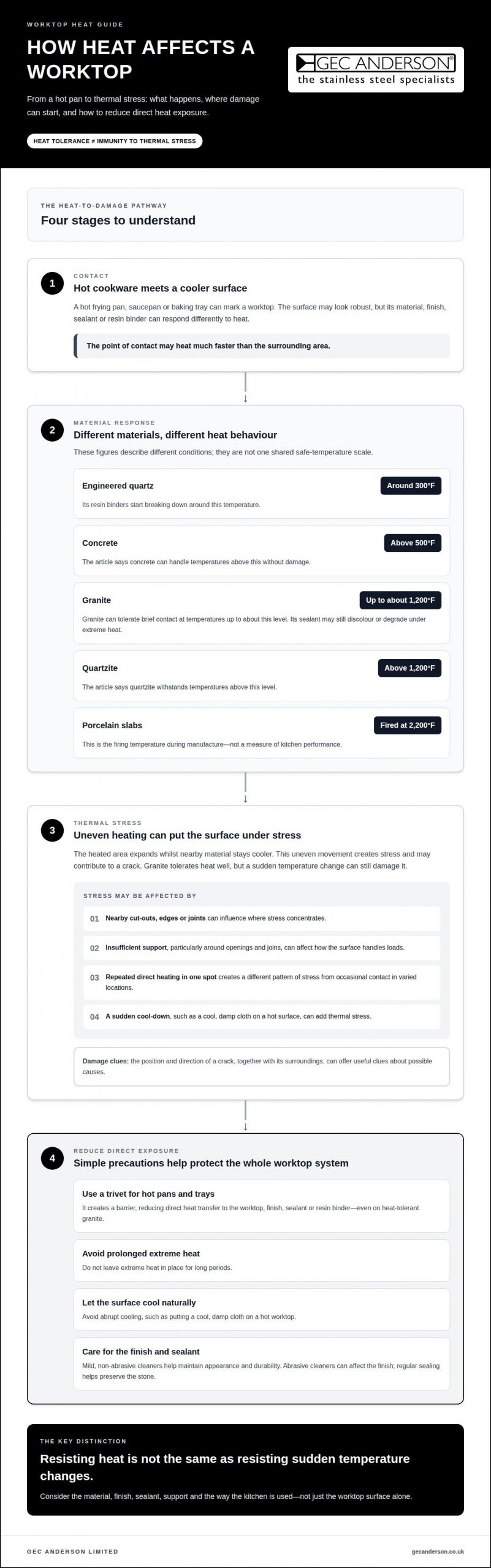
Common materials don’t share one safe temperature limit. Granite can tolerate brief contact up to about 1,200 degrees Fahrenheit, while engineered quartz resin binders start breaking down around 300 degrees Fahrenheit. Concrete can handle temperatures above 500 degrees Fahrenheit without damage, and quartzite withstands temperatures above 1,200 degrees Fahrenheit. Porcelain slabs are fired at 2,200 degrees Fahrenheit during manufacture, which isn’t a measure of their performance in a kitchen.
Care also affects appearance. Mild, non-abrasive cleaners can help maintain the worktop’s appearance and durability. Abrasive cleaners can affect the finish, while heat can discolour or degrade the sealant. A trivet limits direct heat exposure, and gentle cleaning and regular sealing help preserve the stone.
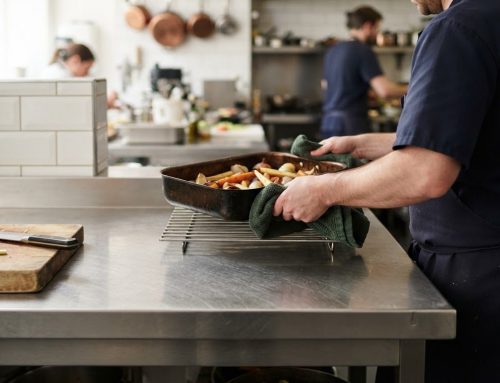
For example, placing a hot roasting tray directly on granite may expose the sealant to extreme heat, even if the stone withstands brief contact. A trivet creates a barrier between the tray and worktop. This is a practical precaution, not a sign that granite lacks heat tolerance. The key distinction is between resisting heat and resisting sudden temperature changes.
Thermal stress and countertop fractures
A countertop fracture can begin when one area heats or cools much faster than the surrounding surface. For example, a hot baking tray placed on a cool worktop creates a local temperature difference. The heated area expands, while nearby material remains cooler. This uneven movement produces stress within the surface, which may contribute to a crack.
Worktop materials respond differently to rapid temperature changes. Stone, engineered materials and laminate do not expand or conduct heat in the same way. Even on one worktop, the temperature can vary between the point of contact and the surrounding area. A trivet reduces direct heat transfer from cookware to that small area.
Existing features can influence where stress concentrates. A sink or hob cut-out interrupts the continuous surface, while an edge or joint changes its shape. If a hot pan sits close to one of these areas, local heating may add stress where the worktop is already shaped or joined. The location and direction of a crack can offer useful clues about the damage.
Installation and support also affect how a surface handles everyday loads. A worktop needs suitable support beneath it, particularly around openings and joins. Experienced countertop and cabinetry specialists such as Absolute Stone Design emphasise the importance of sturdy sub-structures to minimise stress concentration. If a pan sits near an unsupported edge, its weight and heat act together. This differs from a hot pan on a broad, evenly supported area, where its load is distributed across more of the worktop.
Repeated heating and cooling can expose weak points over time. For instance, placing a hot roasting tin in the same position after each use repeatedly heats one area. A fracture is not inevitable, but this creates a different pattern of stress from occasional contact in varied locations. Trivets help prevent repeated direct contact.
Cooling can matter too. Laying a cool, damp cloth on a hot surface rapidly cools the area it touches. This contrast can add thermal stress, especially if the worktop has just been exposed to hot cookware or an appliance. Letting the surface cool naturally avoids this abrupt change.
When a crack appears, its position and surrounding conditions can help explain possible causes. A line near a hob cut-out, for example, may make it worth considering both the opening and recent heat exposure. Avoid placing hot items near the damaged area, since additional heat or weight could put further stress on the surface.
Material choice is one part of planning a kitchen that sees regular heat and heavy use. If you’re considering a different surface as part of that decision, explore stainless steel worktops alongside the practical requirements of your kitchen.
Why kitchen countertop heat resistance matters
Heat resistance matters in routine cooking, not just in rare accidents. A hot frying pan, oven tray or saucepan can leave a mark if the surface or finish cannot withstand the contact. When choosing a material, consider everyday cooking alongside appearance, cleaning and how the kitchen is used.
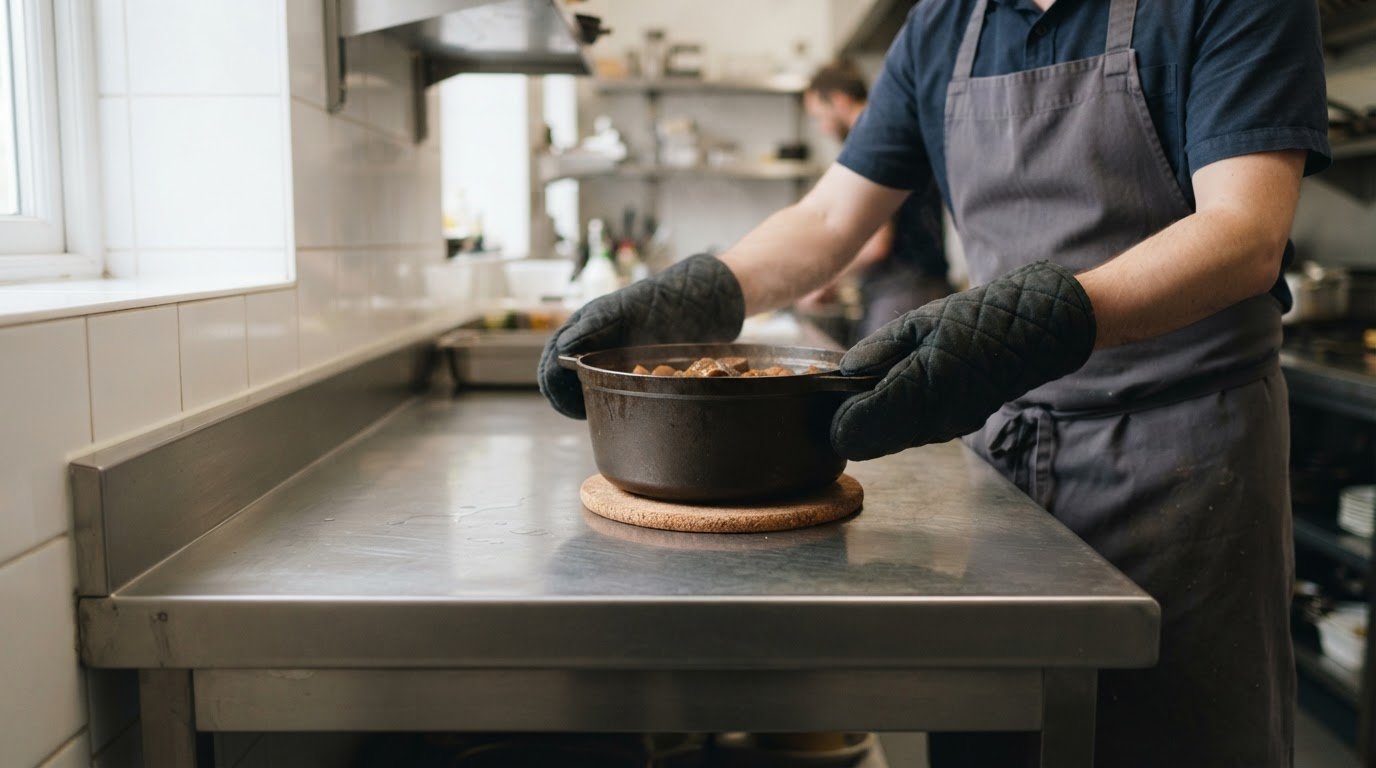
Most kitchen worktops need a trivet or protector beneath hot pans and baking trays, including surfaces selected for heat tolerance. A trivet separates cookware from the worktop, reducing direct heat transfer and helping limit local marks. It also protects a finish, sealant or resin binder that may be affected even when the base material is not.
Material composition helps explain why worktops respond differently. Engineered quartz contains polymer resin binders that heat can affect, causing scorch marks. Natural stone such as granite responds differently, but sudden temperature changes can still create stress. A durable surface is not automatically suitable for direct contact with every hot item.
Consider your cooking routine. A kitchen where roasting trays regularly move from oven to worktop places different demands on a surface than one used mainly for preparation. In either case, a dedicated place for hot cookware reduces the risk of marks. Using a trivet consistently is more reliable than relying on the material alone.
Heat resistance matters beyond visible burns. A mark can change a surface’s appearance, while repeated direct heat may affect the material or its protective layer. Consider:
- Cookware contact: a hot baking tray transfers heat directly to the point beneath it.
- Material composition: resin-bound quartz reacts differently from granite or sintered stone.
- Temperature change: rapid heating or cooling can stress some surfaces.
- Daily habits: using a trivet consistently reduces direct exposure.
These differences make a single heat-tolerance label an incomplete guide. Sintered stone can withstand extreme heat without damage, while engineered quartz resin binders start breaking down around 300 degrees Fahrenheit. Those figures describe specific material behaviour, not permission to leave cookware on a surface. The item’s contact time, the worktop’s construction and any protective finish also matter.
Weigh heat resistance against how the kitchen is actually used. For example, frequent baking makes a safe place for hot trays especially useful. When comparing heat resistant countertop materials, consider both how each material responds and what practical protection it needs. A trivet remains advisable, even for a surface designed to tolerate heat.
Avoiding prolonged exposure to extreme heat
Whether heat damage is covered depends on the terms of the worktop warranty. Read its exclusions and care conditions for scorch marks, cracks and discolouration. Recommended precautions include placing a trivet beneath hot pans and trays and avoiding prolonged contact with extremely hot items.
Contact time matters as well as temperature. A hot dish lifted promptly creates less prolonged contact than a roasting tin left on the worktop while a meal is served. Even a heat-tolerant surface may have a finish or sealant affected by extreme heat. Use a trivet as a barrier, then move the cookware to a suitable resting place.
Make using a trivet part of your cooking routine rather than reaching for one after setting down a pan. Keep it near the oven or hob, where hot cookware is most likely to land. For example, place a baking tray on the trivet as soon as you remove it from the oven. This avoids direct contact during the busiest part of the task.
Useful precautions include:
- Use a trivet: place it under hot pans, oven trays and serving dishes.
- Limit contact time: move hot cookware from the worktop instead of leaving it there during a meal.
- Protect nearby areas: use a barrier if several hot items need to rest on the same surface.
- Follow care instructions: use the worktop manufacturer’s guidance for cleaning and maintenance.
Consider heat from appliances as well as cookware. A recently used oven or other heat-producing appliance can warm the worktop around it. Avoid storing items against a warm surface or leaving an extremely hot object in one place. Follow the appliance instructions on clearances and installation conditions to help prevent unwanted heat exposure.
After removing a hot item, let the worktop return to its usual temperature before using a cold, wet cloth. Rapid cooling can create a sharp temperature change across the contact area. For instance, wiping beneath a hot roasting tin immediately after lifting it introduces moisture and cooling at once. If a spill needs attention, use a dry cloth first, then clean the surface according to its care guidance.
If heat damage appears, note whether it is a surface mark, discolouration or visible crack, and where it is. A mark beneath a pan differs from a crack beside a joint or cut-out. Avoid further heat exposure in that spot, then consult the warranty’s claims process and maintenance terms. Keep the warranty and care instructions accessible so you can follow the relevant conditions.
Can heat damage quartz, laminate, wood or solid-surface countertops?
Yes. A worktop can burn, scorch or otherwise mark when cookware transfers heat directly to its surface. The type of damage depends on the material’s composition and finish. Treat a hot frying pan placed on quartz, laminate, wood or solid surface differently from a cool plate used for food preparation.
Quartz is particularly susceptible to scorch marks because it contains plastic resin. In engineered quartz, the resin binders start breaking down around 300 degrees Fahrenheit. A pan straight from the hob can expose a small area to intense heat, leaving a mark even if the surrounding surface looks unchanged. Heat resistance in the stone’s mineral content does not remove the vulnerability of its resin.
Laminate worktops also need protection from hot cookware. A baking tray taken from the oven concentrates heat at the point where it rests, rather than across the whole surface. A trivet creates separation and helps avoid direct contact. This simple precaution is more reliable than assuming the surface finish will prevent every heat mark.
Wood differs from quartz or laminate, but direct contact with a hot saucepan is still a risk. A pan set down beside the hob can leave a local mark or change the wood’s appearance. Use a trivet for cookware and oven dishes, and clean spills with a mild, non-abrasive product to preserve the worktop’s appearance.
Protect solid-surface worktops from hot pans and trays too. Leaving a hot roasting tin on the surface while serving dinner exposes one area for longer than briefly setting down a cool dish. Use a heat barrier and move the cookware once it is safe to handle. Everyday durability does not mean a material is suitable for direct heat exposure.
Across these materials, the useful comparison is how each surface responds to heat, not simply how hard it feels. Quartz’s resin binder can be affected by heat, while laminate, wood and solid-surface worktops also benefit from a trivet. Sintered stone can withstand extreme heat without sustaining damage, but a trivet remains a practical way to protect finishes and reduce localised exposure.
If you’re assessing surfaces for a kitchen where hot cookware is frequently moved between the hob and preparation area, consider how the worktop will be used as well as its appearance. Explore stainless steel worktops as another option for a considered kitchen specification.
GEC Anderson Limited
GEC Anderson Limited supplies stainless steel products for kitchens designed around practical use and material choice. Its stainless steel worktops, sinks, cabinets and doors, and shelving are available in standard, modular and made-to-measure formats for projects of different scales. These products can help bring worktop requirements, sink placement and storage together in one plan. Understanding how surfaces respond to heat also helps clarify which worktop qualities matter for your cooking routine, maintenance preferences and layout. To discuss stainless steel products for your kitchen project, contact GEC Anderson Limited.
Plan a worktop around the way you cook
Your next decision is not simply which surface looks right. Consider how you use the kitchen, where hot cookware will go and how the worktop relates to sinks and storage. These practical choices help turn what you’ve learned about heat resistant countertop materials into a coherent specification for your space.
For a kitchen project that includes stainless steel, GEC Anderson Limited supplies stainless steel worktops, sinks, cabinets and doors. These products can form part of a wider plan that brings preparation, washing and storage together. The right combination depends on your layout and the demands of daily use.
Share your project requirements and discuss the stainless steel products that may suit your kitchen. Contact GEC Anderson Limited to take the next step in shaping a considered, functional space.
Frequently Asked Questions
Why do worktops burn and mark?
Worktops burn or mark when heat affects their surface, finish or binding materials. A hot saucepan placed on engineered quartz, for example, can scorch its resin even if the mineral content remains intact. The result depends on the worktop’s composition and the cookware’s contact with it. A mark may indicate damage to a coating or binder, not necessarily the underlying material.
Which countertop materials are most heat resistant?
Granite, quartzite and sintered stone are among the materials noted for strong heat resistance, although their behaviour differs. Granite tolerates brief high-temperature contact, while quartzite withstands temperatures above 1,200 degrees Fahrenheit. Sintered stone can withstand extreme heat without damage. These properties don’t make direct contact risk-free: finishes, sealants and sudden temperature changes still matter, so use a trivet for hot cookware.
How heat resistant are granite, quartz, porcelain, ceramic and solid-surface worktops?
Granite can tolerate brief contact up to about 1,200 degrees Fahrenheit, while engineered quartz resin binders start breaking down around 300 degrees Fahrenheit. Porcelain slabs are fired at 2,200 degrees Fahrenheit during manufacture, but that firing temperature doesn’t establish a safe contact temperature in a kitchen. Ceramic and solid-surface worktops vary, so no single temperature limit applies to every product in those categories.
Can hot pans be placed directly on a granite or porcelain worktop?
Use a trivet beneath hot pans on either surface. Granite tolerates brief heat exposure, but sudden temperature changes can damage it, and extreme heat can affect its sealant. Porcelain’s manufacturing firing temperature does not show how an installed worktop responds to contact with cookware. A barrier is a sensible everyday measure for both materials, particularly for a pan just taken from the hob or oven.
What are the risks of thermal shock, cracking or discolouration from hot cookware?
A rapid temperature change can stress some worktops and contribute to cracking. A hot pan on a cool surface, for instance, creates a local temperature contrast; rapidly cooling that same area can add further stress. Heat may also scorch resin or discolour granite sealant, even when the stone itself tolerates high temperatures. Trivets reduce direct exposure, while letting a hot surface cool naturally avoids abrupt cooling.