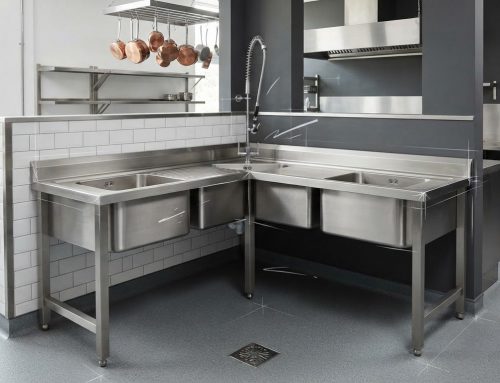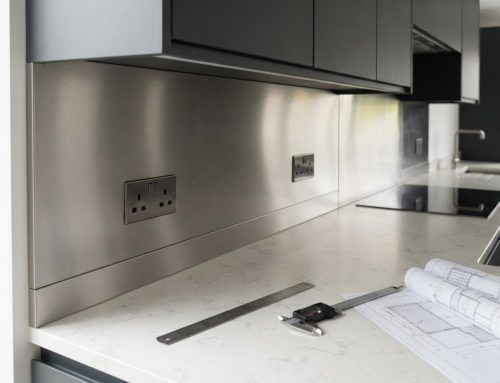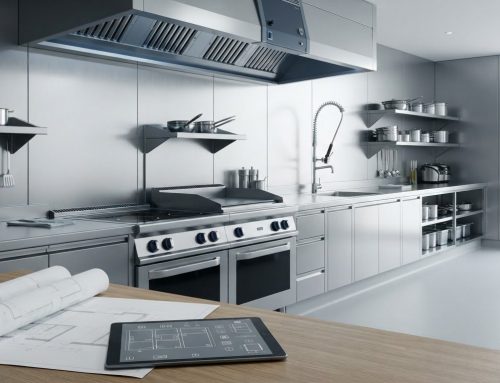


What if the best shelf for your space isn’t a standard size? Bespoke stainless steel shelving can be planned around the available dimensions, the items it needs to hold and the practicalities of installation, rather than forcing the room to accommodate a fixed configuration.
Choosing dimensions is only part of the specification. Shelf depth, stored-item sizes, access and fixing conditions all affect how well the finished shelving works day to day. A clear brief helps bring these details together before the design is agreed.
This guide explains how to prepare a shelving specification, from measuring the available space to describing the storage task and installation requirements. It also compares made-to-measure shelving with modular options and outlines the V90 system’s standard widths of 200, 300, 400 and 500 mm, maximum length of 4.0 metres and upright spacing of 800-1000 mm. Pre-production CAD drawings provide an opportunity to review the proposed design before production.
Key Takeaways
- Map the shelving to the room, noting obstructions, access routes and installation conditions.
- Describe what will be stored, including item dimensions, known weights and how frequently items need to be accessed.
- Choose bespoke stainless steel shelving when the project needs a tailored fit; consider modular planning where defined increments suit the layout.
- Prepare a clear brief with the location, overall run, shelf dimensions and number of levels.
- Review the proposed drawings against the brief so the agreed layout is clear before production begins.
Why choose bespoke stainless steel shelving for a specific space?
Bespoke stainless steel shelving is designed around a project’s dimensions, layout and practical requirements. Instead of choosing from a fixed set of shelf sizes, the specification can account for the available space and how it will be used. Bespoke means designing to fit the project; standard shelving means fitting the project around available sizes.
A standard shelf may not suit a wall run that ends at an unusual point, a corner that needs to remain accessible, or a space interrupted by equipment, pipework or doorways. A mismatch can leave an awkward gap or make stored items harder to reach. A considered layout helps make purposeful use of the available space while positioning shelves in relation to the items they will hold.
When does made-to-measure shelving solve a real design problem?
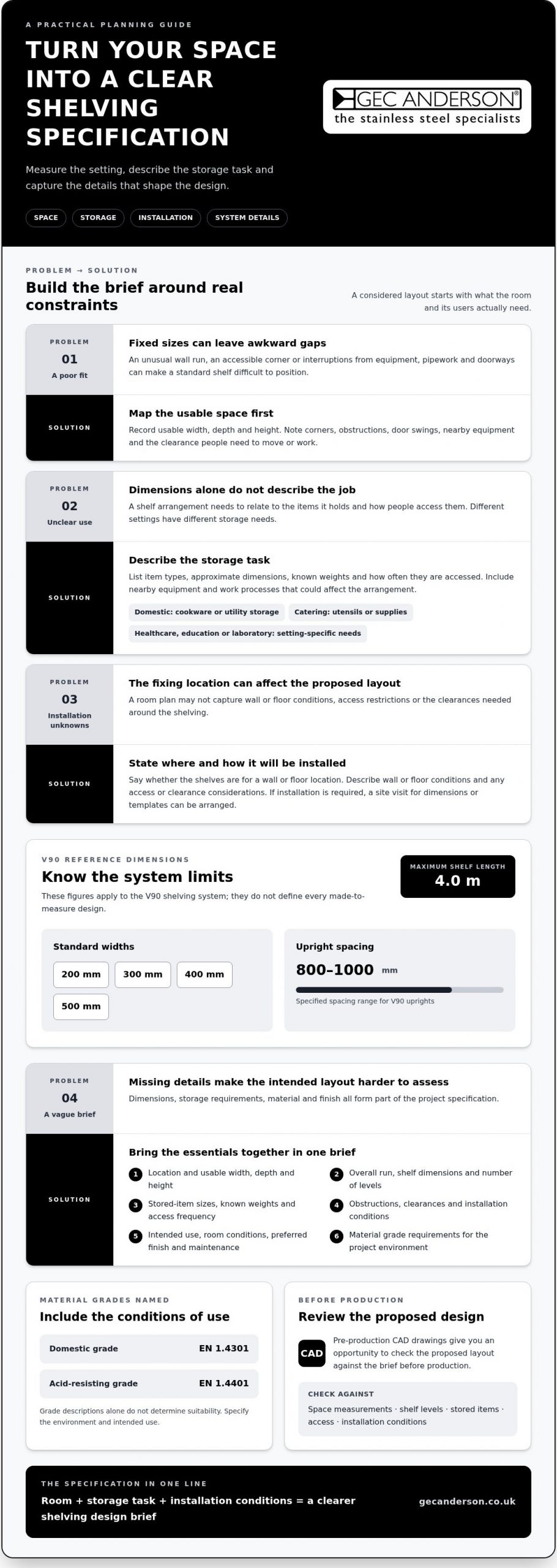
Start with the room, not a preferred shelf size. Measure the usable wall length and note corners, obstructions and clearances around nearby equipment. Then list the items to be stored, their dimensions and how often they need to be accessed. This helps inform shelf positions: frequently used items may need to be easier to reach, while items used less often can be positioned elsewhere. These details make it easier to plan an arrangement around the space instead of leaving unusable areas at either end.
What should stainless steel shelving do in its intended setting?
The brief should reflect the room’s daily use as well as its dimensions. A domestic project might need to organise cookware or make use of a compact utility area. Catering storage may need to accommodate utensils or supplies. In healthcare, education and laboratory settings, the items stored and the way people access them can differ, so describe the specific requirements rather than assuming one arrangement will suit every setting.
Stainless steel’s material properties, including its resistance to corrosion, are outlined in this overview of stainless steel properties. Use that general information as background, then consider the intended contents, room conditions, preferred finish and how the shelving will be used and maintained. Professional spaces may have different operational priorities from residential projects, so the specification should reflect the actual setting rather than rely on a universal design.
With bespoke stainless steel shelving, dimensions, material and finish form part of one project brief. Define the storage task first, then plan the shelves around the space and how people will use them.
Which dimensions and details belong in a bespoke shelving specification?
A useful shelving brief combines measurements with the practical details that shape the design. Record where the shelves will sit, the total length of the run, the required shelf depth and the number of levels. Add the items to be stored, how often they’re accessed and any nearby equipment that could affect reach or clearance.
A clear shelving brief records the location, usable width, depth and height, shelf levels, stored-item dimensions, access needs, obstructions and installation conditions.
How should you measure the space for stainless steel shelves?
Measure the usable width, depth and height rather than relying on a room plan alone. Note corners, pipework, door swings, equipment and the clearance needed for people to move or work. Record whether the shelves are intended for a wall or floor location, and describe any wall or floor conditions that could affect the proposed arrangement. If installation is required, a site visit for dimensions or templates can be arranged.
For the V90 shelving system, the maximum shelf length is 4.0 metres, with standard widths of 200, 300, 400 and 500 mm. Upright spacing is 800-1000 mm. These are V90 dimensions, not dimensions that apply to every made-to-measure shelving design.
What storage and material requirements should the brief describe?
List the type and approximate dimensions of the items to be stored, along with their known weights and how frequently they need to be accessed. Include nearby equipment and work processes so the arrangement can be considered in context. For food-service settings, the FDA’s FDA Food Code guidance provides a reference for equipment materials and cleanability. It is US guidance, not a substitute for applicable UK requirements.
Grade selection should reflect the project environment and intended use. GEC Anderson uses domestic grade EN 1.4301 and acid-resisting grade EN 1.4401. The grade descriptions alone do not determine which is suitable for a particular shelving application. Include the conditions the shelving will face and the use it must serve in the specification.
Gathering these details before design begins makes the brief clearer and helps identify constraints early. With your measurements and requirements to hand, explore made-to-measure shelving as part of a project-specific specification.
Bespoke or modular stainless steel shelving: which approach fits?
The choice depends on whether the project needs a close fit to a particular space or benefits from repeatable planning. Bespoke stainless steel shelving is designed around project-specific dimensions and requirements. A standard or modular configuration follows defined sizes or increments, which can simplify planning when the layout accommodates them.
| Consideration | Project-specific shelving | Standard or modular configuration |
|---|---|---|
| Design flexibility | Dimensions and arrangement respond to the individual brief. | Choices follow the system’s established sizes or increments. |
| Repeatability | Suited to a particular location or layout. | Can support consistent planning across repeat spaces. |
| Adjustment needs | Considered in the brief and agreed design. | Depends on the configuration and options within the system. |
| Fit to the space | Can address unusual dimensions and spatial constraints. | Works well where the room can accommodate standard planning units. |
When is bespoke shelving the more suitable choice?
Choose a project-specific approach where fixed dimensions, an unusual wall run or surrounding fixtures make standard sizes difficult to use efficiently. The brief can relate shelf positions and dimensions to the room and nearby fittings, so the proposed arrangement responds to the space rather than forcing it to conform to a preset module. Assess the design against the intended use and installation conditions.
When might a modular approach be appropriate?
Standard increments can help organise a kitchen layout when repeatable planning is useful and the available space suits the system. DECIMETRIC® is a modular kitchen furniture system built on 100 mm increments. It is a kitchen furniture system, not a shelving product, so its modular planning is a separate consideration when specifying stainless steel shelves.
In practical terms, choose bespoke shelving when the room or storage task calls for a tailored arrangement. Consider modular planning where consistency and defined increments suit the layout. The stainless steel storage systems specification guide offers further context for planning storage as part of a wider project. For general background on steel fabrication, the US-based AISC provides steel fabrication resources. These are not a substitute for project-specific design or applicable UK requirements.
How to move from shelving brief to approved manufacture
A clear sequence helps move a shelving project from an initial idea to an agreed design. For standard items, provide the product references and quantities required. For made-to-order shelving, describe the intended use, location and custom requirements so the design can respond to the project.
What information should you prepare before requesting a design?
Bring the key details together before the design stage. Include the shelving location, measurements, intended use and preferred arrangement, along with any relevant project drawings. Note access routes, nearby equipment and known installation requirements that could affect dimensions or positioning.
Separate essential requirements from preferences. Identify fixed dimensions or clearances first, then list preferred shelf positions and other design considerations. This keeps the brief focused on priorities while showing where the proposed design has flexibility.
What happens when the CAD drawing is approved?
For bespoke stainless steel shelving, pre-production CAD drawings give you an opportunity to review the proposed design before manufacture. Check the overall layout, dimensions and relationship to the surrounding space. Raise any required changes during this review so the agreed drawing reflects the project requirements before production proceeds.
After client approval, the order is placed into production and confirmed in writing with a delivery date. Keeping the brief, drawing comments and order details aligned gives the project team a clear reference for coordinating the next stages.
With the requirements gathered and the design ready for review, discuss a shelving specification for your project.
Why specify bespoke stainless steel shelving from GEC Anderson?
The right shelving should suit its location, contents and day-to-day use. GEC Anderson supplies made-to-measure stainless steel shelving for projects where a standard arrangement may not meet the space or design brief. Dimensions, shelf arrangement and coordination with surrounding fixtures can all be considered as part of the project requirements.
GEC Anderson has supplied stainless steel products since 1962, and its manufacturing is ISO 9001-certified. These provide context for the company’s experience and manufacturing process; the project brief and agreed design remain central to specifying suitable shelving.
What supports confidence in a project-specific shelving order?
Pre-production CAD drawings give you an opportunity to review the proposed design before production. Check the dimensions, shelf positions and how the arrangement relates to the room. The drawing makes the proposed layout clear, while accurate project information and careful review help ensure it reflects the brief.
Design guidance can help develop the brief, and site visits for dimensions or templates can be arranged when installation is required. This brings relevant site details into measurement and installation planning. The final specification should reflect the actual conditions and requirements of your project.
How should you make the next step straightforward?
Prepare a concise set of project details before discussing the shelving. Include:
- Intended use and the items to be stored
- Available dimensions and the proposed location
- Preferred layout, number of shelves and any surrounding fixtures
- Required quantity and relevant drawings or installation information
These details inform the proposed design, which is presented in pre-production CAD drawings for approval. After the drawing is approved, the order is confirmed in writing before production. Keeping the brief, drawing and order details aligned helps everyone work from the same agreed specification.
If your project calls for shelving designed around a particular space or use, discuss your bespoke shelving requirements with GEC Anderson.
Turn Your Shelving Brief into a Considered Design
The right shelving begins with a clear understanding of the space, the items to be stored and how people will use it. Bespoke stainless steel shelving can be specified around those project requirements, while modular planning may suit layouts that work within standard increments.
Record the key dimensions, access needs and installation conditions, then use the pre-production CAD drawings to review the proposed arrangement before manufacture. This approval stage gives you a practical opportunity to check the design. GEC Anderson Limited’s ISO 9001-certified manufacturing and experience supplying stainless steel products since 1962 provide context for stainless steel projects.
With the intended use, measurements, preferred layout and quantity prepared, you have the essentials for a productive discussion. Discuss your bespoke shelving requirements and take the next step towards a design shaped around your project.
Frequently Asked Questions
What information do I need to specify bespoke stainless steel shelving?
Prepare the shelving location, usable width, depth and height, overall run, number of levels and preferred arrangement. Describe the items to be stored, their approximate dimensions and how often they need to be accessed. Include nearby equipment, obstructions, access routes and known installation constraints. Project drawings and the required quantity can also help clarify the brief. Separate essential requirements from preferences so the proposed design can address the priorities.
Can stainless steel shelving be made to fit an unusual space?
Yes. Made-to-measure stainless steel shelving can be designed around project-specific dimensions and layout requirements, including unusual wall lengths, corners or obstructions. Record the usable measurements and note nearby fittings or equipment that affect clearance and access. Where installation is required, a site visit for dimensions or templates can be arranged. Accurate site information helps inform the proposed design, which can then be reviewed before production.
What are the standard dimensions of the V90 shelving system?
V90 shelves have a maximum length of 4.0 metres and standard widths of 200, 300, 400 and 500 mm. Upright spacing is 800-1000 mm. These measurements describe the V90 system and should not be assumed to apply to every made-to-measure shelving design. If the project requires different dimensions, include the space and requirements in the brief so the design can be planned accordingly.
How do bespoke stainless steel shelves differ from modular shelving?
Bespoke shelves are designed around the dimensions and requirements of a particular project, which can suit a fixed or unusual layout. A modular approach uses defined sizes or increments to support repeatable planning where the space suits them. DECIMETRIC® is GEC Anderson’s modular kitchen furniture system, built on 100 mm increments. It is distinct from stainless steel shelving, so compare the project’s layout needs with the purpose of each system.
Which stainless steel grade is suitable for shelving?
Grade selection depends on the environment and intended use. GEC Anderson uses domestic grade EN 1.4301 and acid-resisting grade EN 1.4401. Those descriptions alone do not determine which grade is appropriate for a particular shelf design. Include the conditions the shelving will face and its intended use in the project specification.
How does the CAD approval process work for made-to-measure shelving?
Pre-production CAD drawings show the proposed design for client review before production. Check the dimensions, shelf arrangement and relationship to the surrounding space against the project requirements. Raise any amendments during this review so the agreed drawing reflects the brief. Production follows client approval of the drawing, and the order is confirmed in writing with a delivery date.
How should stainless steel shelving be cleaned without damaging its finish?
Apply a general-purpose cleaning material, such as cream cleaner, gently with a damp cloth or sponge, following the stainless steel grain. Rinse thoroughly with cold water and dry carefully with a soft cloth. Never use warm or hot water or leave the surface to air dry. If discolouration remains, repeat the cleaning process. Avoid leaving cleaning solutions on the surface.