
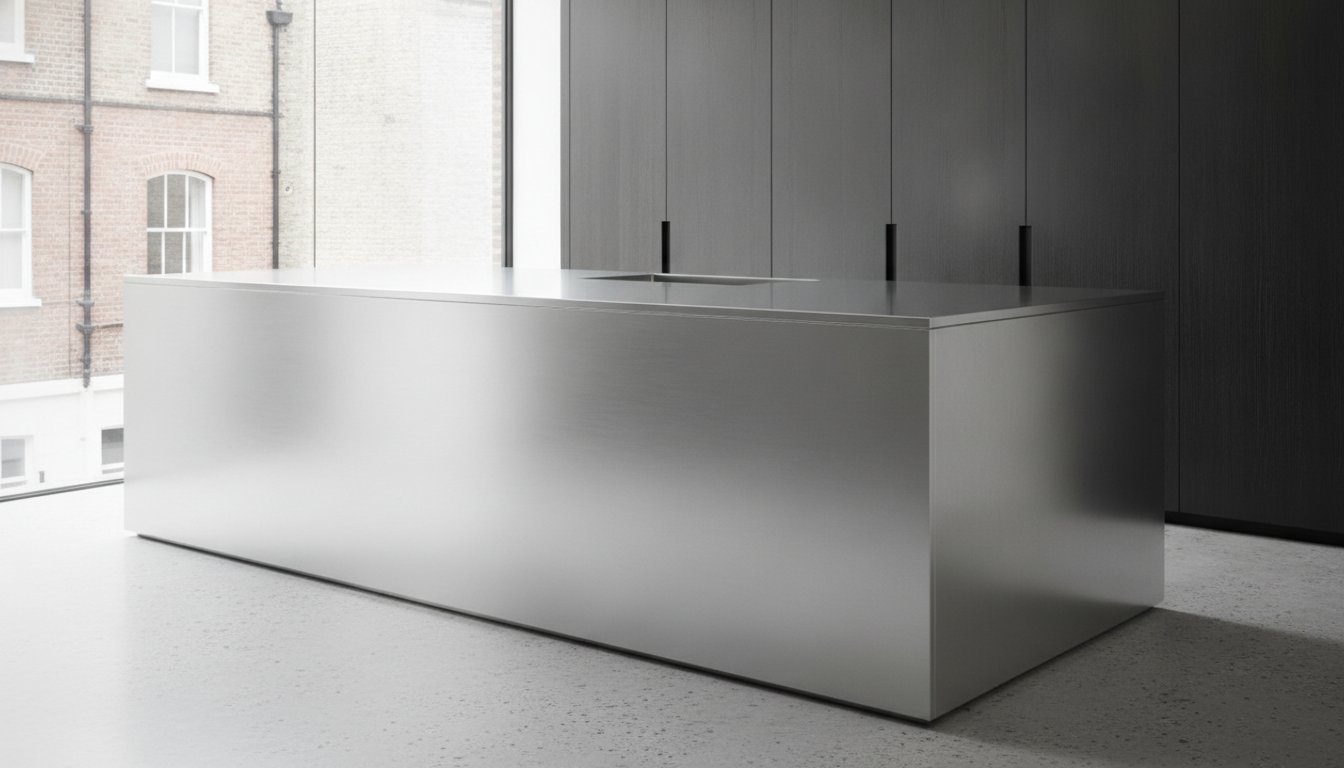
The most sophisticated kitchen designs don’t start with a catalogue; they begin with a technical drawing that accounts for every millimetre of your architectural reality. While modular systems often leave unsightly gaps or require compromise in awkward corners, bespoke stainless steel kitchen units offer a level of precision that turns structural challenges into design features. You might feel that industrial materials lack the warmth required for a domestic setting, or perhaps you’re struggling to find a truly joint-free surface that meets the highest hygienic standards.
We understand that a kitchen is an investment in both function and longevity. This guide explores how professional fabrication bridges the gap between clinical efficiency and residential elegance. You’ll learn about the technical precision of Grade 304 steel, the benefits of welded, monolithic surfaces, and why a made-to-measure approach is the only way to achieve a perfect, lifetime fit. From the initial technical drawings to the final brushed finish, we’ll examine how precision-engineered units provide a seamless aesthetic that standard furniture simply cannot replicate. By focusing on structural integrity and exacting standards, it’s possible to create a space that is as durable as it is visually striking.
Key Takeaways
- Understand the fundamental architectural advantages of bespoke stainless steel kitchen units compared to standard modular systems for a perfect spatial fit.
- Learn why EN 1.4301 (Grade 304) remains the industry benchmark for corrosion resistance and structural integrity in both professional and residential environments.
- Discover how to successfully integrate industrial-grade steel with organic materials like wood and stone to create a refined, sophisticated domestic aesthetic.
- Explore the practical benefits of fully welded, joint-free surfaces and integrated sinks in eliminating bacterial traps and ensuring maximum hygiene.
- Gain insights into specifying made-to-measure solutions that offer lifetime durability and support sustainable, circular design principles through superior longevity.
The Fundamentals of Bespoke Stainless Steel Kitchen Fabrication
Bespoke fabrication represents the pinnacle of kitchen engineering, moving beyond the constraints of mass-produced cabinetry to create a solution that fits a specific architectural envelope. It isn’t merely about choosing a finish; it’s about defining every dimension, shape, and integrated feature to suit the unique requirements of a space. A master fabricator’s role is to interpret complex architectural drawings, ensuring that technical precision translates into a functional reality that modular systems simply cannot match.
Made-to-Measure vs. Modular Systems
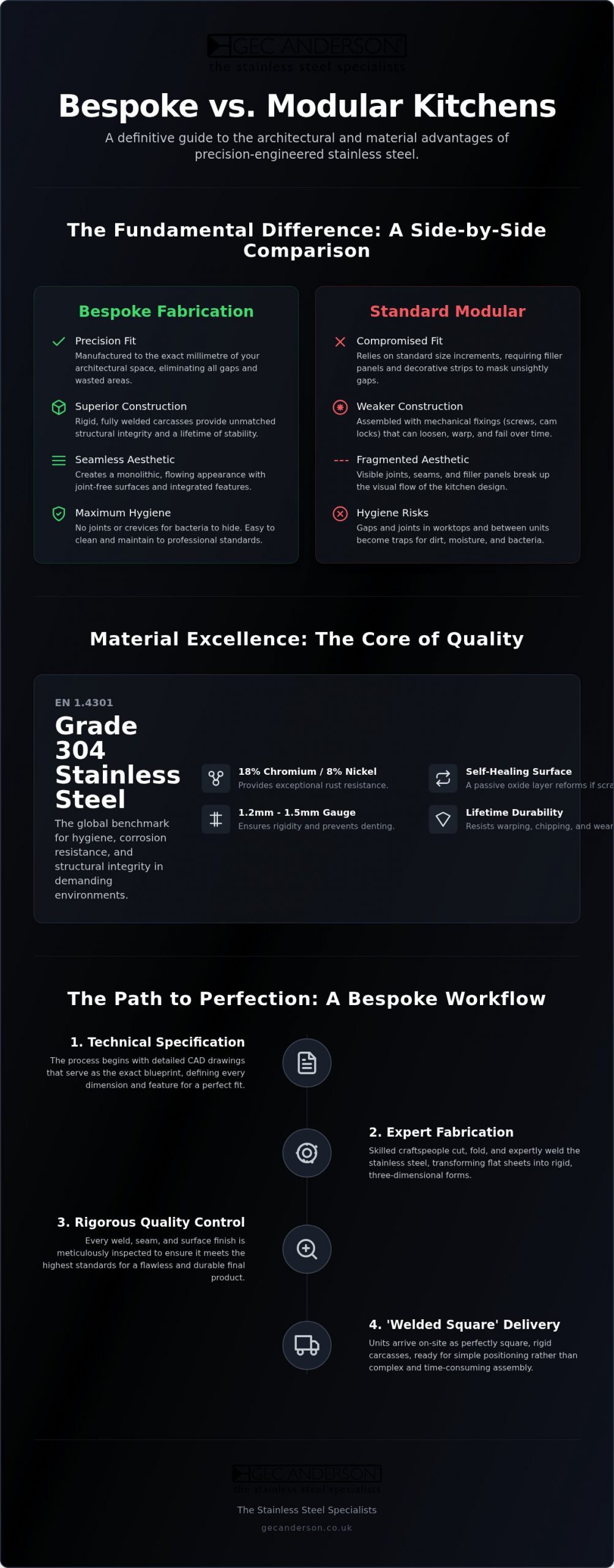
The primary limitation of modular “flat-pack” kitchens is their reliance on standard increments. This often necessitates the use of filler panels and decorative strips to mask gaps where the units don’t align perfectly with the walls. In contrast, bespoke stainless steel kitchen units are manufactured to the exact millimetre. This eliminates dead space and creates a seamless, monolithic appearance that is particularly valued in high-end residential and professional environments.
Structural integrity is another significant differentiator. While modular units typically rely on mechanical fixings like screws and cam locks, bespoke units are provided as rigid, fully welded carcasses. This method of construction ensures the unit remains stable under heavy use and won’t succumb to the loosening or warping often seen in composite materials. For awkward layouts involving structural pillars or non-standard depths, bespoke fabrication allows for the optimisation of every square centimetre of storage and preparation space.
The Fabrication Workflow
A professional fabrication process is a methodical progression from conceptual design to a finished physical product. It begins with a detailed technical specification and CAD drawings, which serve as the blueprint for the factory floor. Understanding the fundamental stainless steel grades and properties is essential at this stage, as it dictates how the material will behave during welding and finishing.
Once the design is approved, the steel is cut, folded, and welded by skilled craftsmen. A key advantage of this approach is the “welded square” delivery. By ensuring each unit is perfectly square and rigid before it leaves the workshop, on-site installation becomes a straightforward process of positioning rather than complex assembly. Quality control is rigorous, with every weld and surface inspected to ensure it meets the exacting standards required for a lifetime of service. This precision-engineered approach ensures that bespoke stainless steel kitchen units provide a level of hygiene and durability that is fundamentally superior to standard alternatives.
Material Excellence: Understanding Grades and Finishes
The enduring appeal of bespoke stainless steel kitchen units rests upon the technical specifications of the alloys used in their construction. Selecting the correct material isn’t merely an aesthetic choice; it’s a decision that dictates the hygiene, longevity, and maintenance profile of the entire installation. For the discerning specifier, understanding the nuances of steel grades is the first step in ensuring a kitchen remains fit for purpose for decades.
Why Grade 304 Stainless Steel?
EN 1.4301, commonly known as Grade 304, serves as the global benchmark for high-quality kitchen fabrication. Its chemical composition, typically containing 18% chromium and 8% nickel, provides exceptional resistance to oxidation and corrosion. This alloy is particularly valued for its self-healing properties. When the surface is scratched, the chromium reacts with oxygen to reform a protective oxide layer, preventing rust from taking hold. Guidance from the British Stainless Steel Association suggests that selecting appropriate stainless steel grades is vital for maintaining food safety and hygiene standards in both domestic and commercial environments.
Beyond the grade, the gauge of the steel is a critical factor in the structural integrity of the kitchen. While budget alternatives might use thinner sheets, professional-grade units typically utilise 1.2mm or 1.5mm steel. This thickness provides the necessary rigidity to support heavy worktops and integrated sinks without flexing or denting. It’s this balance of structural weight and material density that allows for the creation of truly durable, made-to-measure carcasses that withstand the rigours of a busy environment.
Selecting the Right Surface Finish
The aesthetic character of a kitchen is largely defined by its surface texture. A brushed satin finish is widely regarded as the most practical choice for modern environments. Unlike highly polished mirror finishes that highlight every fingerprint and minor abrasion, a brushed texture effectively masks the signs of daily use. Achieving a consistent grain across worktops, splashbacks, and cabinet doors requires a high level of craftsmanship, ensuring that light reflects uniformly across all surfaces to create a cohesive visual flow.
Maintaining these surfaces is remarkably straightforward. Regular cleaning with mild detergents is usually sufficient to preserve the lustre of the metal without the need for harsh chemicals. For those planning a high-performance space, exploring the range of stainless steel options can help in identifying the best combination of grade and finish. By prioritising material excellence, you ensure that your bespoke stainless steel kitchen units don’t just look impressive upon installation but continue to perform flawlessly for a lifetime.
Design Versatility: From Industrial Utility to Luxury Residences
The transition of stainless steel from purely industrial environments to high-end residential architecture reflects a growing appreciation for its unique material properties. Beyond its functional resilience, the material possesses a distinct ability to reflect ambient light, which can significantly brighten professional kitchen environments or narrow domestic spaces. This luminosity, combined with a sleek, reflective surface, allows designers to create kitchens that feel open and airy regardless of their footprint. It’s a material that doesn’t just occupy space; it enhances the visual volume of the room.
Residential Sophistication
In luxury homes, the goal is often to soften the material’s industrial edge by integrating it with organic textures. Pairing bespoke stainless steel kitchen units with warm timber accents, softly veined stone worktops, or glass partitions creates a sophisticated contrast in tone and texture. A prominent trend in contemporary design is the “monolithic” kitchen island, where the entire structure is fabricated as a unified, sculptural element that serves as a focal point for the room. Achieving this look requires handleless cabinets and precision-welded joints to maintain a minimalist, uninterrupted profile. Stainless steel doors offer a high-end finish that won’t peel or warp, whilst bespoke shelving provides a complementary storage solution that maintains the design’s cohesive language.
Commercial and Professional Resilience
Whilst the aesthetic appeal is paramount in residential settings, professional sectors like healthcare and commercial catering prioritise hygiene and heavy-duty performance. In these environments, furniture must withstand constant use and rigorous sanitisation protocols. Bespoke fabrication allows for the creation of units that meet stringent hygiene standards by eliminating the crevices where bacteria might otherwise accumulate. For high-traffic areas requiring extreme organisation, the Stortidy System offers an innovative professional storage solution that integrates seamlessly with the primary cabinetry.
These bespoke stainless steel kitchen units provide the necessary durability for laboratories and public spaces, ensuring that the installation remains functional and visually professional despite decades of intensive service. The master fabricator’s ability to customise every dimension ensures that even the most complex layouts are utilised to their full potential, promoting workflow efficiency and long-term reliability. By focusing on the specific needs of the operator, bespoke design turns a standard workspace into a precision tool for professional excellence.
Seamless Integration: Sinks, Worktops, and Cabinets
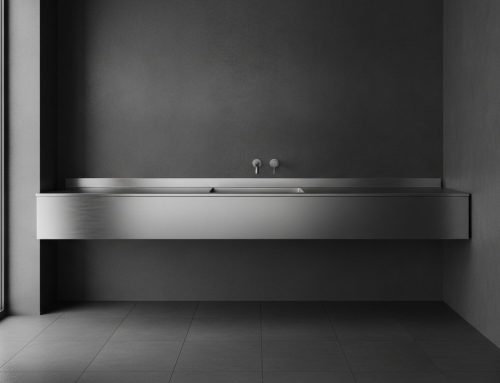
The true strength of bespoke stainless steel kitchen units lies in their ability to form a single, continuous surface that spans multiple functions. Unlike modular kitchens where the sink, worktop, and cabinetry are separate components joined on-site, bespoke fabrication allows these elements to be unified during the manufacturing process. This creates a monolithic aesthetic that is visually striking and fundamentally superior in terms of hygiene. By treating the kitchen as a singular engineered object rather than a collection of parts, architects can achieve a level of design purity that is impossible with standard off-the-shelf products.
The Integrated Sink Advantage
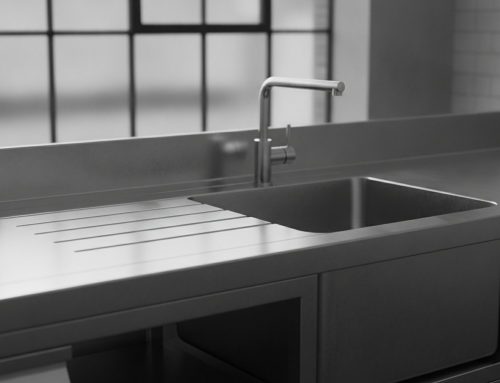
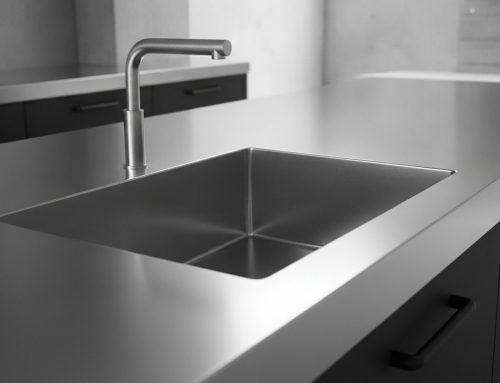
Fully integrated sinks represent a significant advancement over traditional inset or under-mount options. By welding the sink bowl directly into the work surface, fabricators eliminate the silicon joints and mechanical crevices where food particles and bacteria typically accumulate. This seamless transition ensures that liquids and debris can be wiped directly into the bowl without obstruction. Customisation is a core benefit here; bowl sizes, depths, and configurations can be tailored to specific culinary or professional tasks. Whether you require a shallow prep sink or a deep, double-bowl configuration for a commercial environment, fabrication allows for total flexibility in placement and drainer design. To explore these technical advantages further, see our guide to bespoke stainless steel kitchen worktops.
Coordinating Cabinets and Work Surfaces
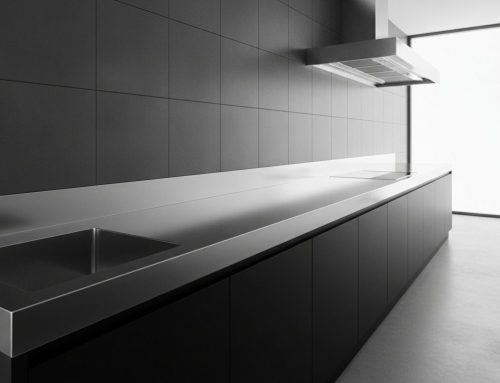
Achieving a cohesive visual identity requires a precise match between the stainless steel worktop and the cabinet doors beneath it. When units are fabricated by a single specialist, the grain and finish of the metal remain consistent across every vertical and horizontal surface. This coordination extends to integrated upstands and splashbacks, which can be folded as part of the worktop to prevent water ingress behind the cabinetry. It’s this attention to detail that creates a unified sculptural look, especially when combined with matching stainless steel shelving.
The structural relationship between components is equally important. A rigid, welded cabinet carcass provides a stable foundation for the heavy-gauge work surface, ensuring the entire assembly remains perfectly level and secure over time. This synergy between the carcass and the surface prevents the minor shifts and movements that can cause joints to fail in lesser systems. Before commissioning your installation, understanding how to measure for a stainless steel worktop with the required technical rigour is essential to achieving a seamless, precision fit. If you’re ready to specify a unified solution for your next project, you can view our full range of integrated stainless steel components to see how these elements work in harmony.
Specifying for Longevity: The GEC Anderson Perspective
GEC Anderson Limited has supplied premium stainless steel solutions since 1962, establishing a heritage grounded in technical excellence and master craftsmanship. Over six decades, we’ve refined the process of creating bespoke stainless steel kitchen units that serve as permanent fixtures rather than temporary furniture. This longevity is achieved through a profound emphasis on functionality and a refusal to compromise on structural integrity. When you specify a bespoke system, you’re choosing a product designed to outlast the building’s interior, providing a level of reliability that modular systems simply don’t offer.
Sustainability and the Circular Economy
The environmental impact of a kitchen is determined by its lifespan and its eventual disposal. Stainless steel is a cornerstone of the circular economy due to its high recycled content and its status as a 100% recyclable material. Unlike composite or plastic-based units that often end their life in landfill, steel can be repurposed indefinitely without loss of quality. Choosing durable, high-quality materials reduces the carbon footprint associated with frequent replacements and waste. It’s a “buy once, buy well” philosophy that aligns with modern sustainability goals whilst ensuring a premium finish that remains untarnished by time.
The Consultative Design Process
Successful fabrication requires more than just manufacturing; it demands an advisory approach that bridges the gap between architectural vision and technical reality. Working with specialists allows for the resolution of complex architectural challenges, such as integrating units into historic structures or accommodating intricate service layouts. This consultative relationship ensures that every technical requirement is met before the first sheet of steel is cut. It’s a partner-like collaboration where technical wisdom and significant experience guide the project from initial CAD drawings to the final factory inspection.
Final considerations for any successful project include professional installation and a methodical maintenance routine. Because bespoke stainless steel kitchen units are provided as rigid, welded carcasses, the installation process is streamlined, ensuring the units are perfectly square and stable. Once in place, the ease of maintenance ensures the kitchen retains its professional lustre with minimal effort. By prioritising precision and permanence, specifiers can create spaces that aren’t just efficient today, but remain functional and beautiful for decades to come.
Investing in Architectural Permanence
Choosing bespoke stainless steel kitchen units represents a commitment to precision engineering and long-term utility. By moving beyond modular constraints, you ensure an exact fit that eliminates the compromises of standard cabinetry whilst providing a level of hygiene that only fully welded, non-porous surfaces can achieve. The result is a monolithic, sculptural installation that performs as a precision tool in commercial settings and a sophisticated design statement in luxury residences. This durability doesn’t just benefit the operator; it supports a sustainable circular economy through material longevity and total recyclability.
GEC Anderson has operated as a specialist independent manufacturer since 1962, providing the technical excellence required to translate complex architectural visions into physical reality. Our team offers expert technical support for architects and designers, ensuring that every detail, from bowl configuration to surface grain, meets the most exacting standards. We invite you to explore our range of bespoke stainless steel kitchen solutions and discover how our heritage of craftsmanship can enhance your next project. It’s time to build a kitchen that stands as a permanent testament to quality and functional design.
Frequently Asked Questions
What are the benefits of bespoke stainless steel kitchen units over standard ones?
Bespoke stainless steel kitchen units offer a level of architectural precision that standard modular systems cannot match. Because they are fabricated to the exact millimetre, they eliminate the need for filler panels and unsightly gaps, ensuring a seamless fit in any layout. The rigid, fully welded carcasses provide superior structural integrity compared to flat-pack units. This method of construction also removes the mechanical joints where bacteria often accumulate, offering a fundamentally more hygienic environment.
Which grade of stainless steel is best for residential kitchen units?
EN 1.4301, commonly referred to as Grade 304, is the most appropriate choice for residential kitchen units. This specific alloy contains 18% chromium and 8% nickel, providing excellent resistance to corrosion and oxidation. It’s the industry benchmark for food-safe surfaces because it’s non-porous and incredibly durable. The material’s self-healing chromium oxide layer ensures that minor surface abrasions don’t lead to rust, maintaining a clean and professional appearance for decades of use.
Are stainless steel kitchen units difficult to maintain or clean?
Maintaining these units is straightforward and requires very little effort compared to organic materials like wood or stone. Stainless steel is naturally non-porous, which prevents bacteria and mould from taking root. Regular cleaning with warm water and a mild detergent is usually sufficient to preserve the surface. Using a brushed satin finish is particularly effective for domestic settings, as the texture helps to conceal fingerprints and minor scratches that occur during daily activities.
Can I integrate my own appliances into bespoke stainless steel units?
Yes, bespoke units are specifically designed to accommodate the integration of third-party appliances. During the technical drawing phase, fabricators create precision apertures based on the dimensions of your chosen ovens, hobs, or dishwashers. This ensures a flush, seamless fit that maintains the kitchen’s monolithic aesthetic. Whilst GEC Anderson doesn’t supply the appliances themselves, we provide the necessary technical expertise to ensure your equipment fits perfectly within the rigid, welded carcass of our cabinetry.
How long do bespoke stainless steel kitchen units typically last?
Bespoke stainless steel kitchen units are engineered for longevity and typically last for the lifetime of the building. Whilst modular composite kitchens might require replacement after a decade, high-gauge stainless steel remains structurally sound for 20 years or more. The use of 1.2mm or 1.5mm thick steel ensures that the units don’t warp, flex, or succumb to moisture damage. This makes them a highly cost-effective investment when viewed through the lens of durability.
Is stainless steel a sustainable material for kitchen fabrication?
Stainless steel is one of the most sustainable materials available for modern kitchen fabrication. It’s 100% recyclable at the end of its life without any loss of quality, and most new steel contains a high percentage of recycled content. The primary environmental benefit, however, is its extreme durability. By choosing a material that doesn’t need to be replaced every few years, you significantly reduce the carbon footprint and waste associated with frequent renovations.
Do bespoke stainless steel cabinets come in different finishes?
Yes, bespoke cabinets can be finished in several ways to suit the design requirements of the project. A brushed satin finish is the standard choice for its practical ability to mask wear, but more reflective polished options are available for specific aesthetic effects. The advantage of bespoke fabrication is the ability to maintain a consistent grain direction across all cabinet doors, worktops, and shelving, which creates a unified and professional visual identity throughout the entire space.
What is the difference between brushed and polished stainless steel?
The primary difference lies in the surface texture and how it reflects light. Brushed stainless steel has a directional grain that gives it a muted, satin-like appearance, making it highly effective at hiding fingerprints and scratches. Polished stainless steel is buffed to a high-gloss, mirror-like finish that is extremely reflective. Whilst polished steel offers a striking look, it’s generally more demanding to maintain in high-traffic kitchens as it highlights every mark and abrasion.