
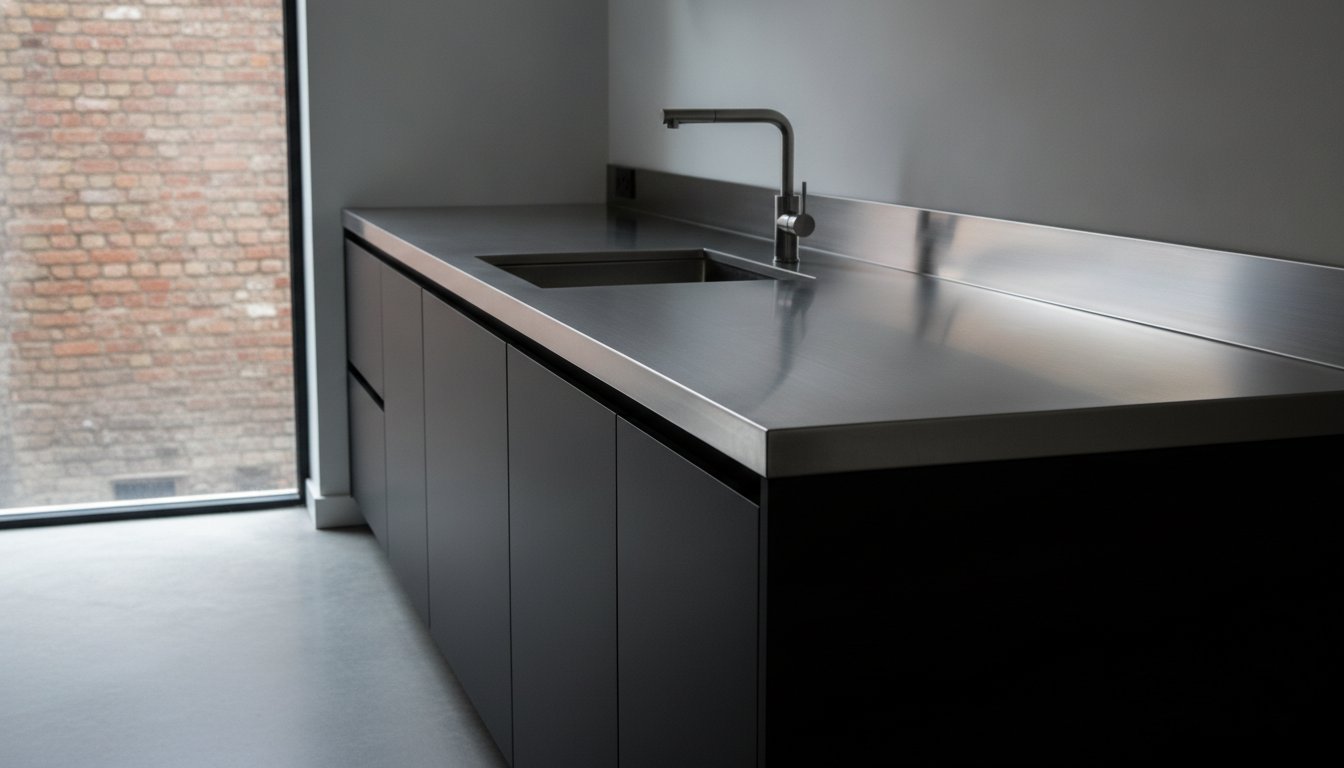
A truly exceptional kitchen surface doesn’t merely exist to support your daily tasks; it serves as a permanent, high-performance architectural fixture that defines the room’s utility. When you’re specifying 304 grade stainless steel worktops UK, you aren’t just choosing a material, you’re investing in a legacy of hygiene and structural integrity. Many people worry that domestic metal tops will feel “tinny” or lack the refinement of traditional stone. It’s a valid concern, especially when the market is flooded with inferior imports that fail to meet the exacting standards of British craftsmanship.
We understand that the technical distinction between 304 and 316 grades can feel complex, yet selecting the right specification is vital for longevity. This guide clarifies why 304 grade is the definitive choice for premium residential and commercial environments, offering the perfect balance of corrosion resistance and fabrication versatility. You’ll discover how to commission a bespoke surface that integrates sinks seamlessly, ensuring a finish that’s as beautiful as it’s functional. We’ll walk through the precision of British manufacturing and the essential technical details that guarantee your worktop remains a functional centrepiece for a lifetime.
Key Takeaways
- Understand the technical composition of 18/10 stainless steel and why this specific ratio of chromium and nickel ensures long-term durability in both domestic and professional kitchens.
- Discover why 304 grade stainless steel worktops UK are the definitive specification for 95% of indoor projects, providing optimal corrosion resistance without the unnecessary expense of marine-grade alternatives.
- Learn how bespoke fabrication allows for the seamless integration of sinks and upstands, creating a single, unified surface that eliminates the dirt-traps found in standard modular installations.
- Identify the core functional advantages of specifying 304 grade, including total heat resistance and a non-porous finish that naturally inhibits the growth of bacteria and mould.
- Gain professional insight into commissioning a made-to-measure surface that reflects the precision of British manufacturing and is engineered to provide a lifetime of reliable service.
Understanding 304 Grade Stainless Steel for UK Worktops
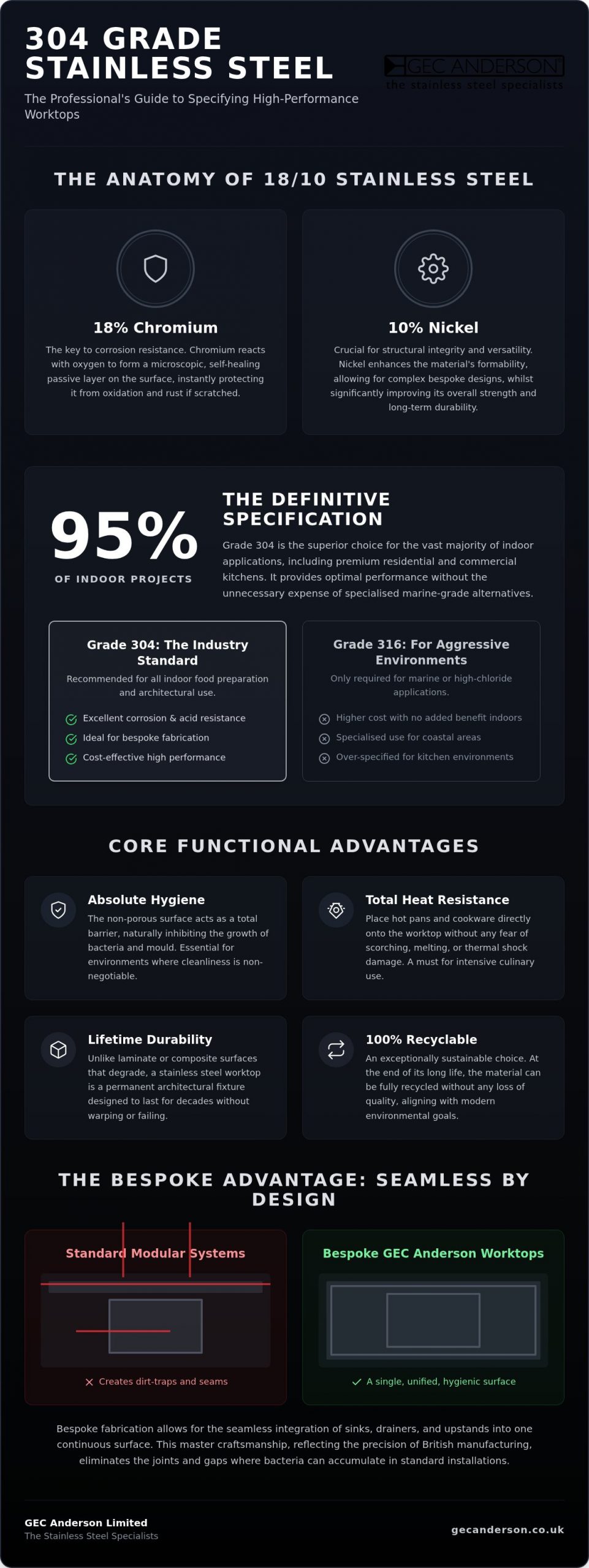
Selecting 304 grade stainless steel worktops UK is a decision grounded in both technical logic and aesthetic permanence. This material is the most versatile and frequently specified austenitic stainless steel in the British architectural sector. It offers a sophisticated balance of durability and refined finish. When you see the term “18/10” in technical specifications, it refers to the precise chemical composition of the alloy: 18% chromium and 10% nickel. This specific ratio ensures the material remains resilient under the pressures of a busy kitchen whilst maintaining its structural integrity over decades of use.
The Chemistry of Durability: Chromium and Nickel
The exceptional performance of SAE 304 stainless steel stems from its unique molecular structure. Chromium is the critical component that provides essential corrosion resistance. It reacts with oxygen to form a microscopic, self-healing passive layer on the surface. If the worktop is scratched, this layer reforms instantly to prevent oxidation and rust. Nickel plays a complementary role by improving the material’s formability and structural integrity, which is vital for complex bespoke designs. 304 grade is defined as an austenitic steel with superior non-magnetic properties, making it ideal for precision engineering.
Why 304 Grade Dominates the UK Kitchen Market
In the UK, 304 grade is the default specification for projects that demand both longevity and absolute hygiene. It strikes an ideal balance between cost-effectiveness and high-end performance. Whilst 316 grade exists for more aggressive environments, 304 grade remains the superior choice for the vast majority of residential and commercial food preparation areas. Its structural properties make it the preferred material for bespoke fabrication. This allows master craftsmen to create seamless units where sinks, drainers, and worktops are integrated into a single, unified piece without the dirt-traps found in modular systems.
British manufacturing standards, specifically the updated BS EN 10088-1:2023, recognise 304 grade as the benchmark for quality stainless steel fixtures. It doesn’t just meet the basic requirements for food safety; it exceeds them. For those seeking a surface that won’t degrade or warp, this grade provides the necessary assurance of a professional-grade installation. It’s a purposeful choice for architects and discerning homeowners who value a material that matures gracefully and reflects a commitment to functional excellence.
The Functional Benefits of Specifying Grade 304 Surfaces
Choosing 304 grade stainless steel worktops UK provides a level of functional reliability that other materials simply cannot replicate. This alloy is celebrated for its non-porous surface, which acts as a total barrier against bacterial growth and mould. Unlike stone, composite, or wood, there are no microscopic fissures where pathogens can hide. This makes it an essential specification for environments where hygiene is non-negotiable. The material is also remarkably resilient against domestic acids, such as lemon juice or vinegar, and common cleaning agents that might damage more sensitive surfaces.
Hygiene and Cleanliness in Professional and Domestic Settings
In healthcare and high-end residential projects, the ability to maintain clinical-level hygiene is paramount. Stainless steel remains the only choice for such exacting standards. Maintenance is remarkably straightforward; the surface responds perfectly to standard British cleaning products without the risk of degradation. Following British Stainless Steel Association guidelines ensures that the material remains in peak condition, even in high-traffic zones. Beyond hygiene, the material offers exceptional heat resistance. You can place hot pans directly onto the surface during intensive culinary use without fear of scorching or thermal shock.
Longevity: A Sustainable Choice for 2026
Longevity is perhaps the most compelling argument for this material. Whilst laminate or composite surfaces may require replacement within a decade, 304 grade steel is a permanent fixture. It is 100% recyclable at the end of its life, aligning with modern sustainability goals for 2026. Over time, the surface develops a unique, soft patina that tells the story of the kitchen’s use. This characteristic is part of its charm; it reflects a material that is living rather than static. The brushed finish provides a neutral, sophisticated aesthetic that complements contemporary UK interior design, from minimalist apartments to industrial-led renovations.
The lifetime value of a metal worktop far exceeds that of temporary alternatives. When you consider the lack of repair costs and the absence of replacement cycles, the investment becomes highly logical. For those planning a long-term project, exploring bespoke stainless steel fixtures offers a path to a truly enduring kitchen environment. It’s a choice that prioritises utility and permanence over fleeting trends, ensuring the kitchen remains a high-performance space for decades to come.
304 Grade vs 316 Grade: Choosing the Correct Specification
Distinguishing between material grades is essential for ensuring the longevity of an architectural installation. Whilst both alloys appear identical to the naked eye, their chemical compositions dictate their performance in specific environments. The primary difference lies in the addition of molybdenum to 316 grade, a component absent in 304. For 95% of 304 grade stainless steel worktops UK installations, the standard 304 specification provides more than enough protection. Choosing 316 often incurs a price premium of 30% to 50%, which is typically an unnecessary expenditure for indoor residential or light commercial kitchens.
The decision to specify a particular grade shouldn’t be based on a “more is better” philosophy but rather on the physical reality of the kitchen’s location. 304 grade is the workhorse of the industry for a reason. It handles the heat, moisture, and chemical exposure of a busy kitchen with ease. It’s only when environmental factors become aggressive that 316 becomes a logical requirement.
When to Consider Marine Grade 316
There are specific scenarios where the “marine grade” properties of 316 become necessary. Outdoor kitchens, for instance, face constant exposure to the elements and require a higher threshold of resistance. If a project is located in a coastal area, the high salt content in the air can lead to surface staining on standard steel over time. Similarly, environments with high chlorine levels, such as indoor swimming pool areas or specialised laboratories, require the enhanced protection of 316. However, for a standard internal kitchen, the technical properties of Grade 304 offer the ideal balance of durability and value.
The Role of Molybdenum in Corrosion Resistance
Molybdenum is the alloying element that distinguishes 316 from 304. It specifically protects the metal against pitting and crevice corrosion, which can occur when the surface is exposed to high concentrations of chlorides or industrial solvents. For most UK residences, 304 grade offers optimal resistance against the organic acids and cleaning chemicals found in a domestic setting. Over-specifying can lead to inflated project costs without providing a tangible benefit to the end user. GEC Anderson provides expert guidance on material selection, ensuring that your bespoke project uses the most appropriate grade for its intended environment.
The master craftsman understands that every project has a unique set of demands. It’s not just about the metal itself, but how it interacts with the surrounding architecture and the specific behaviours of the users. By focusing on 304 grade stainless steel worktops UK for internal projects, you’re choosing a material that has been proven across decades of British manufacturing. It remains the steady, reliable guide for standard requirements, offering a level of stability that professional specifiers trust.
Key Considerations for Bespoke Stainless Steel Fabrication
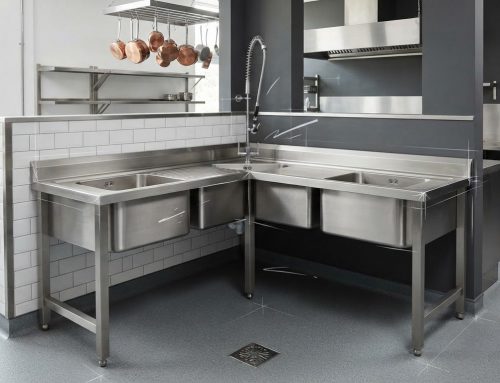
The shift from standard modular units to 304 grade stainless steel worktops UK represents a commitment to both architectural precision and absolute hygiene. Made-to-measure fabrication allows for the total elimination of joints and seams. In a standard installation, joints often become collection points for moisture and debris. By contrast, a bespoke surface is engineered as a continuous piece. This ensures the worktop remains entirely non-porous across its entire length, providing a level of cleanliness that modular systems cannot match.
The structural integrity of these surfaces relies heavily on the quality of the substrate. To avoid the “tinny” sound often associated with low-quality metal tops, premium fabrication utilises high-quality timber bonding. This substrate provides essential sound deadening and structural rigidity. It allows the metal to feel solid and substantial, matching the tactile quality of stone whilst offering the superior performance of steel. This combination of a robust core and a precision-engineered surface defines the functional excellence of a professional installation.
Seamless Integration of Sinks and Splashbacks
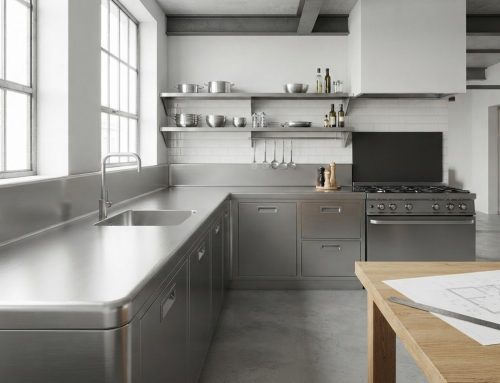
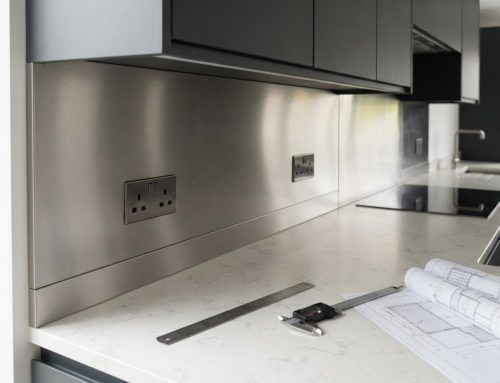
The hallmark of expert fabrication is the ability to weld and polish sinks directly into the worktop surface. This process creates a unified, hygienic bond with no visible joins or silicone beads to degrade over time. For those requiring deeper technical insight into these processes, our bespoke stainless steel kitchen worktops guide provides a comprehensive framework for specification. Extending this material to include a continuous metal splashback further enhances the aesthetic. It creates a clean, industrial-led look that is remarkably easy to maintain and visually cohesive.
Specifying Thickness and Edge Details
Bespoke manufacturing offers the freedom to define the exact visual weight of the surface. You might select a slimline 20mm profile for a minimalist, contemporary aesthetic. Alternatively, a bold 40mm or thicker edge can provide a more commanding presence in a large kitchen. The choice of edge detail is equally critical. Square edges offer a sharp, architectural finish, whilst chamfered or bullnose edges provide a softer profile. Because the fabrication is entirely custom, it easily accommodates unusual shapes, intricate cut-outs, or specific site requirements that standard products cannot meet.
Precision is the defining characteristic of this approach. Every dimension is calculated to ensure a perfect fit within the unique constraints of your space. If you’re ready to define the specific requirements for your project, you can explore our range of bespoke stainless steel fixtures to ensure every detail is executed with professional accuracy.
Investing in Longevity with GEC Anderson Bespoke Worktops
GEC Anderson occupies a unique position as the premier UK source for bespoke stainless steel fixtures. Our approach is defined by a quiet confidence that stems from over six decades of technical excellence and a deep understanding of material performance. When specifying 304 grade stainless steel worktops UK, you’re choosing a partner that prioritises utility and structural permanence over temporary design trends. We provide a consultative service that bridges the gap between architectural concept and precision installation, ensuring that every surface meets the rigorous demands of high-traffic residential and commercial environments.
The relationship between the specifier and the manufacturer is vital for the success of any high-end project. We work closely with architects from the earliest stages of design to ensure the technical specification aligns with the functional requirements of the space. This collaborative process ensures that the inherent durability of 304 grade steel is fully realised through exacting manufacturing standards and a methodical approach to bespoke design.
The Precision of Made-to-Measure Design
A perfect fit is non-negotiable in bespoke architecture. We’ve developed a manufacturing philosophy that allows for both modular efficiency and total made-to-measure flexibility. Whilst modular systems offer a structured approach for certain scales, our bespoke capabilities allow for the creation of truly unique configurations that standard products cannot achieve. We encourage our clients to view a stainless steel worktop not as a replaceable piece of furniture, but as a permanent architectural fixture. It’s a structural element designed to provide a lifetime of reliable service without the need for frequent repair or replacement cycles.
British Craftsmanship and Heritage Since 1962
Our heritage is grounded in the physical reality of British manufacturing. Established in 1962, GEC Anderson has spent over 60 years refining the art of stainless steel fabrication for the professional, healthcare, and residential sectors. This longevity is a testament to our commitment to quality and our ability to deliver solutions that stand the test of time. We don’t rely on aggressive marketing; instead, we let the precision of our engineering and the satisfaction of our long-term partners speak for itself.
Every project we undertake is a reflection of this master-craftsman identity. We combine traditional skills with modern innovation to produce surfaces that are as resilient as they are refined. If you’re ready to integrate this level of expertise into your next project, please contact GEC Anderson to discuss your 304 grade specification and discover how we can help you achieve a seamless, high-performance finish.
Specifying for a Lifetime of Performance
Choosing the right surface requires a balance of technical knowledge and architectural vision. By selecting 304 grade stainless steel worktops UK, you ensure a hygienic, heat-resistant, and entirely non-porous environment that withstands the rigours of daily use. We’ve explored how the 18/10 composition provides essential durability and why bespoke fabrication remains the only way to achieve a truly seamless, integrated finish with welded sinks and splashbacks.
A worktop shouldn’t be a temporary fixture but a permanent investment in your property’s utility. GEC Anderson has operated as a specialist UK manufacturer since 1962, providing architects and designers with precision-engineered 304 and 316 grade options. Our bespoke solutions are crafted to meet the exact requirements of your brief, ensuring a master-crafted result that matures gracefully over decades. This commitment to longevity and functional excellence is what defines a truly premium British installation.
If you’re ready to transform your kitchen with a surface that prioritises utility and heritage, explore bespoke 304 grade worktops at GEC Anderson. We look forward to helping you realise a space built on precision, stability, and professional trust.
Frequently Asked Questions
Is 304 grade stainless steel good for kitchen worktops?
304 grade is the definitive choice for both residential and professional kitchen surfaces. Its 18/10 chromium and nickel composition provides exceptional resistance to corrosion and heat. Unlike other materials, it won’t crack or warp under thermal stress. This makes 304 grade stainless steel worktops UK the standard specification for high-performance environments where durability and structural integrity are paramount. It’s a purposeful investment that matures with use rather than degrading over time.
What is the difference between 304 and 316 stainless steel worktops?
The primary distinction is the addition of molybdenum in 316 grade, which enhances resistance to chlorides and salt. 304 grade is perfectly suited for 95% of internal UK applications, including domestic kitchens and commercial food preparation areas. You should only specify 316 grade for marine environments, coastal installations, or areas with high chlorine exposure. For standard indoor projects, 304 grade offers optimal performance without the unnecessary cost premium of marine-grade alternatives.
Do stainless steel worktops scratch easily in a domestic kitchen?
All stainless steel surfaces will develop fine scratches over time, but these marks eventually blend into a soft, uniform patina. This characteristic is a sign of a working kitchen rather than a flaw in the material. To maintain the finish, you should avoid using abrasive scouring pads or cutting directly on the surface. Using a dedicated chopping board ensures the worktop remains in peak condition whilst allowing the natural character of the metal to emerge.
Can I have a bespoke stainless steel worktop cut to my exact dimensions?
Bespoke fabrication is a core service for specialist manufacturers like GEC Anderson. We provide made-to-measure solutions that are engineered to your exact architectural requirements, including complex shapes and specific cut-outs. This approach ensures a perfect fit within your unique space, eliminating the need for the awkward joints found in modular systems. Every dimension is precision-engineered to create a permanent architectural fixture that aligns with your design brief.
How do I clean and maintain a 304 grade stainless steel surface?
Maintenance is straightforward and requires only standard British cleaning products. For daily care, a soft cloth with warm water and mild detergent is sufficient to keep the surface pristine. You should avoid using bleach or cleaners containing chlorides, as these can damage the protective passive layer of the steel. Regular cleaning preserves the non-porous finish, ensuring the worktop remains a hygienic and attractive centrepiece in your kitchen for decades of reliable service.
Are stainless steel worktops more hygienic than granite or quartz?
Stainless steel is significantly more hygienic than natural stone or composite materials because it’s entirely non-porous. Granite and quartz can have microscopic fissures where bacteria and mould may accumulate over time. Steel provides a total barrier against pathogens, which is why it’s the only material used in clinical and professional food environments. It doesn’t require sealing or specialist treatments to remain sanitary, making it a reliable choice for health-conscious households.
Can sinks be seamlessly integrated into a 304 grade worktop?
Sinks can be seamlessly integrated into the worktop using advanced welding and polishing techniques. This process creates a single, unified surface with no visible joins or dirt-traps. It’s a hallmark of high-quality British manufacturing and a key advantage of choosing bespoke 304 grade stainless steel worktops UK. This integration not only enhances the minimalist aesthetic but also simplifies cleaning by removing the silicone beads and crevices found in standard inset sink installations.
Is 304 grade stainless steel magnetic?
304 grade stainless steel is an austenitic alloy and is generally non-magnetic. This property is due to its high nickel content, which alters the atomic structure of the steel. Whilst some slight magnetism can occasionally occur in areas that have been heavily cold-worked during the fabrication process, the material remains fundamentally non-magnetic. This makes it ideal for environments where magnetic interference must be avoided, such as certain laboratory settings or precision architectural spaces.