
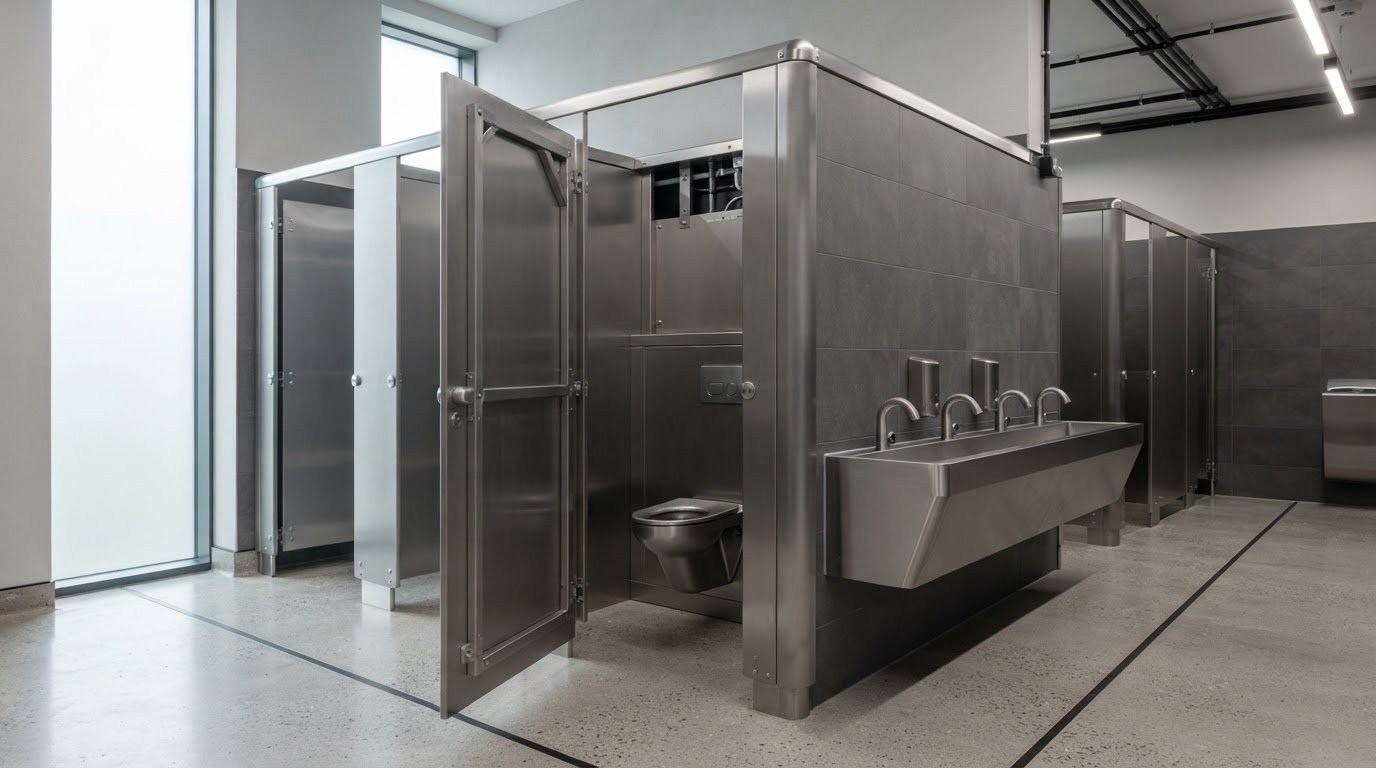
A school toilet’s resilience depends on its specification, not simply on a product labelled “anti-vandal”. Heavy use and deliberate damage can affect ordinary fixtures, so choosing anti-vandal school toilets means considering how each component will perform in its setting. Durability matters, but so do hygiene, appearance and the practicalities of cleaning and maintenance.
A clear brief helps architects, contractors and school teams choose fixtures for the space and the people who use it. This guide explains how to assess stainless steel sanitaryware, compare materials and record the requirements that matter before approving project drawings. It also covers cleaning and maintenance, so the specification reflects the washroom’s ongoing needs as well as its initial design.
Key Takeaways
- Specify anti-vandal school toilets as a practical durability goal, not a promise that fixtures cannot be damaged.
- Match stainless steel sanitaryware to the intended use, users and demands of the washroom.
- Compare material options across durability, hygiene, appearance, maintenance and project suitability.
- Build a clear specification by recording fixture types, quantities and design requirements before approving production drawings.
- Consider how stainless steel sanitaryware can support your school’s project brief.
Why specify anti-vandal school toilets for demanding daily use?
School washrooms experience repeated daily use by pupils, staff and visitors. High traffic brings regular cleaning and wear, while deliberate misuse can put further pressure on fixtures. These demands make sanitaryware selection part of a wider planning decision: a damaged or unsuitable item may need repair or replacement, affecting both maintenance routines and the availability of the washroom.
A considered specification looks beyond the initial product choice. Account for the intended users, the intensity of use and the work needed to keep the washroom clean and serviceable. Stainless steel offers a durable, hygienic option for demanding settings, but no material makes a fixture immune to damage.
What does anti-vandal mean in a school washroom?
“An anti-vandal specification reduces a fixture’s vulnerability to damage; it doesn’t make the washroom damage-proof.” This distinction helps set realistic expectations. Fixture durability is one part of the design, while supervision, safeguarding arrangements and behaviour policies sit within the school’s wider responsibilities. The broader discussion of the Public toilet also considers vandalism alongside cleanliness and maintenance, illustrating why material choice is only one part of washroom resilience.
For specifiers, the practical aim is to select sanitaryware suited to its application, then plan for routine cleaning, inspection and maintenance. Stainless steel’s hygienic surface and durability can support this approach. The fixture types and their positions still need to suit the specific room and its users.
Which school projects benefit from a considered specification?
New-build washrooms offer an opportunity to define fixture requirements early. In a refurbishment, the existing layout and building constraints may shape what can change. A replacement project has a different focus: identify what needs attention and ensure each new fixture suits the washroom’s users and patterns of use. Each project benefits from a clear brief.
Schools, colleges and other education settings may serve different age groups and have distinct routines. A room used by a high volume of pupils may place different demands on fixtures from one used by a smaller group. Record these practical distinctions rather than relying on a broad label such as “heavy duty”.
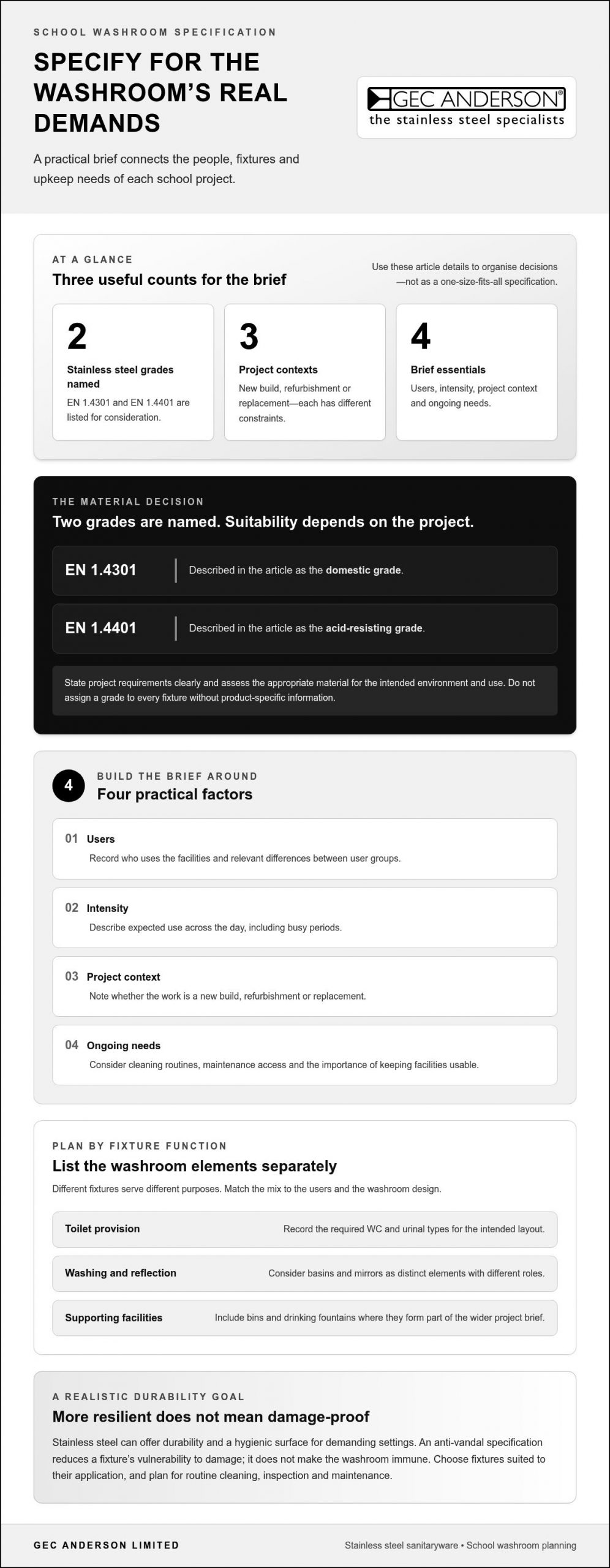
- Users: Identify who uses the facilities and any relevant differences between user groups.
- Intensity: Describe expected use across the day, including busy periods.
- Project context: Note whether the work is a new build, refurbishment or replacement.
- Ongoing needs: Consider cleaning routines, maintenance access and the importance of keeping facilities usable.
These details give the project team a useful basis for selecting sanitaryware and planning ongoing requirements. Next, assess how stainless steel can meet those demands, fixture by fixture.
How stainless steel sanitaryware supports school toilet durability
Stainless steel can be a practical choice for busy school washrooms because it combines durability with a hygienic surface. These qualities are relevant where fixtures are used frequently and need regular cleaning. The material is not a guarantee against damage, however. Performance depends on choosing appropriate fixtures and considering how they fit the room’s layout and maintenance routine.
Start by listing the function of each fixture. A WC has different requirements from a basin or mirror, and treating all sanitaryware as a single category can leave gaps in the brief. Consider the complete washroom, then prioritise the products that support its planned use.
Which stainless steel fixtures can a school specify?
WCs and urinals are core fixtures in school toilet layouts. Basins provide washing facilities, while mirrors serve a separate practical purpose. The right mix depends on the users and design of the washroom rather than a single standard arrangement.
The wider facilities brief may also include bins or drinking fountains. These do not replace toilet or handwashing fixtures, but they may be relevant when planning connected areas or shared facilities. Listing each item by function helps the project team coordinate the overall design.
- Toilet provision: Record the required WC and urinal types for the intended layout.
- Washing and reflection: Consider basins and mirrors as distinct elements with different roles.
- Supporting facilities: Include bins and drinking fountains where they form part of the wider project brief.
How should material choice inform the project brief?
Stainless steel grades include EN 1.4301, the domestic grade, and EN 1.4401, the acid-resisting grade. State any project requirements clearly, then assess the appropriate material in relation to the intended environment and use. Do not assign a grade to every fixture without product-specific information.
Material selection should also account for cleaning and maintenance. A hygienic surface is most useful when the fixtures can be incorporated into a routine that keeps the washroom clean and serviceable. Include cleaning requirements in the brief instead of leaving them until after the fixtures have been selected.
Stainless steel sanitaryware brings durability and a hygienic surface together as practical options for busy washrooms, without making fixtures immune to damage.
GEC Anderson supplies stainless steel sanitaryware, including WCs, urinals, basins and mirrors. Technical support and design guidance help shape project requirements, and pre-production CAD drawings provide a basis for client approval. Explore GEC Anderson stainless steel sanitaryware as you develop the fixture brief.
Stainless steel or conventional fixtures: how to weigh the trade-offs
Material comparisons are most useful when they start with the job each fixture must do. Stainless steel, ceramic and other material categories can all be considered for school washrooms, but broad labels alone do not show how a particular product will perform. Compare the actual specification, intended use and project constraints rather than assuming one material is always superior.
Use the table below as a framework for discussion, not a universal performance ranking. Product design, installation context and maintenance arrangements all affect whether an option suits a particular project.
| Factor | What to assess |
|---|---|
| Durability | Review the product specification and intended application. Consider the expected use and the consequences of damage or replacement. |
| Hygiene | Consider the surface and how the fixture will be cleaned as part of the washroom’s routine. |
| Appearance | Assess how the material and fixture design sit within the wider washroom scheme. |
| Maintenance | Include cleaning requirements, inspection and ongoing facilities planning in the comparison. |
| Project suitability | Check the fixture type against user needs, layout constraints and the brief for a new build, refurbishment or replacement. |
What should a school compare before choosing fixtures?
Begin with the likely use and the role of each fixture. A WC, urinal and basin serve different functions, so compare like with like. Then consider the room’s physical constraints, the cleaning routine and the visual character the project is intended to achieve. This helps the team weigh operational priorities alongside design preferences without relying on unsupported claims about cost or comparative service life.
Stainless steel need not make a washroom feel institutional. Consider its appearance as part of the overall design, alongside the layout, lighting and other selected materials. A coherent scheme can present the material as a deliberate architectural choice, rather than treating it solely as a response to heavy use.
Does stainless steel mean a school toilet is indestructible?
No. Durable materials can reduce vulnerability, but they cannot prevent every form of deliberate damage. “Resistance is a specification objective, not an absolute guarantee against damage.” Keeping that distinction clear helps schools set realistic procurement expectations and plan for inspection, maintenance and possible repair as part of facilities management.
Assess any “anti-vandal” claim against the actual product specification and intended use. The label alone does not explain which fixture is being assessed or what the claim means in practice. For anti-vandal school toilets, record the material, fixture type, project context and maintenance priorities, then assess whether the specified product addresses those needs.
How to prepare a school toilet sanitaryware specification
A clear specification gives architects, contractors and the school team a shared reference, from the initial project brief through to approval of the production drawing. Set out what the washroom needs to do, document the site conditions and identify decisions still in development. This turns the aim of durable school sanitaryware into defined requirements, rather than relying on broad labels such as “heavy duty”.
What information belongs in the initial project brief?
Record the intended users and project context, then describe the required fixtures and quantities. Include WCs, urinals, basins and any associated sanitaryware in scope. For each item, note its intended location and role in the layout. This makes it easier to see whether the brief covers each function and helps prevent fixture quantities or positions being left to assumption.
Capture dimensions and relevant site constraints, as well as expectations for appearance and finish. Separate confirmed requirements from decisions still under development. For example, mark an agreed fixture quantity as confirmed while noting a finish choice as pending design review. This distinction prevents assumptions from being treated as approved requirements.
How do drawings and project approvals support accuracy?
Drawings help the project team review how proposed sanitaryware relates to the space before production. GEC Anderson provides pre-production CAD drawings for client approval. Where required, a site visit may be arranged to establish dimensions or prepare templates. Keep project measurements and any template information aligned with the brief.
Use this sequence to organise the work:
- Define the project: State whether it is a new build, refurbishment or replacement, and describe the intended users and washroom requirements.
- List the fixtures: Record each required fixture type, quantity, location and intended function.
- Document the space: Provide relevant dimensions, layout information, site constraints and any template requirements. Note where measurements need to be established.
- Set design requirements: Describe the desired appearance and finish, and distinguish agreed details from open decisions.
- Review the drawing: Check the pre-production CAD drawing against the brief, including fixture positions, dimensions and project-specific requirements.
- Approve and confirm: Resolve amendments before approving the drawing. Production follows client approval and written order confirmation.
Before approval, check that the drawing reflects the information the project team intends to build from. A missing quantity, unresolved dimension or unrecorded design change can create avoidable ambiguity. Keep the brief and drawing together as the reference for the specified sanitaryware.
For support developing a school sanitaryware brief and reviewing project drawings, discuss your project requirements with GEC Anderson.
Specify GEC Anderson stainless steel sanitaryware for your school project
A well-defined project brief makes it easier to assess whether stainless steel sanitaryware suits the school’s intended use, layout and maintenance requirements. GEC Anderson supplies stainless steel sanitaryware for education washrooms. The company has supplied stainless steel products since 1962, and its manufacturing is ISO 9001 certified.
What can GEC Anderson provide for an education washroom?
The sanitaryware range includes WCs, urinals, basins, mirrors, baths, bins and drinking fountains. The appropriate selection depends on the project scope. WCs and urinals may form the core toilet provision, while basins and mirrors serve distinct roles within the washroom. Bins, baths and drinking fountains can be included where they are relevant to the wider facilities brief.
Set out the required fixtures, quantities, layout and design requirements in the project brief. GEC Anderson provides design guidance, measurement and installation guidance, as well as cleaning guidance for stainless steel sanitaryware. This support helps the project team develop and review its requirements against the intended use of the space.
What happens after you share the project requirements?
Start with a clear description of the project and products required. For standard products, provide the relevant product references and quantities. Share available dimensions, layout information or templates so these details can inform the design. If dimensions or templates need to be established on site, a site visit may be arranged when required.
The project process then follows a considered sequence:
- Review the requirements: GEC Anderson provides technical support and design guidance to develop the brief.
- Establish project details: Relevant measurements or templates inform the design where required.
- Review the drawing: Pre-production CAD drawings are provided for client approval, allowing the proposed details to be considered before production.
- Confirm the order: Production follows client approval and written order confirmation.
Review the drawing against the agreed brief, including fixture types, quantities and project-specific requirements. Resolve any amendments before approval so the production information reflects the intended scheme. This creates a clear reference for the project team and helps keep the design aligned with the site and its planned use.
If you’re planning anti-vandal school toilets, share your project brief, fixture requirements and relevant site information with GEC Anderson. Discuss your school sanitaryware requirements.
Turn your washroom brief into a clear next step
A useful specification remains practical beyond the design stage. Before moving forward, make sure the people responsible for approving the project share the same understanding of its priorities. Agree which requirements are fixed, which decisions still need resolution and how changes will be recorded. This gives the brief a clear role as the project develops and reduces the chance of important details being left open to interpretation.
For anti-vandal school toilets, translate the school’s operational needs into a considered sanitaryware brief. Include the decisions that will shape the final scheme, and keep the intended use of each fixture in view as the design progresses. A clear brief helps align the project requirements with an appropriate stainless steel solution.
GEC Anderson can help you develop the brief around your school’s needs. Discuss your school sanitaryware requirements and take the next step towards a well-considered washroom specification.
Frequently Asked Questions
What makes a school toilet anti-vandal?
Anti-vandal school toilets are specified to reduce the vulnerability of fixtures to heavy use and deliberate misuse, not to guarantee that no damage can occur. Assess the construction and intended application of each product rather than relying on a label alone. For example, consider whether the chosen basin or WC suits the room’s expected use, and include inspection and maintenance in the facilities plan.
Are stainless steel toilets suitable for schools?
Stainless steel sanitaryware can be a suitable option for school washrooms where durability and hygiene are priorities. Its hygienic surface and practical material qualities make it relevant to busy facilities, provided each fixture suits its purpose and the project requirements. Assess WCs, urinals and basins individually, then consider how their material, design and care requirements fit the intended layout.
Can stainless steel school toilet fixtures be damaged?
Yes. Stainless steel fixtures can be damaged, so they should not be treated as indestructible. A realistic specification helps the school plan for routine inspection and respond to wear or damage appropriately. Cleaning also matters: chloride-containing materials such as salt should be removed immediately because they can cause localised corrosion.
Which sanitaryware should a school include in its toilet specification?
List the required fixtures according to the washroom’s function and project scope. This may include WCs, urinals and basins, with mirrors as complementary elements. Record the quantity and intended location of each rather than grouping everything under “sanitaryware”. A wider facilities brief may also cover bins, drinking fountains, baths or sluice sinks where these are relevant to the education setting.
Can stainless steel sanitaryware be made to measure for a school project?
GEC Anderson supplies stainless steel sanitaryware for school projects. Set out the fixture requirements, layout and relevant site dimensions in the brief so they can inform the design. Where dimensions or templates need to be established on site, a visit may be arranged if required. Pre-production CAD drawings allow the proposed details to be reviewed before production.
How does GEC Anderson’s sanitaryware ordering process work?
For standard products, provide the product reference and quantity. GEC Anderson develops pre-production CAD drawings for client approval, and a site visit may be arranged for measurements or templates if required. Following approval and written order confirmation, the order moves into production. The written confirmation includes the delivery date, giving the project team a reference for planning.
How should stainless steel sanitaryware be cleaned without damaging the surface?
Apply a general-purpose cleaning material such as cream cleaner with a damp cloth or sponge, rubbing gently in the direction of the stainless steel grain. Rinse thoroughly with cold water, then dry carefully with a soft cloth. Do not leave the surface to air-dry. For calcium deposits, use vinegar, 10% acetic acid or diluted nitric acid at one part acid to four parts water, then rinse with cold water and dry with a soft cloth. Ensure good ventilation and follow the usual rules for handling strong acids when using diluted nitric acid.