
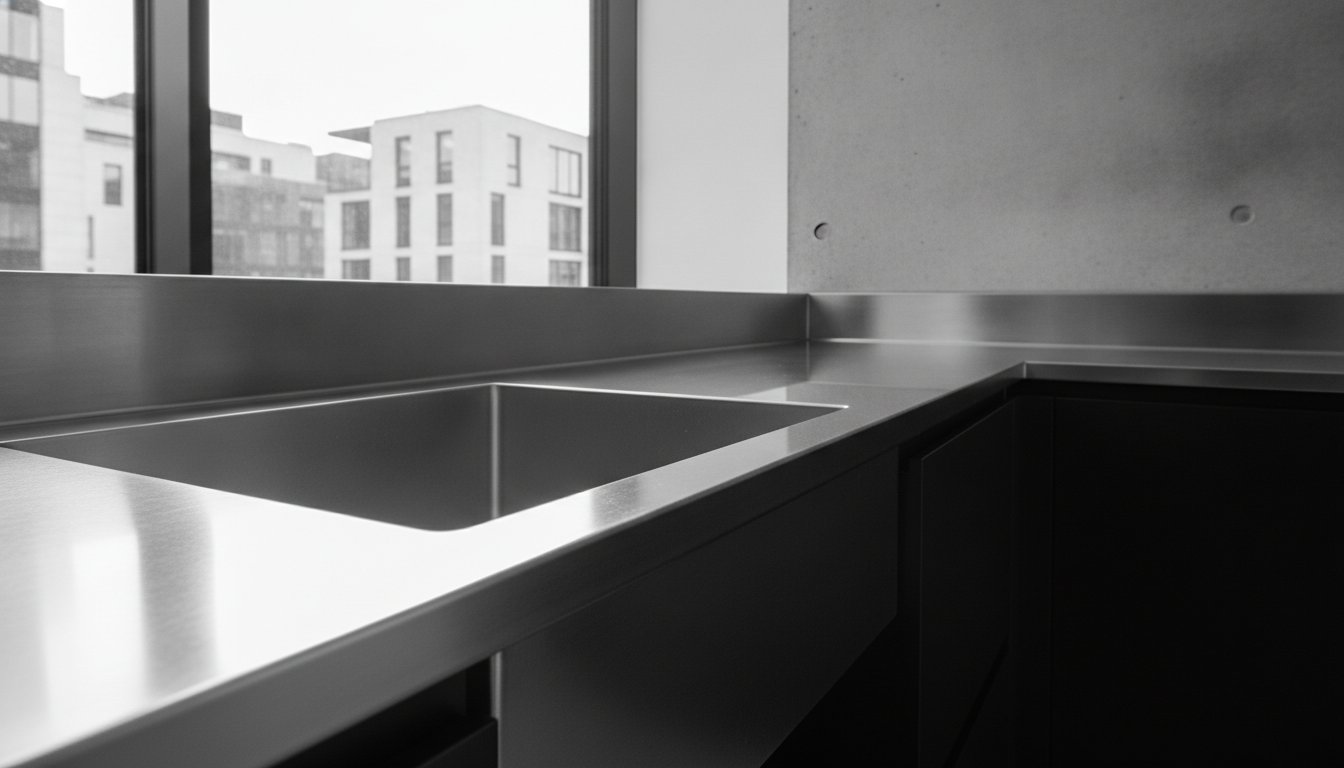
A standard sink is frequently the weakest point in an otherwise flawless architectural specification. Whilst off-the-shelf units offer convenience, they often force compromises in hygiene and aesthetics, particularly when integrated into bespoke cabinetry or specialist laboratory environments. Specifying made to measure stainless steel sinks isn’t merely a matter of achieving a perfect fit; it’s a strategic decision to prioritise structural integrity and long-term performance over temporary convenience.
You likely recognise that seams and joins are where traditional installations fail, becoming magnets for bacteria or points of material degradation. This guide provides a comprehensive technical reference for bespoke stainless steel solutions, detailing how precision fabrication ensures a lifecycle exceeding 50 years. We’ll examine the specific material benefits of EN 1.4301 and acid-resisting EN 1.4401 grades, the versatility of Series A bowl configurations, and the design possibilities that allow for seamless integration in the most demanding professional and residential spaces. By understanding the manufacturing philosophies behind these fixtures, you can ensure your next project benefits from the highest standards of order and functional efficiency.
Key Takeaways
- Understand the critical differences between bespoke fabrication and modular systems to avoid the spatial compromises inherent in standard off-the-shelf units.
- Learn how to select the appropriate grade and gauge of stainless steel to ensure long-term resistance against material degradation in specialist or domestic settings.
- Discover the configuration possibilities of made to measure stainless steel sinks, including the integration of multiple Series A bowls into a single, join-free surface.
- Identify the technical parameters for large-scale specifications, such as maximum seamless lengths and complex return dimensions for L-shaped layouts.
- Uncover the specific cleaning protocols, including the mandatory use of cold water, required to preserve the product’s 50-year functional lifecycle.
What are Made to Measure Stainless Steel Sinks?
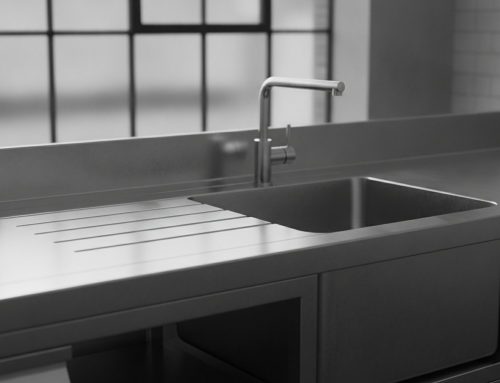
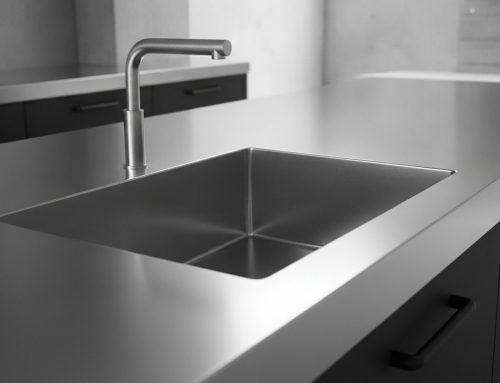
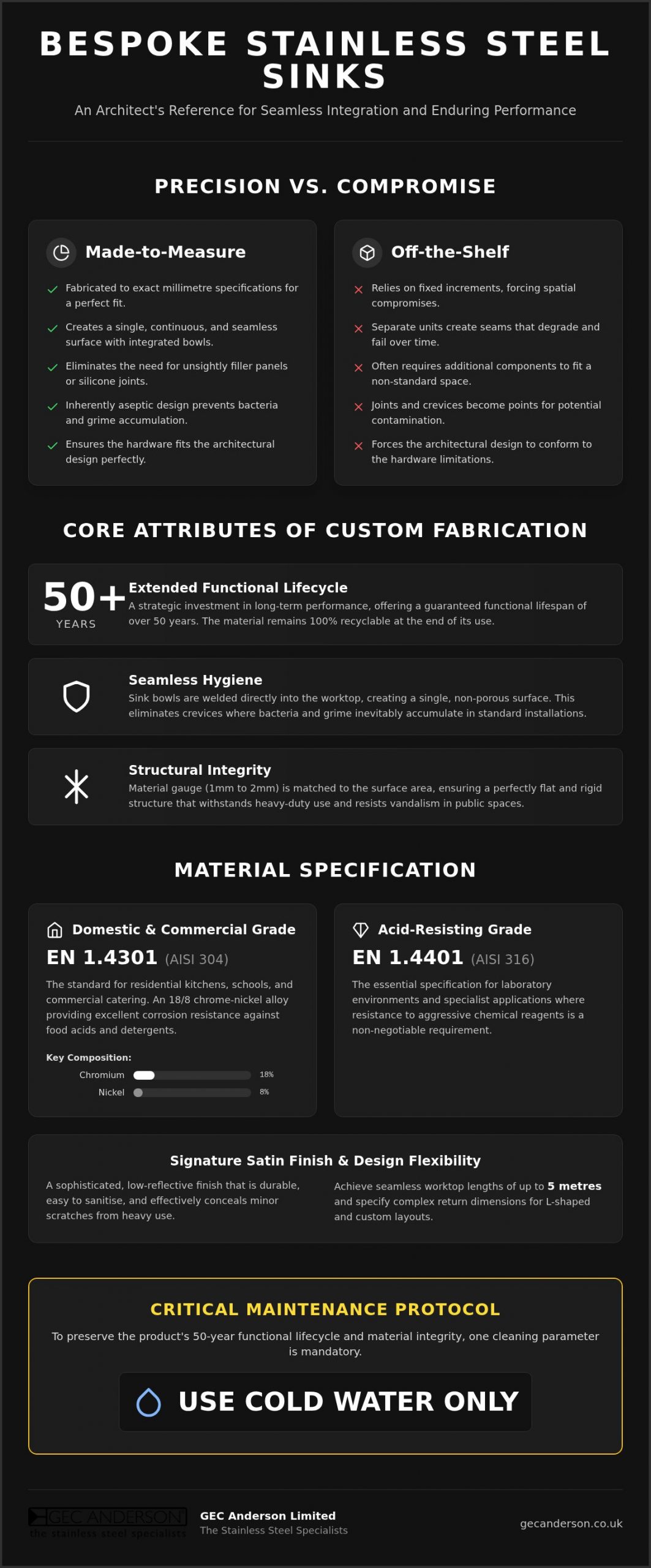
A bespoke stainless steel sink is a custom-fabricated unit designed to integrate flawlessly into a specific environment. Unlike standard off-the-shelf products or modular Decimetric systems that rely on fixed increments, made to measure stainless steel sinks are manufactured to exact millimetre specifications. This approach removes the limitations of pre-defined dimensions, allowing architects and designers to specify fixtures that align perfectly with bespoke cabinetry or complex architectural footprints. The primary advantage lies in the total elimination of seams and joins; the sink bowl is welded directly into the worktop to create a single, continuous surface.
The material’s longevity is a cornerstone of its specification. These products typically offer a 50-year lifecycle and remain 100% recyclable at the end of their use. Understanding the fundamental stainless steel properties is essential for specifiers; the material’s inherent strength and corrosion resistance ensure it remains functional and aesthetic in even the most demanding conditions.
The Shift from Standard to Bespoke Specification
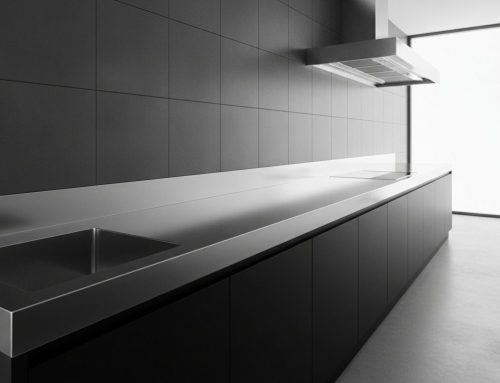
Standard sink sizes often fail in high-traffic commercial zones or unique residential layouts where every centimetre of workspace is critical. When a standard unit is forced into a custom space, it usually requires filler panels or unsightly silicone joints that degrade over time. Custom fabrication allows for non-standard lengths up to 5 metres, providing a level of visual simplicity that’s central to modern architectural design. This flexibility isn’t just about length; it includes bespoke shapes and returns that accommodate the specific flow of a professional kitchen or laboratory. It’s about ensuring the hardware fits the design, rather than compromising the design to fit the hardware.
Hygienic and Aseptic Advantages
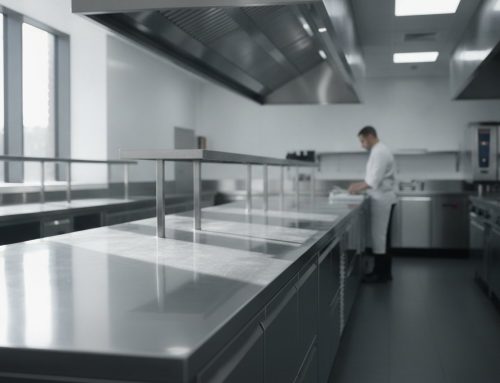
In professional environments, hygiene isn’t negotiable. Traditional installations with separate bowls and worktops create crevices where bacteria and grime inevitably accumulate. Seamless edges, achieved through expert fabrication, eliminate these failure points entirely. This makes the surface inherently aseptic and significantly easier to maintain. The choice of a satin stainless steel finish further supports this, as it resists staining and maintains a polished, professional appearance despite heavy-duty use. In the public sector, this structural integrity also provides essential resistance to vandalism, ensuring the fixture remains secure and hygienic throughout its decades-long service.
Material Excellence: Grades and Gauges for Professional Environments
The technical integrity of made to measure stainless steel sinks begins with the precise selection of material grade and thickness. We don’t employ a one-size-fits-all approach; instead, the factory selects gauges between 1mm and 2mm based on the product’s surface area and functional requirements. This ensures the worktop remains perfectly flat and rigid even under heavy-duty use. By matching the gauge to the specific dimensions, we provide a structure that withstands the rigours of commercial use without unnecessary weight.
The defining characteristic of GEC Anderson craftsmanship is our signature satin finish, which offers a sophisticated, low-reflective surface that’s both durable and easy to sanitise. This finish isn’t just an aesthetic choice; it’s a functional attribute that helps conceal minor scratches and maintain a professional appearance over decades. AISI 316 is the essential grade for acid-resisting laboratory environments where resistance to aggressive chemical reagents is a non-negotiable requirement.
Domestic Grade EN 1.4301 (AISI 304)
EN 1.4301, commonly known as AISI 304, is the standard specification for residential kitchens, schools, and most commercial catering environments. It’s an austenitic 18/8 chrome-nickel alloy, containing approximately 18% chromium and 8% nickel. This specific composition provides excellent corrosion resistance and ensures the material won’t react with food acids or common household detergents. Because it’s non-porous, it doesn’t harbour bacteria, making it the ideal choice for maintaining high hygiene standards in busy environments. Its balance of cost-effectiveness and durability has made it the benchmark for architectural stainless steel.
Acid-Resisting Grade EN 1.4401 (AISI 316)
In more demanding settings like hospitals, pharmaceutical labs, or industrial facilities, EN 1.4401 (AISI 316) is the necessary specification. The addition of molybdenum to the alloy significantly enhances its resistance to pitting and crevice corrosion, particularly when exposed to chlorides or harsh disinfectant protocols. It’s also the preferred choice for installations in coastal areas where salt-laden air can quickly degrade lesser grades of steel. Ensuring the correct material grade is specified at the outset is the only way to guarantee the 50-year lifecycle that defines our reputation for reliability. You can explore our product range to see how these grades are applied across different sectors.
Design Flexibility: Configurations and Integrated Sink Bowls
The architectural value of made to measure stainless steel sinks lies in their capacity for total configuration. Unlike standard units that restrict layout to pre-set patterns, bespoke fabrication allows for a combination of bowls and work surfaces to be manufactured as a single, unified entity. This versatility facilitates the creation of single, double, or even triple bowl arrangements without the need for joins or transitions. For specific functional requirements, textured finishes are also available for certain size specifications, providing additional surface durability and slip resistance where it’s most required.
The Series A Bowl Range
The Series A bowl range serves as the fundamental building block for these custom installations. These bowls are available in a diverse array of sizes to suit every application, from the compact A18 (180mm) suitable for hand washing or small basins, to the expansive A70 (700mm) often specified for large sluice sinks or industrial cleaning. Each bowl is integrated with precision, utilising specific partitions and flange dimensions that allow for exact placement within the worktop. This level of detail ensures that even complex triple-bowl configurations maintain structural rigidity. For projects requiring a softer aesthetic or specific functional flow, circular bowl options are also available, ensuring the design remains as purposeful as it’s visually cohesive.
Seamless Integration and Edge Profiles
When a sink is integrated into bespoke stainless steel kitchen worktops, the result is a continuous surface that functions as a single architectural element. This method of fabrication eliminates the visible seams and silicone gaps that typically disrupt the visual flow of a kitchen or laboratory. It creates a “work of art” aesthetic where the transition from the draining area to the bowl is perfectly smooth and devoid of dirt traps. Beyond the sink itself, specifiers can select from a variety of customisable edge profiles. Whether the design calls for a sharp, minimalist square edge or a more traditional marine edge to contain spills in a clinical environment, the fabrication process allows for a level of detail that standard manufacturing cannot replicate. For a deeper understanding of how fully welded construction eliminates silicone joins as a structural and hygienic failure point, our guide to integrated sink and worktop units provides comprehensive technical detail on achieving a monolithic, aseptic surface. This structural unity ensures that the entire surface remains hygienic, durable, and aesthetically consistent throughout its lifespan.
Specifying Bespoke Sinks: Dimensions and Technical Considerations
Specifying made to measure stainless steel sinks requires a level of precision that standard procurement simply doesn’t demand. When designing for large-scale commercial kitchens or expansive residential islands, the ability to specify seamless straight runs of up to 5 metres is a significant architectural advantage. For L-shaped or U-shaped configurations, return dimensions can extend up to 2.3 metres. These parameters allow for a continuous, join-free surface that maintains its structural integrity even in high-traffic environments. During the design phase, it’s essential to consider the placement of ‘wet zones’ and integrated drainers. These features are pressed or fabricated directly into the steel to ensure efficient water drainage and a minimalist, clutter-free aesthetic.
The Ordering and Approval Process
The transition from a design concept to a finished product is managed through a rigorous technical workflow. This methodical approach ensures that every millimetre aligns with site requirements and the architect’s vision before any metal is cut.
- Step 1: Provision of initial product references and custom dimensions to establish the project scope and functional requirements.
- Step 2: Review and formal approval of GEC Anderson CAD drawings, which serve as the definitive blueprint for production.
- Step 3: Coordinated delivery to the site, ensuring the unit arrives precisely when needed for seamless project management.
Technical Constraints and Sheet Sizes
Whilst the flexibility of bespoke fabrication is vast, it’s governed by the physical properties of the raw material and the machinery used in our UK facility. Standard sheet sizes typically reach up to 4 x 1 metre, which dictates the maximum dimensions for a single, join-free section without a weld. If your project requires a textured finish for increased slip resistance or a specific aesthetic, the maximum sheet size is 2.4 x 1.15 metres. Our factory selects the appropriate gauge, usually between 1mm and 2mm, to guarantee that even the largest units remain rigid and perfectly flat. This technical oversight prevents the flexing or ‘drumming’ often associated with inferior, thinner materials. It’s this commitment to structural mass that underpins our typical 50-year product lifecycle. You can request a technical consultation to understand how these dimensions will integrate with your specific cabinetry requirements.
Longevity and Maintenance: Preserving the 50-Year Lifecycle
The technical superiority of made to measure stainless steel sinks is matched only by their potential for longevity. Whilst often described as “zero maintenance,” these fixtures are better understood as high-performance assets that require specific, methodical care to maintain their integrity over a 50-year lifecycle. Unlike composite materials that degrade or stone that requires periodic sealing, stainless steel is a permanent, 100% recyclable solution. Its durability depends entirely on preserving the passive chromium oxide layer that protects the surface from corrosion.
Effective maintenance is a matter of precision rather than effort. It’s essential to always follow the grain of the steel during any cleaning process to avoid disrupting the satin finish. Synthetic detergents and chlorides pose a significant risk; if left to dry on the surface, they can lead to permanent discolouration or even pitting. By adhering to a strict technical cleaning regime, specifiers ensure that the sink remains as hygienic and aesthetically pleasing as the day it was installed.
The Cold Water Protocol
A common misconception in facility management is that warm or hot water is superior for rinsing. For GEC Anderson products, the rule is absolute: always rinse with cold water after cleaning. Warm water can accelerate the evaporation of cleaning agents, leaving behind chemical residues that cloud the surface. After the cold rinse, you must never leave the sink to air dry. Instead, dry the surface immediately with a soft cloth. This prevents the formation of water spots and preserves the refined satin shine that’s the hallmark of bespoke fabrication. Consistent adherence to this protocol is the simplest way to prevent long-term surface degradation.
Specialist Stain and Calcium Removal
In areas with hard water, calcium deposits can accumulate and trap grime. These should be treated with vinegar or 10% acetic acid, followed by a thorough cold water rinse. If surface rust appears, it’s often the result of external iron particles rather than the steel itself. This can be addressed using a dry cleaning powder. For persistent rust in demanding industrial or clinical settings, use a dry nylon fibre brush or a solution of diluted nitric acid at a 1:4 ratio. These specific interventions ensure that even in the most aggressive environments, your made to measure stainless steel sinks remain a stable, high-performance component of the building’s infrastructure.
Achieving Architectural Precision with Bespoke Stainless Steel
Specifying made to measure stainless steel sinks transforms a functional necessity into a permanent architectural asset. By eliminating the hygienic failure points inherent in standard joins and utilising factory-selected gauges, these fixtures provide a structural integrity that off-the-shelf units can’t match. Whether your project requires the acid-resistance of 316-grade steel or a seamless 5-metre run, the result is a surface designed for a 50-year lifecycle.
GEC Anderson has been an established leader in UK manufacturing since 1962. Our ISO 9001 certified quality management ensures that every specification benefits from comprehensive technical support and precise CAD drawings. This methodical approach guarantees that the final installation aligns perfectly with your design intent. We invite you to request a technical quotation for your bespoke stainless steel project and partner with a seasoned specialist. We’re ready to help you deliver a solution defined by precision, utility, and enduring craftsmanship.
Frequently Asked Questions
What is the difference between 304 and 316 grade stainless steel sinks?
EN 1.4301 (304) is the industry standard for domestic and general commercial use, offering excellent durability through its 18/8 chrome-nickel composition. EN 1.4401 (316) is an acid-resisting grade containing molybdenum, making it essential for laboratories and hospitals where exposure to chlorides or aggressive chemicals is likely. Choosing the correct grade ensures the material maintains its structural integrity and aesthetic finish throughout its intended 50-year lifecycle in its specific environment.
Can I have a made to measure stainless steel sink integrated into a worktop?
Integration is a primary benefit of made to measure stainless steel sinks. We manufacture the sink bowl and worktop as a single, unified entity, welding the components together to eliminate visible seams and joins. This creates a completely seamless, aseptic surface that prevents bacteria buildup and offers superior hygiene. These integrated units are custom-fabricated to your exact millimetre requirements, ensuring a perfect fit for any architectural layout or bespoke cabinetry design.
What is the maximum length for a bespoke stainless steel sink unit?
For seamless straight runs, the maximum length for a bespoke stainless steel unit is 5 metres. If your project requires L-shaped or U-shaped configurations, the maximum return dimension is 2.3 metres. These generous parameters allow for expansive, join-free surfaces in large commercial kitchens or residential islands. If a textured finish is specified, the maximum size is 2.4 x 1.15 metres, governed by the physical dimensions of the specialised sheet material used in fabrication.
How do I clean a stainless steel sink without causing discolouration?
To maintain the satin shine, always apply a general-purpose cream cleaner and rub gently following the grain of the steel. You must rinse the surface thoroughly with cold water and dry it immediately with a soft cloth. Never use warm or hot water for rinsing, as this can lead to discolouration. Avoiding air drying is critical; it prevents the formation of water spots and ensures that synthetic detergent residues don’t cloud the polished finish.
Are bespoke stainless steel sinks suitable for residential kitchens?
These fixtures are highly suitable for residential environments, particularly for those seeking a minimalist, industrial aesthetic or professional-grade durability. A bespoke sink offers a tailored fit that standard modular units cannot provide, especially in kitchens with non-standard dimensions. Beyond their visual appeal, they are 100% recyclable and designed to last for over five decades. They provide a hygienic, heat-resistant, and virtually permanent solution that withstands the rigours of a busy domestic kitchen.
What information is needed to get a quote for a made to measure sink?
To provide an accurate quotation, we require the specific product reference and your desired custom dimensions. This includes the overall worktop length, depth, and the required edge profile. You should also specify the number and size of Series A bowls needed, such as the A40 or A50, and their precise placement. Mentioning the intended environment helps us recommend the appropriate steel grade, whether it’s the standard 304 or the acid-resisting 316.
Why is cold water recommended for rinsing stainless steel?
Cold water is recommended because it prevents cleaning agents from evaporating too quickly on the surface. When warm or hot water is used, detergents can dry prematurely, leaving behind a cloudy residue or synthetic film that is difficult to remove. This buildup often leads to surface discolouration over time. By rinsing with cold water and drying immediately with a soft cloth, you preserve the passive protective layer of the steel and maintain its original lustre.
Can GEC Anderson provide CAD drawings for my bespoke project?
We provide detailed pre-production CAD drawings for every bespoke project as a standard part of our service. Once you’ve submitted your custom requirements, our technical team generates these blueprints for your formal review and approval. This process ensures absolute precision before manufacturing begins, allowing architects and specifiers to verify every millimetre. This methodical approach is central to our ISO 9001 certified quality management and guarantees that the final product meets your exact specifications.